Somaliland Is Offering Washington Minerals and a Base to Win Recognition
SOMALILAND · GEOPOLITICS
Key Facts
- —The port structure DP World owns 51% of Berbera port, Somaliland 30%, Ethiopia 19%.
- —The offer In February, a Somaliland minister offered Washington exclusive mineral access and military bases.
- —The counter-offer Days later, Somalia’s federal government offered the US its own ports, airports, minerals.
- —The visit A senior US commander met President Abdullahi in Hargeisa in early August. Abdullahi left for his first official US visit on 3 September.
- —The Ethiopian angle Berbera’s capacity has more than tripled since 2016; Ethiopia is landlocked with over 130 million people.
- —The catch Somaliland declared independence in 1991 but is unrecognized by the UN and US. Somalia disputes any deal over its territory.
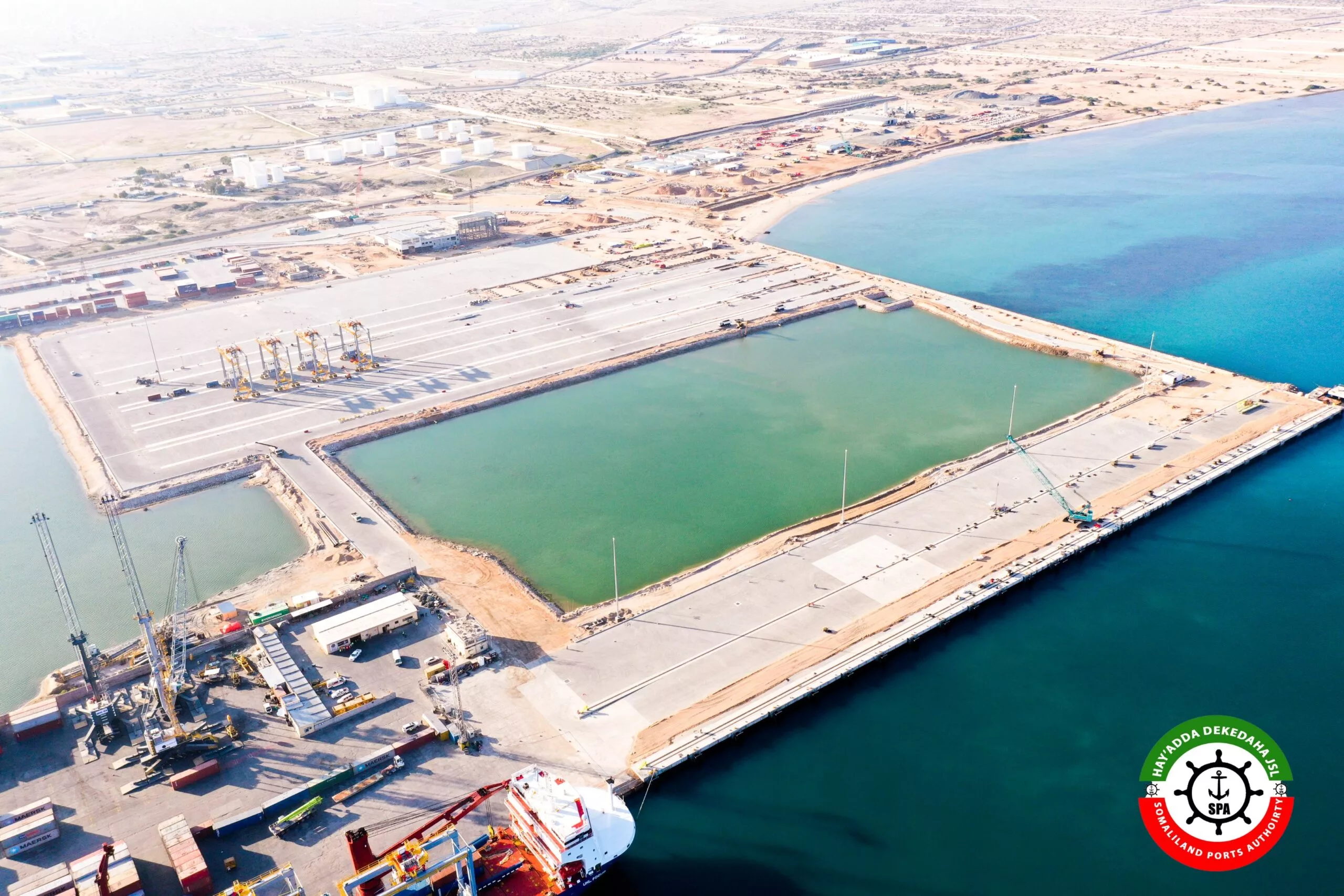
Somaliland’s Berbera port anchors its offer to Washington. It includes access to mineral deposits, including lithium and coltan, plus the possibility of US military bases on the Gulf of Aden.
Somalia’s federal government made a similar offer days later. Both governments are courting Washington from a territory whose sovereignty is itself disputed.
Why Berbera is the centre of the argument
Berbera is a deep-water port on a busy shipping lane, close to Yemen near the Red Sea’s southern entrance.
DP World, the Dubai-based operator, has run the port since 2016. It rebuilt a rundown facility into a modern container terminal.
The ownership structure is unusual. DP World holds 51 percent, the Somaliland government 30 percent, and Ethiopia 19 percent, under a deal Ethiopia struck in 2018.
That gives a landlocked neighbour equity in a port on disputed territory.
Since DP World took charge, Berbera’s container capacity has grown from 150,000 to 500,000 units a year. Average ship turnaround time has fallen from 64 hours to about 25.
For Addis Ababa, the appeal is an alternative to Djibouti, which currently handles around 90 percent of Ethiopia’s trade.
That mix of Emirati capital, Ethiopian cargo and Somaliland territory turns a regional port upgrade into a strategic asset. It is also why Djibouti watches Berbera closely.
What Hargeisa has put on the table
In February, Khadar Hussein Abdi, Somaliland’s Minister of the Presidency, spoke to the news agency AFP. He said Hargeisa would give Washington exclusive access to mineral deposits.
He named lithium and coltan, and said Somaliland was open to hosting American military bases. He did not rule out an Israeli presence either.
Somaliland’s relations with Israel became a live subject after Israel recognized Somaliland in December 2025, the only country to do so.
The offer is openly transactional: recognition is the objective, and access is the currency, Somaliland’s officials say.
A senior US commander, the head of US Special Operations Command Africa, met President Abdirahman Mohamed Abdullahi in Hargeisa in early August. They discussed maritime security and fighting piracy.
Mogadishu is selling the same goods
Somalia’s federal government responded within days, offering Washington access to its own ports, airports and critical minerals. It was an explicit counter to the Somaliland proposal.
In August, the US signed a security deal to expand its presence at Bosaso, a Puntland port on the Gulf of Aden. Puntland is a semi-autonomous region of federal Somalia, and some reports said the deal bypassed Mogadishu.
For Washington, the appeal of dealing with Hargeisa is stability. Somaliland has held elections and transferred power peacefully in a way the federal government often has not.
The appeal of dealing with Mogadishu is legal weight. A treaty with a recognized state has a legal status that an agreement with an unrecognized territory would lack.
Any Somaliland-US deal would likely be an informal arrangement, not a ratified treaty, since Washington does not recognize Somaliland as a state.
Somalia says any such deal over what it calls its own territory carries no legal force.
The mineral claim needs scrutiny
Lithium and coltan are the names most likely to open doors in Washington. They should be treated as a prospectus, not a confirmed reserve.
Somaliland’s geology is under-surveyed. Independent assessments of these mineral claims have not been completed, according to reporting on Abdi’s own comments.
There is credible evidence of mineral deposits across the Horn of Africa, but little independently verified data. That gap is where money is usually lost.
The offer is being priced politically rather than geologically. Recognition granted on the basis of unproven deposits would be a costly mistake for both sides.
Any serious investor will want drilling results before concession terms. That work has largely not been done.
What recognition would actually unlock
The practical constraints on Somaliland are financial rather than military. Without recognition, it cannot borrow from the International Monetary Fund (IMF) or the World Bank.
It also struggles with international banking and sovereign insurance.
Recognition would make Berbera easier to finance. Infrastructure lending follows legal certainty more than it follows cargo volume.
It would also ease the Ethiopian relationship. Addis Ababa has been careful about how far it goes with a territory Mogadishu claims as its own.
For readers in Latin America, the precedent question is familiar. Recognition disputes from Kosovo to Western Sahara have shaped how governments across the region vote at the United Nations.
What to watch next
The first thing is whether Washington signs anything, and with whom. President Abdullahi’s working visit to the US, which began on 3 September, is the most direct test yet.
The second is the Ethiopian throughput deal at Berbera, the commercial case that stands apart from the politics.
The third is whether any independent survey verifies Somaliland’s mineral claims, separating the geology from the diplomacy.
Frequently Asked Questions
Who owns Berbera port?
DP World holds 51 percent, the Somaliland government 30 percent and Ethiopia 19 percent.
What has Somaliland offered the United States?
In February, its Minister of the Presidency said Hargeisa would give exclusive access to minerals such as lithium and coltan. He also said Somaliland was open to hosting US bases.
Has Somalia responded?
Yes. Somalia’s federal government offered the US access to its own ports, airports and critical minerals within days, explicitly countering the Somaliland offer.
Did American officials visit Hargeisa?
Yes. The commander of US Special Operations Command Africa met President Abdirahman Mohamed Abdullahi in early August to discuss maritime security.
Why does recognition matter commercially?
Without recognition, Somaliland cannot borrow from the IMF or the World Bank, which limits how it finances infrastructure.
Connected Coverage
- The maritime security backdrop is in our reporting on piracy pressure in the same waters and on Mogadishu’s other defence arrangements. This is a core thread of Africa: The New Scramble.
More Africa news: Nigeria | South Africa | Kenya | Egypt | Ghana | Morocco | DR Congo | Angola | Ethiopia | Tanzania
This article was produced by The Rio Times’ automated newsroom system. How we use AI · Report an error · Editorial responsibility: Matthias Camenzind, Editor-in-Chief
Horn of Africa and the Red Sea
- Horn of Africa 2026: Why It Matters and Who Backs Whom
- Ethiopia’s Neighbors Explained, Ports, Eritrea, Somalia
- Eritrea Explained 2026, a Red Sea Country Guide
- Somalia Explained: Al-Shabaab, Somaliland, the Ports and the Fight Over a 2026 Vote