Greek Team Finds Big Alexandria Foundations
Egypt’s antiquities authorities say limestone foundations in Alexandria may belong to a royal tomb, but the committee calls this a preliminary idea that needs more excavation.

Archaeology: Egypt
Greek archaeologists have found the foundations of a large limestone building in the Royal Quarter, one of the most prominent historical areas of ancient Alexandria, Egypt’s Mediterranean port city, Egypt’s Ministry of Tourism and Antiquities said on Tuesday 24 November 2026. A committee of state experts says the structure may have been a royal tomb, but it calls that only a preliminary hypothesis.
The ministry says the committee considers the find important for the study of ancient Alexandria’s layout, and that the building’s features raise the possibility of a link to a royal tomb that historical sources mention. The ministry’s statement does not mention Alexander the Great, whose tomb has never been found.
Key Facts
- Who. Greek archaeologists led by mission head Dr Kalliopi Limnios-Papakosta; Egypt’s antiquities ministry announced it.
- What. Foundations of a large limestone building with walls and a tunnel, possibly a royal tomb.
- Where. Shallalat Gardens, a park in Alexandria, on the site of the ancient Royal Quarter.
- When. Announced Tuesday 24 November 2026; the committee calls the tomb idea preliminary.
- As of. 25 November 2026, 10:00 GMT.
Egypt’s antiquities authorities say limestone foundations in Alexandria may belong to a royal tomb, but the committee calls this a preliminary idea that needs more excavation.
The mission belongs to the Hellenic Institute for the Research of Alexandrian Civilization, a Greek research body, and is led by Dr Kalliopi Limnios-Papakosta. It has worked in Shallalat Gardens, a park area in Alexandria, for about 20 years, with funding from the Moheb Kassabgui Foundation and Reliance Egypt, the ministry said.
The dig revealed the foundations of a large limestone structure surrounded by walls, and a tunnel running north beneath the building. The ministry gave no size or depth for the foundations.
On receiving the mission’s report, Tourism and Antiquities Minister Sherif Fathy ordered a specialised committee to inspect the site. It is headed by Dr Ayman Ashmawy, head of the Central Administration for Lower Egypt, Sinai and North Coast Antiquities at the Supreme Council of Antiquities, the state body that runs Egypt’s antiquities.
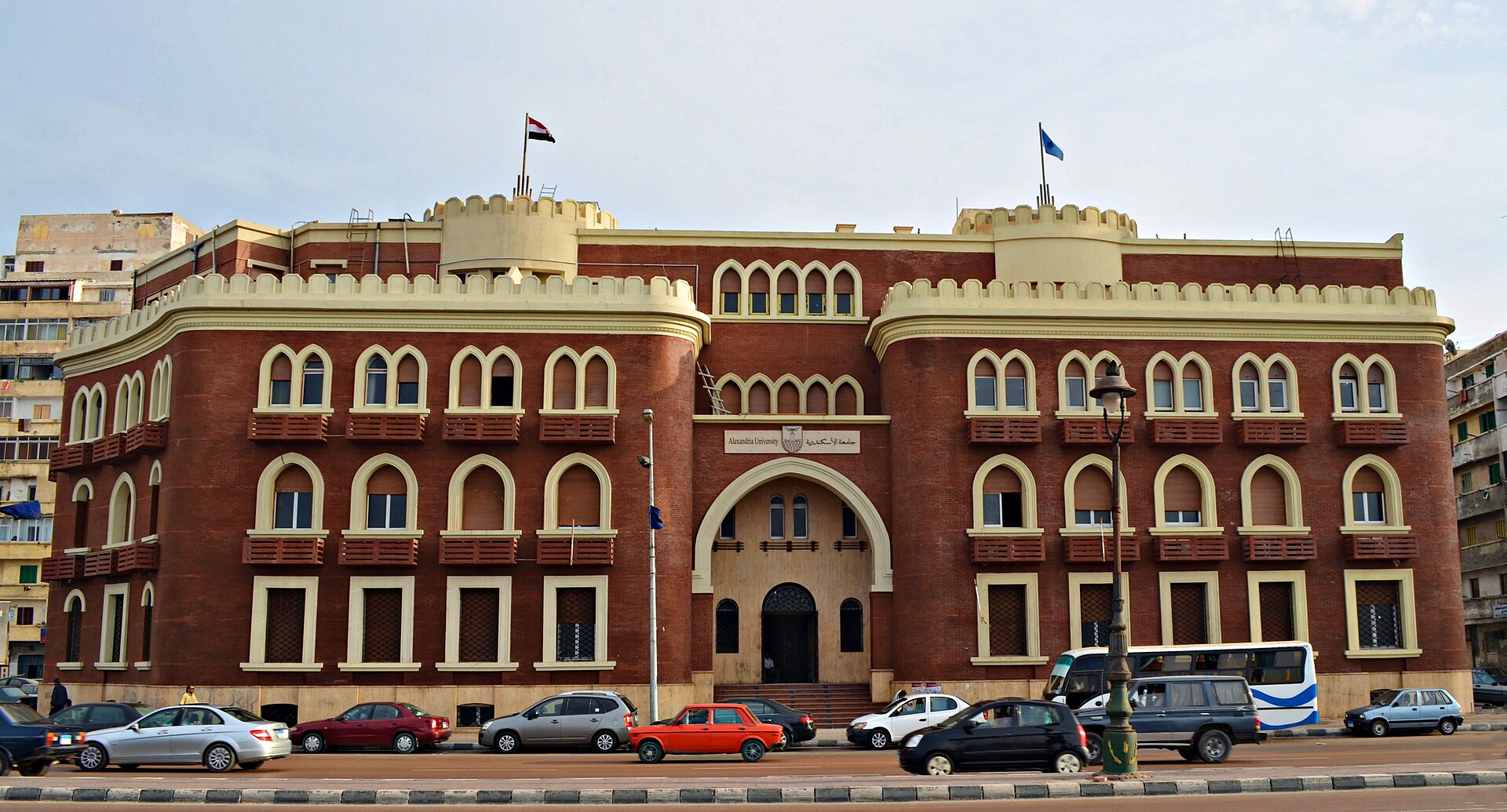
Specialists and professors of Greek and Roman history and archaeology from Alexandria University and Tanta University, another Egyptian state university in the Nile Delta, sit with him. The committee examined the architectural remains and gave its report to Dr Hisham El-Leithy, Secretary General of the Supreme Council, who presented it to the minister.
The committee concluded that the site lies within the Royal Quarter, one of the city’s most prominent historical areas. The foundations and their square dimensions, it said, indicate they once supported a large, tall structure.
The building’s nature and architectural features raise the possibility of a funerary function, the committee said. In that case, it said, it could be the royal tomb that historical sources say King Ptolemy IV Philopator, a ruler of Egypt’s Ptolemaic dynasty who reigned from 221 to 204 BC, established, and which the ancient Greek geographer and historian Strabo mentions in his description of Alexandria.
Ashmawy stressed that this is a preliminary hypothesis that needs further research. Further excavation and architectural studies, he said, could provide more information on the building, its function and its relationship with the surrounding structures.
Some commentary abroad has linked the find to the lost tomb of Alexander the Great. Neither the ministry nor the committee makes that link, and the location of Alexander’s tomb remains unknown.
Fathy said the successive discoveries show Alexandria’s rich heritage. El-Leithy said the on-site inspection confirmed the importance of the location and that the find opens new avenues for research into royal structures in Alexandria in the period of Ptolemaic rule.
What is still open is what the building was for. The statement gives no date for the next excavation season and none for publishing the mission’s report.
Frequently Asked Questions
Did Egypt find Alexander the Great’s tomb?
No. The ministry does not mention him, and the location of his tomb is still unknown.
What did the archaeologists find?
They found the foundations of a large limestone building, with surrounding walls and a tunnel beneath it, inside the ancient Royal Quarter.
What happens next?
The ministry has not announced a date for more digging. The committee says further excavation and studies are needed to learn what the building was for.
Sources
Ministry of Tourism and Antiquities statement, 24 November 2026; Supreme Council of Antiquities scientific committee report, as presented by the ministry, 24 November 2026
Connected Coverage
This article was produced by The Rio Times’ automated AI newsroom. Editorial responsibility: Matthias Camenzind, Publisher and Editor-in-Chief. The Rio Times also runs Ask Rio Times, which answers from 100,000+ of our own articles, the daily Latin America Power Map, and prediction-market odds on elections and markets.. How we use AI · Report an error
Living in or visiting Alexandria? See this month's events.