Egypt Signs Deal to Insure 18.5 Million More
Egypt wants state insurance in six more governorates by 2030, with the public purse covering most of the bill. The Cabinet statement gives no rollout dates for individual governorates.

EGYPT · HEALTH
Egypt signed a health compact with the World Bank Group, the international development lender, in Cairo on Monday 23 November 2026, aiming to bring state health insurance to about 18.5 million more people by 2030. Egypt’s Cabinet, the government’s executive body, said in a statement that Prime Minister Mostafa Madbouly witnessed the signing.
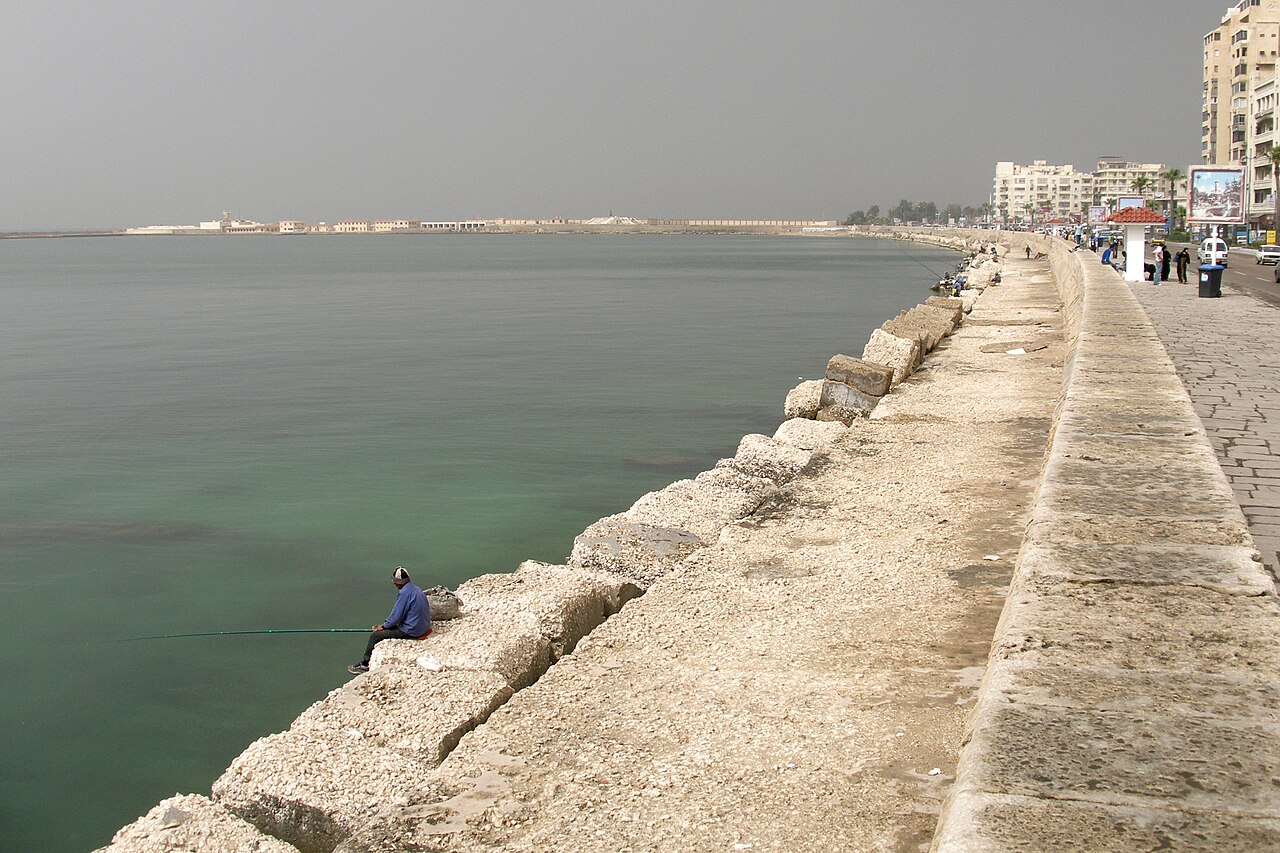
The plan covers six governorates, from Alexandria on the Mediterranean coast to Matrouh and North Sinai. For readers abroad, it sets out who pays for the expansion and how progress will be tracked.
Key Facts
- Who. Egypt’s government and the World Bank Group, with Prime Minister Mostafa Madbouly witnessing.
- What. A compact to extend state health insurance to about 18.5 million more people by 2030.
- How much. About EGP 178 billion (US$3.3 billion) needed through 2030, mostly public money.
- When. Signed Monday 23 November 2026 in Cairo; rollout dates per governorate not stated.
- As of. 23 November 2026, 19:30 GMT
Egypt wants state insurance in six more governorates by 2030, with the public purse covering most of the bill. The Cabinet statement gives no rollout dates for individual governorates.
Egypt’s Universal Health Insurance System (UHIS), the state scheme that pays for care, is being rolled out governorate by governorate in phases. The Cabinet said the first and second phases together should reach about 23.5 million people, which leaves about 5 million in the first phase by simple subtraction.
Madbouly described accelerating the scheme as a key government priority and a major social reform, the Cabinet said, aimed at integrated, high-quality services that place no financial burden on citizens and their families. He said the government is upgrading infrastructure, improving facility readiness and securing qualified staff and sustainable financing.
The second phase takes in Damietta, Kafr El-Sheikh, Minya, Matrouh, North Sinai and Alexandria. The compact provides for upgrading 935 facilities, made up of 827 primary healthcare centres and 108 hospitals and critical care units, to national accreditation standards.
Egypt is one of 15 countries that introduced National Health Compacts, five-year reform plans, the World Bank said in a press release in Tokyo on 6 December 2025. The release cited the Bank’s 2025 Global Monitoring Report, which found that 4.6 billion people lack access to essential health services and 2.1 billion face financial hardship.
“Strong primary health systems do more than safeguard health—they support jobs and economic opportunity,” said Ajay Banga, World Bank Group President, in Tokyo on 6 December 2025. The Bank’s stated goal, set in April 2024, is to help deliver affordable, quality health services to 1.5 billion people by 2030.
The same release said Morocco will extend mandatory health insurance to an additional 22 million people, and Kenya will expand social health insurance coverage from 26% to 85%. Morocco and Kenya are among the other compact countries the release names.
Health and Population Minister Khaled Abdel Ghaffar, Finance Minister Ahmed Kouchouk and Deputy Foreign Minister for International Cooperation Samar El-Ahdal signed for Egypt. Planning and Economic Development Minister Ahmed Rostom and Anna Bjerde, the World Bank’s Managing Director of Operations, attended the ceremony.
Representatives of development partners were also present. In the six governorates, Egypt aims to keep out-of-pocket spending, meaning what patients pay directly, below 28% of total health expenditure.
It also targets locally produced essential medicines and health products above 75% by value and above 90% by volume, with better availability of essential medicines at primary care facilities. The Cabinet put the financing need through 2030 at about EGP 178 billion (about US$3.3 billion at 54.19 pounds to the dollar, the RT market-data rate on 23 November).
Of that, EGP 163 billion (about US$3.0 billion) is public money and EGP 15 billion (about US$0.28 billion) is private. Public money therefore carries about 91.6% of the cost, a share found by dividing the Cabinet’s two totals.
Kouchouk stressed sustainable financing, efficient spending and private investment, as well as contributions paid on behalf of eligible low-income groups. The compact rests on six pillars: facility readiness, primary and telemedicine services, benefit packages and preventive care, the health workforce, financial protection and access, and private-sector investment.
Abdel Ghaffar said it supports completing the rollout through facility upgrades, primary care, workforce and hospital readiness.A joint monitoring, evaluation and accountability framework will track the plan, involving the Ministry of Health and Population, two state health bodies (the Universal Health Insurance Authority and the General Authority for Healthcare), the World Bank Group and development partners.
Its indicators cover geographic expansion, facility readiness, registration, financing and service quality. The statement does not say whether the World Bank will lend under the compact.
As reported, it gives no loan size, terms or start dates for each governorate. Readers who want the wider financing picture can follow our report on the World Bank US$1 billion financing for Egypt, and more coverage sits under Egypt news.
For how care works today, see Egypt’s education and health system explained and healthcare for expats in Egypt.
Frequently Asked Questions
Who gets covered under the second phase?
People in the governorates named in the compact, including Alexandria and Minya, would join the state scheme as local facilities are upgraded. The Cabinet has not said when each one starts.
Is the World Bank lending money for this?
The Cabinet statement does not say. It describes the World Bank Group as a partner in the compact and in monitoring its progress.
How will progress be measured?
Through a joint framework run with the health ministry, two health authorities and the World Bank Group. It will track expansion, facility readiness, registration, financing and service quality.
Sources
Egyptian Cabinet, statement on the signing of the National Compact for Accelerating the Implementation of Egypt’s Universal Health Insurance System by 2030, Cairo, 23 November 2026 · World Bank, press release on National Health Compacts, Tokyo, 6 December 2025: worldbank.org · Exchange rate: RT, a financial data provider, USD/EGP quote of 23 November 2026
This article was produced by The Rio Times’ automated AI newsroom. Editorial responsibility: Matthias Camenzind, Publisher and Editor-in-Chief. The Rio Times also runs Ask Rio Times, which answers from 100,000+ of our own articles, the daily Latin America Power Map, and prediction-market odds on elections and markets.. How we use AI · Report an error