Egypt Economy 2026 Pound Steady Near 51 Before IMF Test
Economy · Egypt
Key Facts
- —The date Friday, September 4, 2026, finds Egypt past its seventh IMF review and before the programme’s December expiry.
- —The currency The pound hit a low near 52.34 per dollar in March 2026, after a 10.19% monthly slide, then steadied near 50.95 by September 2026.
- —The inflation Annual urban inflation rose to 14.9% in July 2026, from 14.3% in June.
- —The Canal Suez Canal revenues climbed 23% to $4.67 billion in fiscal 2025/26, still far below the $10.2 billion earned in 2023.
- —The catch The IMF’s programme test rate for 2026 is 47.8077, well below the pound’s September market level of about 50.95.
Cairo’s recovery is nominal, costing people buying power and delaying relief. The Suez Canal earns again, but inflation rises.
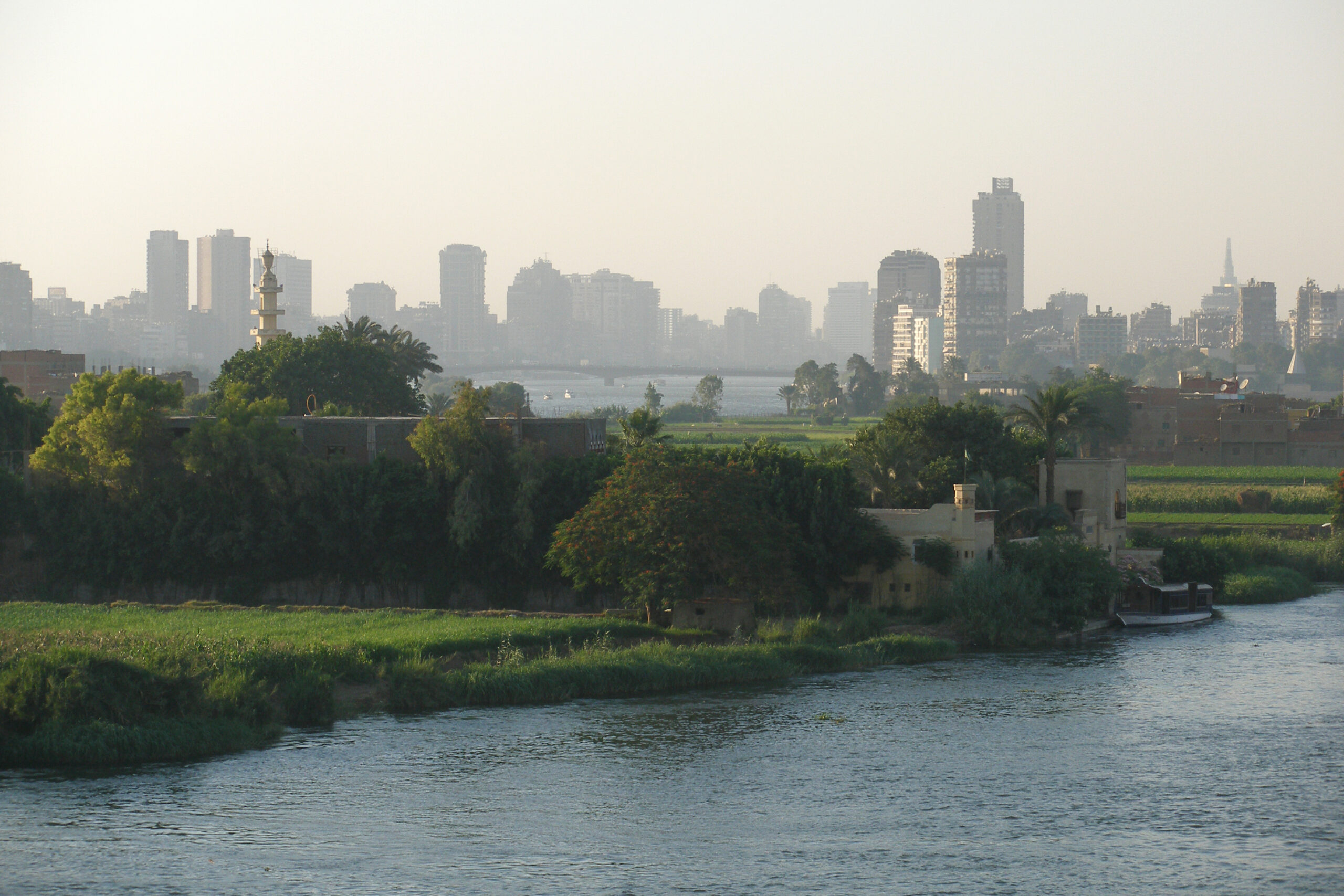
The pound has clawed back some of its March losses, though it remains far softer than before the crisis.
Where the IMF programme stands
The Extended Fund Facility, or EFF, is the International Monetary Fund’s (IMF) main loan tool backing Egypt’s reforms.
The programme’s seventh review was completed, and its disbursement approved, on July 30, 2026.
Completion of that review unlocked an additional disbursement of $1.8 billion.
The IMF also agreed to extend the programme to December 2026 after delays in earlier reviews.
The extension raised performance targets for March 2026 and added deep-seated benchmarks.
Those new conditions cover tax administration, debt management, and governance of state-owned enterprises.
Egypt’s external financing needs were about $13 billion for fiscal 2025/2026, which ended in June.
The IMF now forecasts a much smaller requirement of about $4 billion for fiscal 2026/2027.
The reduced need reflects the country’s return to some hard-currency inflows, but not yet to pre-crisis comfort.
The programme exchange rate explained
For assessing 2026 quantitative targets, the IMF has fixed a programme exchange rate of 47.8077 Egyptian pounds per US dollar.
That rate is the Central Bank of Egypt’s official buy rate recorded on September 30, 2025.
It is a technical assumption used for calculating targets, not necessarily the live market price.
The central bank, known as the CBE, uses this fixed rate to measure whether Egypt meets IMF quantitative conditions.
A wide gap between the programme rate and market rate would complicate compliance with those targets.
Investors should understand that the IMF number is an accounting device rather than a forecast.
The pound’s market level and pressure
In March 2026, the Egyptian pound weakened sharply, trading near 52.34 per US dollar.
That level represented a 10.19% slide in a single month, tied to capital outflows during a regional conflict.
By September 4, 2026, the pound had recovered some ground, trading near 50.95 per dollar in the market.
A weaker pound still raises the local cost of imported food, fuel, and industrial inputs.
The September level shows the pound remains softer than before the March shock, even after its partial recovery.
Residents holding pounds absorbed a sharp loss of external purchasing power during the March slide.
Inflation and the August rate hold
Egypt’s annual urban inflation rose to 14.9% in July 2026, up from 14.3% in June.
That was the first monthly acceleration since March.
Core inflation, which excludes volatile items, also rose to 14.7% in July from 14.3% in June.
Month-on-month, core prices were unchanged.
In August 2026, the CBE kept its deposit rate at 19%, its fourth consecutive hold.
The IMF expects inflation to remain elevated until the end of the year.
Analysts project continued pressure through the third quarter of 2026 before a year-end easing.
The CBE’s earlier November 2025 forecast had anticipated average inflation of 10.5% for 2026.
That projection assumed convergence toward a 7%, plus or minus 2%, target by the fourth quarter of 2026.
Electricity tariffs and administered prices
At the start of August 2026, the Ministry of Electricity raised tariffs by an average of 12% across all consumption tiers.
The lowest bracket, from 0 to 50 kilowatt-hours per month, was excluded from the increase.
Economist Hani Genena estimated the electricity hike could add about 2 percentage points to August inflation.
Administered price adjustments are part of the reform agenda supported by the IMF.
Such increases reduce fiscal costs but immediately hit households and small businesses.
For foreign investors, this signals continued commitment to subsidy rationalisation despite public pain.
Suez Canal revenues after Red Sea disruption
The Suez Canal Authority reported revenues of $4.67 billion for fiscal 2025/2026.
That is a 23% increase from the previous fiscal year.
Chairman Osama Rabie said vessel transits climbed 10% year-on-year and cargo tonnage rose 22%.
During the first half of fiscal 2025/26, revenues had already increased 18.5%.
The final quarter of calendar 2025 posted a further 24.5% increase.
In 2024, revenues collapsed to $4 billion from $10.2 billion in 2023 because of Red Sea tensions.
Despite the rebound, the Canal remains far below its record calendar-year level of $10.25 billion.
The waterway’s recovery is real, but still less than half of what it earned before the disruption.
What Canal arithmetic means for hard currency
The $4.67 billion Canal figure is the country’s most visible barometer of Red Sea risk.
A return to normal traffic would require sustained security along the shipping route.
Even with improved transits, Egypt’s hard-currency buffer from the Canal is smaller than in 2023.
The shortfall has been partly offset by IMF disbursements and Gulf financing.
For residents, the Canal revenue gap translates into continued pressure on imports and the pound.
For investors, Canal receipts are a proxy for how quickly Egypt can rebuild external resilience.
Debt, subsidies and the fiscal squeeze
Egypt’s reform programme includes energy subsidy rationalisation and tax administration changes.
The IMF extension added benchmarks for debt management and state-owned enterprise governance.
The sharp drop in financing needs, from $13 billion to a projected $4 billion, suggests the worst external gap may have passed.
Still, high interest rates at 19% keep domestic borrowing expensive.
Subsidy cuts, such as the electricity tariff rise, are politically sensitive but fiscally necessary.
Each administered price increase reduces budget costs while adding to near-term inflation.
Earlier disbursements and reform conditions
Egypt entered 2026 with $5.2 billion already disbursed under the active EFF.
That money was conditional on exchange-rate unification achieved in March 2024, plus energy subsidy rationalisation and monetary tightening.
The July 2026 seventh review added $1.8 billion to the disbursed total.
Cumulative IMF support is now meaningful, but so are the policy constraints attached.
The December 2026 expiry leaves little room for another major slippage.
What it means for foreign investors
The completion of the seventh review and the December 2026 extension reduce immediate default risk.
A 19% deposit rate offers high nominal yields, but real returns depend on future inflation.
The pound’s swing from 52.34 in March to about 50.95 by September shows currency risk remains real despite the IMF anchor.
Suez Canal recovery restores some dollar cash flow, but the waterway is still underperforming its old baseline.
Gulf investment and IMF cash are stabilisers, not substitutes for private capital flows.
Investors should watch the gap between the market exchange rate and the IMF programme rate of 47.8077.
A widening gap would signal that official targets and market reality are diverging again.
Background: our egypt growth outlook cut 5 percent inflation delays rate cuts guide.
More: Egypt news in English, every day from The Rio Times.
The big picture: Egypt explained — economy, politics, society and daily life in one read.
What it means for residents
Urban inflation at 14.9% in July is eroding wages and savings.
The August electricity tariff rise will push costs higher before any year-end easing arrives.
The pound lost about a tenth of its value in one month in March 2026. It has since recovered only part of that, to near 50.95 by September.
Imported goods, fuel, and debt service remain more expensive than before the March slide.
High interest rates make credit costly for households and small firms.
The IMF programme’s stability does not translate quickly into cheaper living costs.
Residents are bearing the adjustment through prices, subsidies, and a currency still well off its pre-2026 levels.
Connected Coverage
Egypt and Russia Talk Up a Reactor and an Unopened Suez Zone
Afreximbank’s Profit Rose 30% in a Rough Year for Its Members
Egyptians Abroad Sent Home a Record US$47.3 Billion in a Single Year
The Big Picture
More from the Egypt section
Latest developments
- Morocco Socialists Bring 26 Seats to New Government — 11 October 2026
- Amr Diab Cairo Concert at Al Manara on Thursday 3 December — 10 October 2026
- Algeria Seeks 7 Years for Former Algiers Mayor — 10 October 2026
- Trump Calls Ethiopia Dam Funding Stupid on 9 October — 10 October 2026
This article was produced by The Rio Times’ automated newsroom system. How we use AI · Report an error · Editorial responsibility: Matthias Camenzind, Editor-in-Chief
LatAm Markets: Live Signals → — real-time movers, turnover leaders and FX across Latin America.
Expat Guide to Egypt
What The Rio Times publishes for foreigners who live in or move to Egypt.
Start here
- Egypt Security and Crime Explained 2026
- Retire in Egypt: No Retirement Visa, Ministry Lists US$100,000 Property for One-Year Permit
- How Foreigners Open a Bank Account in Egypt in 2026
- Taxes in Egypt for Expats 2026 — Residence, Income and Property
City guides
Coming up in Egypt
- Arab Music Festival Honours Hany Shaker in Egypt From 20 to 30 October 20 Oct
- Abu Simbel Sun Festival on 22 October: Sunrise Hits the Sanctuary 63 Metres Inside the Temple 22 Oct
- Cairo Clocks Go Back One Hour on 29 October 29 Oct
- Argy Pyramids of Giza: NEWORLD Live Show in Egypt on Friday 6 November 6 Nov
Understand Egypt