France Boosts Security for Saturday Protests
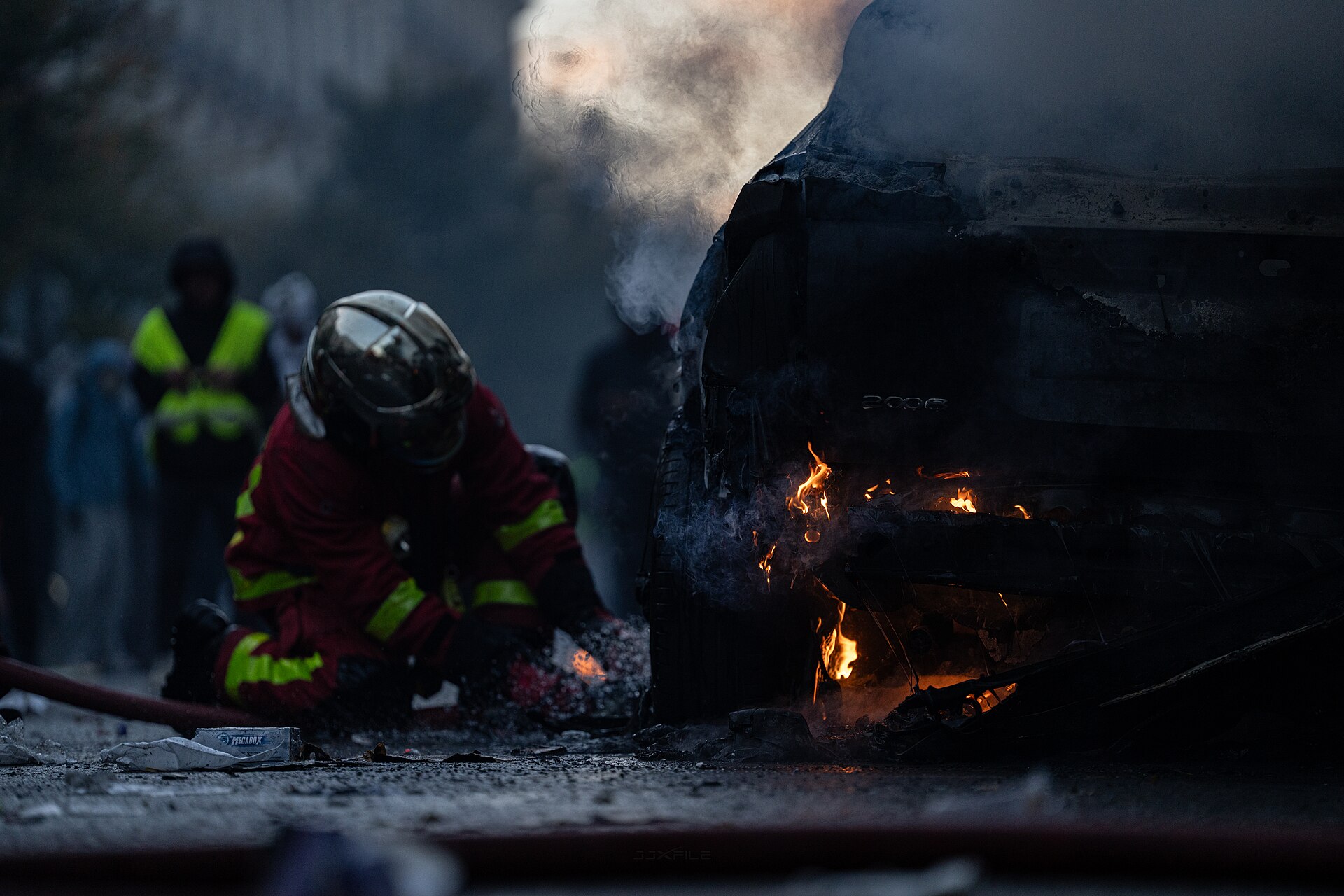
France will deploy 20% more security forces on Saturday, 24 October, than on 17 October, as President Emmanuel Macron warns that protests judged illegitimate will be banned. The 17 October unrest led to roughly 2,400 arrests and is part of why France is in crisis.
Unions have separately called a nationwide strike for Thursday, 5 November, over wages and pensions. Below we set out what is known, and what is not.
Key Facts
- Security: France will field 20% more security forces on Saturday, 24 October, than on 17 October.
- Rules: Macron says illegitimate protests will be banned; Paris has a night curfew in two zones.
- Arrests: About 2,400 by Tuesday, 20 October; 149 people were jailed at that point.
- Next strike: A nationwide strike is set for Thursday, 5 November, including rail.
- Prediction markets: Polymarket puts a French state of emergency by 31 October at 6.5%, Kalshi at 11% (22 October 2026, 11:35 pm ET (5:35 am in Paris)).
This story is part of our coverage of the why France is in crisis. Dates, times and how to follow it are in our guide.
In Plain English
- The unions: CFDT, CGT, FO, Unsa and FSU are France's main labour unions; UNEF is a student union.
- Yellow Vests: a protest movement that began in 2018 over fuel taxes.
- Sentinelle, GIGN, RAID: the army's street-patrol mission and two elite police units.
- Curfew: a ban on being outside at night, here only in specified areas.
Security Deployment Rises
Jean-Didier Berger, the minister delegate to the Interior Ministry, said France was at a 'maximum level of vigilance'. Leave has been cancelled, and military Sentinelle units, the GIGN and RAID have been deployed.
Student unions including UNEF have called on people to join Saturday's protests. Yellow Vest groups have announced a march in central Paris, and its route and authorisation were not confirmed as of 22 October.
Government Tightens Restrictions
Macron said on Thursday, 22 October, that protests viewed as illegitimate would be banned, and blamed 'seditious' ultra-left groups for the violence. A day earlier he had called comments by foreign leaders on the unrest 'unacceptable' and 'stupid'.
Prime Minister Sébastien Lecornu supports partial, localised curfews rather than a curfew over all of Paris. In Paris, a curfew from 11 p.m. to 6 a.m. covers two zones, around Place de la République and Les Halles, through Monday, 26 October.
Lyon imposed a 9 p.m. to 6 a.m. curfew in part of its centre earlier this week. Whether it applies on Saturday is not confirmed.
Justice Minister Gérald Darmanin has promised 'extremely firm' court responses to property crimes. By Tuesday, 20 October, authorities reported roughly 2,400 arrests, more than 800 people presented to prosecutors and 149 people jailed.
Unions Plan November Strike
The five main unions (CFDT, CGT, FO, Unsa and FSU) have called a nationwide strike and demonstrations for Thursday, 5 November 2026. They are demanding higher wages and pensions, and the call predates the 17 October riots.
The four SNCF rail unions have also called a stoppage that day. CGT Secretary-General Sophie Binet said after talks at Matignon, the prime minister's office, on 21 October that union demands had received 'no consideration whatsoever'.
The talks between Lecornu and union leaders produced no breakthrough. An earlier public-sector protest on 29 September drew about 170 demonstrations, with more than 300,000 people according to the CGT and 206,000 according to the Interior Ministry.
Background and Political Stakes
The unrest began with weeks of high-school protests over poor school conditions and staff shortages. It then merged with anger over household costs, fuel and public services.
The 17 October escalation was one of France's most serious episodes of urban unrest in years. The stakes are raised by the 2027 presidential election and a government budget plan with €54 billion (about US$60.6 billion at the RT rate of 1.122 on 22 October) in savings.
What Prediction Markets Say
- Polymarket: a French state of emergency by 31 October 6.5%, by 31 December 18.0% (about US$275,000 traded).
- Kalshi (regulated in the US by the CFTC): a state of emergency before 1 November 11%, before 1 January 2027 23%.
- Polymarket: France passes a national budget by 31 December 52.5% (about US$19,000 traded).
- Stand: 22 October 2026, 11:35 pm ET (5:35 am in Paris). These are bets, not polls.
Why we show this: prediction markets turn real-money bets into a live probability that moves within minutes of the news, which is why investors, campaigns and newsrooms in the United States now follow them closely. We show them next to polls and official results, never instead of them.
What It Means for US Readers
Travellers to Paris this weekend should expect protest bans and a night curfew in parts of the centre. Our guide to is it safe to travel to France is kept up to date.
Investors can follow the budget fight, because a failed budget would deepen the political crisis. Polymarket traders currently see slightly better than even odds that France passes one by year-end.
What Is Not Known
No reliable nationwide turnout forecast for 24 October has been published. Attendance figures for earlier protests remain disputed, with a wide gap between union and Interior Ministry estimates.
It is unclear how many of Saturday's gatherings will be authorised, rerouted or banned at the last minute. Start times depend on each city and union notice.
Frequently Asked Questions
What is happening in France on Saturday, 24 October?
Student unions and Yellow Vest groups plan protests, including a march proposed in central Paris. The government will field 20% more security forces than on 17 October and says illegitimate protests will be banned.
Why are French unions planning a strike on 5 November?
The five main unions want higher wages and pensions, and the call predates the 17 October riots. Rail unions have also called a stoppage that day.
How many people have been arrested in the recent unrest?
By Tuesday, 20 October, authorities reported roughly 2,400 arrests, more than 800 people presented to prosecutors and 149 people jailed. Justice Minister Gérald Darmanin has promised extremely firm court responses.
What do prediction markets say about France?
On 22 October (11:35 pm ET), Polymarket put a state of emergency by 31 October at 6.5% and Kalshi at 11%. These are bets, not polls.
Sources: Europe 1; ICI; Euronews; Al Jazeera; LCP; Sortiraparis; Connexion France; Orange Actualités; AP; Polymarket; Kalshi.
This article was produced by The Rio Times’ automated newsroom system. How we use AI · Report an error · Editorial responsibility: Matthias Camenzind, Editor-in-Chief
France in Turmoil
- Why France Is in Crisis, and How Macron Lost His Grip
- Why Is France Protesting? Riots, Curfews and the 2027 Race
- Is It Safe to Travel to France Right Now? Curfews, Strikes
- Who Will Win France’s 2027 Election? Polls and Odds