EU’s €150 Billion Defense Loan Proposal Exposes Deep Divisions
The European Commission’s ambitious proposal for a €150 billion ($158 billion) defense loan plan has underscored Europe’s struggle to unify its security strategy.
Presented by Commission President Ursula von der Leyen on Tuesday, the initiative aims to address decades of underinvestment in defense and reduce reliance on U.S. protection. However, resistance from key member states highlights the bloc’s fractured approach to collective security.
Von der Leyen’s plan, part of the broader €800 billion ($841 billion) “ReArm Europe” strategy, seeks to mobilize funds for joint procurement of air defense systems, drones, missiles, and other critical capabilities.
She described the current moment as “an era of rearmament,” emphasizing Europe’s need to act decisively following U.S. President Donald Trump’s suspension of military aid to Ukraine.
This move has left European nations scrambling to fill the void created by Washington’s retreat from its traditional role in continental security. Despite the urgency, the proposal faces significant opposition within the EU.
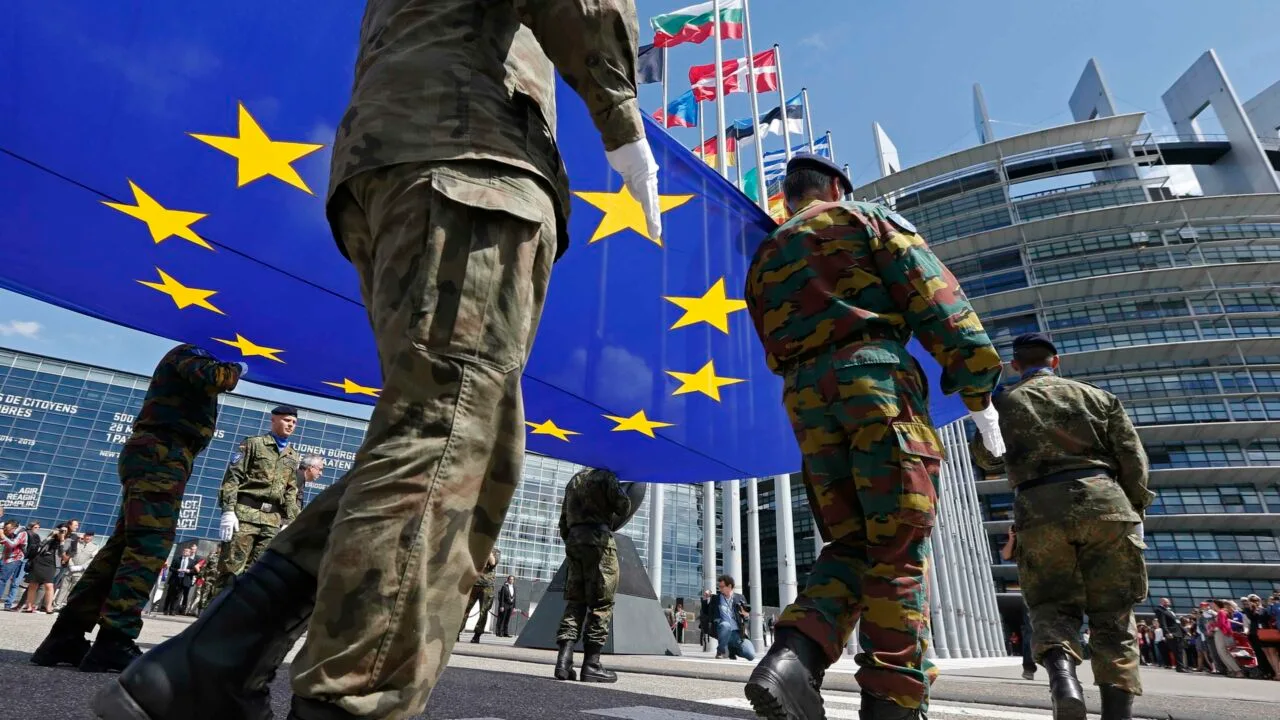
Germany and the Netherlands have rejected calls for joint borrowing to fund grants for defense projects, favoring loans instead. Meanwhile, fiscally constrained nations like Italy and France struggle to allocate resources for increased military spending.
Hungarian Prime Minister Viktor Orban has also signaled opposition, further complicating efforts to secure consensus among the 27 member states.
EU Defense Plan Faces Political Hurdles
The plan includes activating a fiscal escape clause under EU budget rules, allowing countries to spend an additional €650 billion ($683 billion) over four years without triggering penalties.
However, this mechanism relies on individual governments’ willingness and ability to increase defense budgets—something far from guaranteed given Europe’s economic disparities.
Von der Leyen framed the proposal as a “once-in-a-generation moment” for Europe to assume greater responsibility for its security. Yet, the divisions within the bloc reveal a deeper issue: Europe remains wealthy but politically fragmented, unable to act as a cohesive entity in times of crisis.
The upcoming emergency summit on Thursday will test whether EU leaders can overcome these differences and agree on a path forward. As Europe grapples with its internal disagreements, defense stocks have surged in anticipation of increased spending.
However, whether this proposal can translate into tangible progress remains uncertain, highlighting the continent’s vulnerability in an increasingly volatile global landscape.
This article was produced by The Rio Times’ automated newsroom system. How we use AI · Report an error · Editorial responsibility: Matthias Camenzind, Editor-in-Chief
Read More from The Rio Times