Trump Turns to Putin for Help in Navigating High-Stakes Negotiations with Iran
Russia has agreed to assist the United States in facilitating nuclear negotiations with Iran, a move that underscores Moscow’s growing influence in global diplomacy.
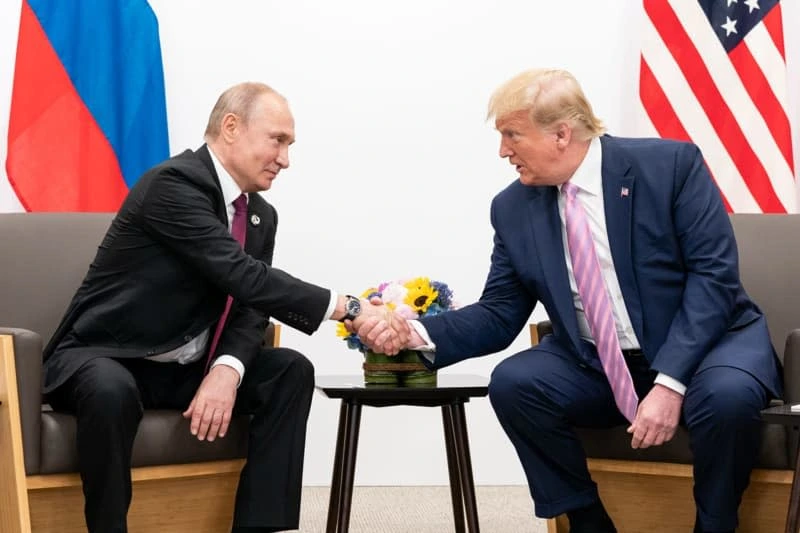
This decision follows a February 12 phone call between U.S. President Donald Trump and Russian President Vladimir Putin, during which Trump requested Russian involvement in mediating talks.
High-level discussions between American and Russian officials later took place on February 18 in Riyadh, Saudi Arabia, focusing on resolving disputes over Iran’s nuclear program and its support for regional anti-U.S. groups.
Kremlin spokesperson Dmitry Peskov confirmed Russia’s readiness to mediate, stating, “Russia believes the United States and Iran should resolve all problems through negotiations” and emphasizing Moscow’s commitment to facilitating dialogue.
Iranian Foreign Ministry spokesperson Esmaeil Baghaei also acknowledged the possibility of external assistance, calling it “natural” for countries to offer goodwill in addressing significant geopolitical challenges.
Trump’s administration has intensified pressure on Iran since his return to office, reinstating sanctions targeting Tehran’s oil exports and economic activities.
Diplomatic Tensions
Despite this, Trump has expressed interest in pursuing direct negotiations with Iran to secure a verified nuclear peace agreement. Supreme Leader Ayatollah Ali Khamenei remains firm in rejecting talks under pressure.
He cites deep mistrust of U.S. intentions following Trump’s withdrawal from the Joint Comprehensive Plan of Action (JCPOA) in 2018. Russia’s involvement adds complexity due to its strengthening ties with Iran amid Western sanctions.
Moscow has expanded military cooperation with Tehran and utilized Iranian drones in Ukraine. In January 2025, Iranian President Masoud Pezeshkian signed a 20-year strategic partnership agreement with Putin during his visit to Moscow, further solidifying their alliance.
The urgency of negotiations is underscored by recent reports from the International Atomic Energy Agency (IAEA), which revealed that Iran’s stockpile of 60% enriched uranium has grown by over 50% since December 2024.
This level of enrichment exceeds civilian requirements and approaches weapons-grade material, raising international concerns. While Russia’s mediation offers a potential diplomatic pathway, skepticism remains regarding Tehran’s willingness to engage with U.S.-led efforts channeled through Moscow.
The success of these talks ultimately depends on whether all parties can overcome entrenched mistrust and commit to meaningful dialogue aimed at de-escalation and resolution.
This article was produced by The Rio Times’ automated newsroom system. How we use AI · Report an error
Read More from The Rio Times