Europe Intelligence Brief — Tuesday, November 24, 2026
Executive Summary
Europe Intelligence Brief for November 24: Russian strikes hit Kyiv region, EU proposes 22nd sanctions package, Spain votes November 29.
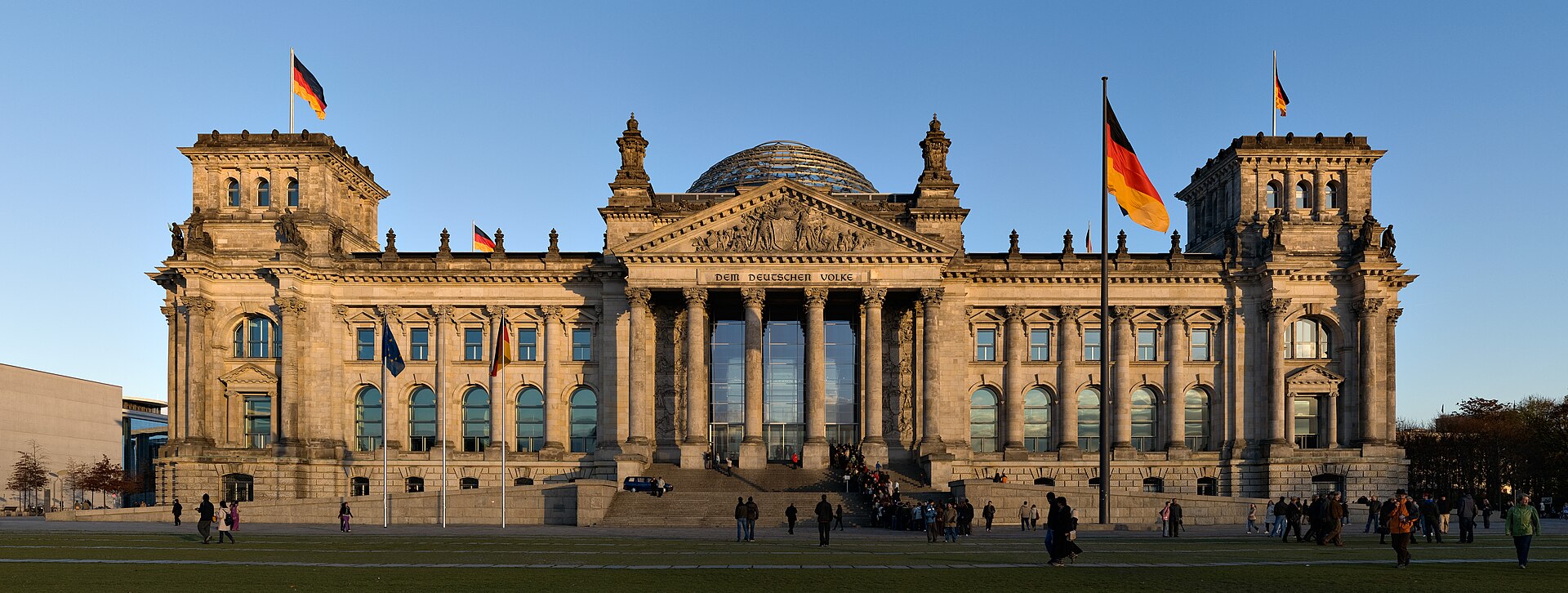
Europe starts Tuesday in a defiant but anxious temper, arguing about its own security while the war and the diplomacy run side by side, as Euronews coverage on 23 and 24 November shows. The nerves are not only about Moscow, because strikes, stalled budgets and crowded migrant shelters follow leaders home.
Leaders speak in the language of lessons and warnings, and on 23 November, Chancellor Friedrich Merz called the 2008 refusal to admit Ukraine to NATO a mistake. Institutions sound weary, with observers noting on 24 November that the arithmetic of the EU budget looks increasingly impossible.
The through-line is that Europe is being asked to harden its defences and pay for them while the argument over who sits at the table is still open. Each capital answers in its own register, with a sanctions package, a cautious visit, a ballot or a street march.
Key Facts
Belgium. Thousands marched against austerity in Brussels on 23 November; the 2027 budget is stalled.
Brussels. The European Commission proposed a 22nd sanctions package against Russia on 24 November.
Hungary. Prime Minister Péter Magyar met Volodymyr Zelenskyy in Ukraine on 24 November.
Spain. Voters go to the polls on 29 November; the latest polls put the PP ahead.
Canary Islands. More than 10,000 migrants have arrived, a record for November.
Brussels And Berlin: Warnings Everywhere
Merz’s remark reads as an argument about the future as much as the past, since on 23 November, Commission President Ursula von der Leyen and US envoy Jared Kushner clashed that same day over when European security architecture enters the peace talks. The quarrel shows a Europe that wants its seat before the terms are set, not after.
The alarm reaches the northern flank too, where on 23 November, Finland summoned the Russian ambassador over a suspected helicopter airspace violation and what Helsinki called dangerous and reckless actions. Together with the hybrid-threat warnings from EU military chief Gen. Seán Clancy and from NATO, both reported on 23 November, a US reader should see pressure that stays just below open war.
Kyiv: Nights Of Waiting
Ukraine hears talk of peace while the strikes go on, and on 23 November, the toll from Sunday’s Russian attack on Dymer, in the Kyiv region, rose to 11 after a woman was pulled from rubble after 22 hours. An earlier report that day spoke of at least 15 dead across the region, and the difference was not explained.
Ukrainian military intelligence says Russia now uses a jet-powered Geran-5 drone, a claim was relayed on 23 November alongside the German-Ukrainian firm Quantum Systems saying its interceptor shot one down. Ukraine’s sanctions envoy told journalists on 24 November that he is disappointed Irish-made alumina was left out of the new package, a sign that Kyiv wants economic pressure to bite as hard as the military kind.
Budapest: A Cautious New Tone
The trip marks a sharp break with the Orbán era, yet Budapest blames Russia for the conflict while ruling out weapons or troops. It reads as a change of tone more than of substance, a way to win room in Brussels without alarming voters at home.
On 23 november, Magyar called the EU budget proposal not an acceptable basis for talks, as the Visegrád Four voiced their own concerns. The lesson for Americans is that a friendlier Hungary will still bargain hard over money, which keeps the 2028 to 2034 budget fight alive.
Madrid: Tired Before The Vote
With days to go, on 24 November, housing, immigration and polarisation top voters’ worries. Experts told journalists on 23 November that the vote must be shielded from hybrid threats and disinformation, a sign that even a domestic ballot now carries a security question.
On El Hierro, the reception system is at capacity with about 900 migrants, which turns an abstract debate into a daily scene. Whichever bloc wins will inherit a country where fatigue is as strong as ideology, and Washington should expect Madrid’s tone on migration and on Europe to be tested quickly.
Belgium And Germany: Anger At Home
The Brussels march turned violent, with witnesses describing tear gas and water cannon after clashes on 23 November. Prime Minister Bart De Wever offered his resignation on 2 November and the king refused it, officials noted, so a government that survived once now depends on a budget that is going nowhere.
In Germany, on 23 November, IG Metall called over 23,000 workers at 19 northern sites out on 24-hour strikes at Mercedes and BMW, widening a pay dispute. A country asked to rearm is also asked to share the cost fairly, and the dispute is an early test of whether workers accept that bargain.
What This Means From Latin America
Iran has ordered the Strait of Hormuz closed further day by day and says three tankers hit mines, a Revolutionary Guards claim that maritime monitors have not confirmed. Producers in Brazil, Mexico and Argentina would gain from dearer crude while importers across the region would pay more for fuel, so Qatar’s effort to revive US and Iran talks is watched closely in Latin American capitals.
Spain’s vote matters to its Latin American diaspora and trade ties, and the EU’s defence-related trade investigation into Chinese imports, reported on 23 November, may redirect supply chains toward the Americas. In Ecuador, on 24 November, severe flooding in the Galápagos Islands has forced evacuations by boat amid El Niño concerns, a reminder that climate shocks reach the region even as the COP31 talks in Antalya collapsed without a deal.
What We Are Watching
- Tuesday, 24 November, 9:00 a.m. ET: Belgium business confidence: The November reading has no forecast, and the previous value was -9.8. It shows whether firms share the street’s gloom over the stalled budget.
- Wednesday, 25 November, 2:45 a.m. ET: France consumer confidence: The November forecast is 82, against a previous 80. It shows whether French households are regaining some calm.
- Thursday, 26 November, 2:00 a.m. ET: Germany GfK consumer confidence: The December forecast is -29.9, after -30.8 before. It shows whether German households are growing less gloomy as the pay strikes spread.
- Friday, 27 November, 3:55 a.m. ET: Germany unemployment rate: The November forecast is 6.4, the same as the previous 6.4. It shows whether the labour market is holding steady under the industrial dispute.
- Sunday, 29 November: Spain votes: Spaniards choose a government after the final published polls. It decides who handles housing, migration and Madrid’s line on Europe.
- Tuesday, 1 December: Estonia closes its road crossings with Russia: The closure begins on this date, according to reports on 20 and 21 November. It shows how far front-line states will go in answer to hybrid pressure.
Frequently Asked Questions
What is the EU proposing against Russia?
The European Commission proposed a 22nd sanctions package on 24 November, targeting banks, crypto, the shadow fleet, refineries, soldiers and athletes. It needs approval from member states, whose talks are expected in the coming days.
Why did Merz bring up 2008?
On 23 November Merz said it was a mistake not to admit Ukraine into NATO in 2008. He said the invasion likely would not have happened had Kyiv been admitted at Bucharest.
When is Spain’s general election?
Spain holds its general election on Sunday 29 November. The latest published polls, before the ban on publication after 23 November, put the PP ahead with Vox third.
What did Hungary’s Péter Magyar do in Ukraine?
On 24 november, Prime Minister Péter Magyar met Volodymyr Zelenskyy in Ukraine. Budapest blames Russia for the conflict but rules out sending weapons or troops.
This article was produced by The Rio Times’ automated AI newsroom. Editorial responsibility: Matthias Camenzind, Publisher and Editor-in-Chief. The Rio Times also runs Ask Rio Times, which answers from 100,000+ of our own articles, the daily Latin America Power Map, and prediction-market odds on elections and markets.. How we use AI · Report an error
LatAm Markets: Live Signals → — real-time movers, turnover leaders and FX across Latin America.
Read More from The Rio Times