US Military Staff Can Now Enter Ecuador Without a Visa or Permit
Ecuador · DEFENCE
Key Facts
- —What happened Ecuador now lets US military personnel and defense contractors enter without a visa or special permit.
- —How big a jump The rule replaces 2024 guidance that required extra authorisation steps for those visitors.
- —The real story It is a ministerial order implementing a 2023 status-of-forces pact, not a new law.
- —The catch Covered personnel can stay up to 180 days a year, but the time is non-renewable.
- —Who it touches Only US personnel under the defense deal; ordinary US tourists and residents are unaffected.
- —What comes next The National Assembly may challenge the order, and troop numbers could stay unpublished.
A short ministerial order, published quietly in the official gazette, changes who can walk into Ecuador and on what terms.
Ecuador will let US military personnel, Defense Department civilians and contractors enter without a visa or special permit. It appeared in the Registro Oficial on 18 August 2026.
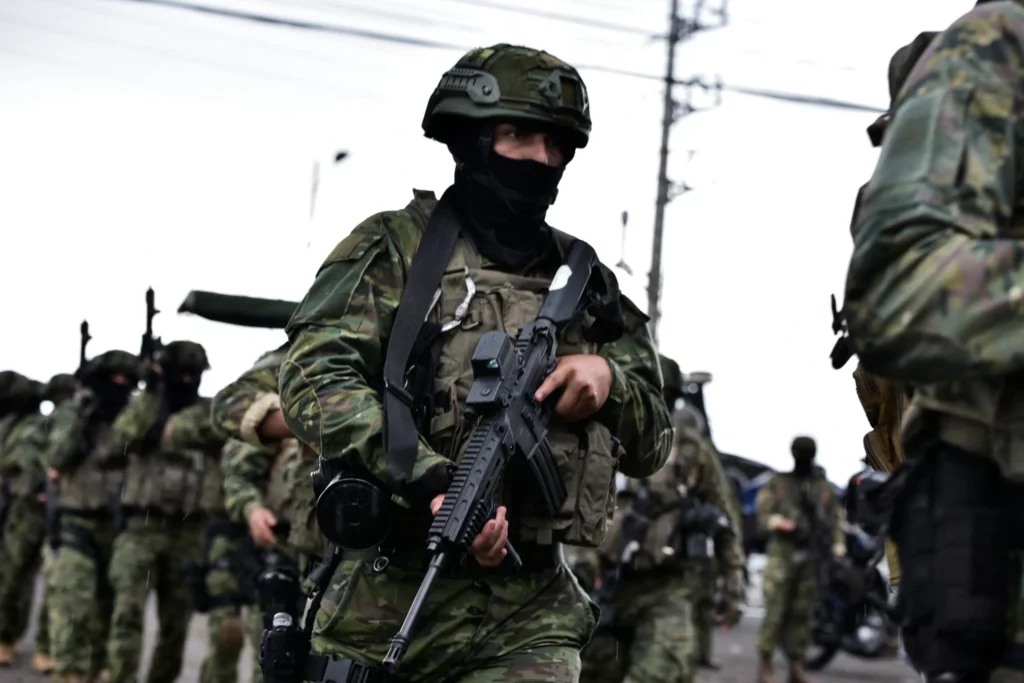
What the Rule Does
The agreement regulates the temporary entry and stay of US military personnel, civilian employees of the Department of Defense and contractors.
It replaces guidance issued in 2024 that had required additional authorisation steps. Those special permits are gone.
In their place is a dedicated migration register, recorded with the purpose of travel marked as SOFA.
Under that mechanism, covered US personnel need no Ecuadorian visa and no ad hoc permit. It applies to activities under the agreement.
This is why the change has been described as entry without special permits.
The Legal Instrument Matters
This is an acuerdo ministerial, a ministerial agreement. It is not a law passed by the National Assembly and not a presidential decree.
It was issued by the Interior Ministry as an implementing measure for an existing bilateral Status of Forces Agreement.
That underlying pact was signed in 2023 and ratified in 2024. The new order tells officials how to apply it at the border.
The distinction is practical. A ministerial agreement can be amended or withdrawn by the same ministry without going back to Congress.
How Long They Can Stay
Covered personnel may remain in Ecuador for up to 180 days per calendar year. The allowance is non-renewable.
Multiple entries are permitted within that limit. The days accumulate against the annual total rather than resetting on each arrival.
Non-renewable means the 180 days cannot be extended once used. It does not mean a single visit.
The number of people covered is not capped in the agreement, or at least is not published. This is a time rule, not a headcount.
What They Have to Show
US personnel must show either a valid passport or an official US government identification. That alone is not enough.
They must also carry a collective movement order or an individual travel order issued by the US Department of Defense.
Migration control is handled through the special register. The order states explicitly that this register is not a visa and does not create a new migration category.
In other words, it is an operational channel rather than a new immigration status.
The Immunity Question
Covered US personnel get privileges, exemptions and immunities equivalent to the administrative and technical staff of a diplomatic mission.
That standard comes from the 1961 Vienna Convention. It is narrower than full diplomatic immunity but still substantial.
While they hold regular status, they are not subject to migration-related sanctions or administrative measures in Ecuador.
This is the part of such agreements that usually generates domestic argument, in Ecuador as elsewhere.
Why Ecuador Is Doing This
Ecuador has been fighting an organised crime problem that overwhelmed its police and prisons. Cooperation with the United States is central to the government’s answer.
Removing paperwork friction for visiting US personnel is a small, concrete step in that direction. It costs nothing and signals alignment.
It follows a broader reversal. Ecuador’s 2008 constitution barred foreign military bases, and that provision has been the subject of political fights ever since.
This agreement does not create a base. It regulates visits.
What It Does Not Change
Nothing here affects ordinary US citizens visiting Ecuador, only US personnel under the defence pact. Tourists remain under the normal visa-free arrangement.
It does not change residency, investment or property rules for foreigners. Those sit under entirely different law.
It does not authorise operations by US personnel. Whether US personnel do anything in Ecuador depends on separate agreements and on Ecuadorian consent.
Read narrowly, this is a border procedure document.
If you are a US citizen living in Ecuador on a residency visa, this order has no bearing on your status.
What to Watch
The first thing is whether the National Assembly challenges the instrument. A ministerial agreement implementing a ratified treaty is on firmer ground than a standalone order, but the politics are live.
The second is any constitutional challenge on the foreign forces question. Ecuador has litigated that before.
The third is whether numbers of US personnel in Ecuador are ever published. At present nothing requires them to be.
We will report the text if the full agreement is posted publicly.
The agreement sits inside a bilateral pact that Ecuador’s own constitution once made difficult. That tension has not gone away.
For most residents and visitors, nothing about daily life changes.
More: Ecuador news in English, every day from The Rio Times.
Frequently Asked Questions
Who does this cover?
US military personnel, civilian employees of the Department of Defense and contractors, working under the bilateral Status of Forces Agreement.
How long can they stay?
Up to 180 days per calendar year, non-renewable, with multiple entries allowed inside that total.
Do they need a visa?
No. They are recorded on a special migration register instead. The order says that register is not a visa and creates no new migration category.
Does this affect American tourists?
No. Ordinary US visitors remain under the normal visa-free arrangement, and residency and investment rules are unchanged.
Is this a new US base?
No. The agreement regulates temporary entry and stay. It does not establish a base or authorise operations.
Sources
Related: Ecuador Residency Visas: Guide for Expats
This article was produced by The Rio Times’ automated newsroom system. How we use AI · Report an error · Editorial responsibility: Matthias Camenzind, Editor-in-Chief