Colombia Opens Mega-Prison for 1,722 Inmates
Colombia’s new president has opened a 1,722-place prison in La Guajira and used the ceremony to promise a hunt for the phones that let inmates run crime from inside.
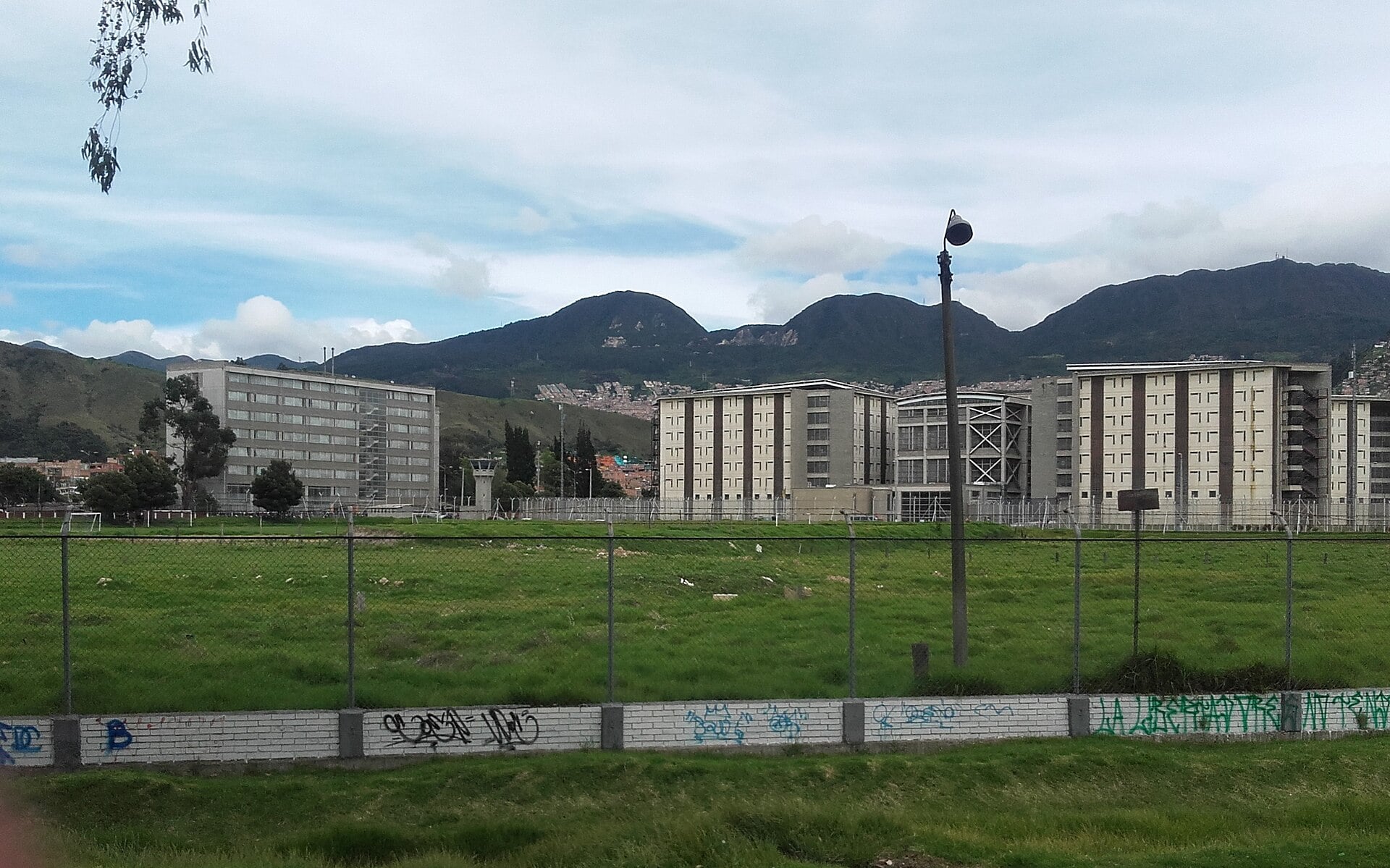
Security: Colombia
On Wednesday 25 November 2026, Colombian President Abelardo de la Espriella opened a new prison in Riohacha, in the northern department of La Guajira, built for 1,722 inmates. The presidency calls it the first large-scale prison the government has delivered since 2011.
At the ceremony he ordered an investigation into how mobile phones reach inmates, saying criminals still run extortion from behind bars. Reported costs range from about US$89 million to about US$104 million.
Key Facts
- Who. President Abelardo de la Espriella opened the new national prison in Riohacha, La Guajira.
- What. It has 1,722 places in eight pavilions and 476 cells on about 36,000 square metres.
- Cost. COP 308 to 363 billion Colombian pesos (about US$89 million to US$104 million), by source.
- Next. The government says it will also finish the prisons at Sabanas de San Ángel and elsewhere.
- As of. 28 November 2026, 03:10 GMT.
Colombia’s new president has opened a 1,722-place prison in La Guajira and used the ceremony to promise a hunt for the phones that let inmates run crime from inside.
The complex is formally called an Establishment of National Prison Order, or ERON in Spanish, and INPEC, the national penitentiary institute, will run it. Seven of its eight pavilions are for men and one is for women, with 1,308 places for men, 152 for women and 218 for ethnic-minority inmates, mainly Wayuu, plus 44 for kitchen workers and a child-development unit.
The city’s existing prison is more than 260% over capacity, according to reported figures. That crowding is why the new building became a political priority.
The complex has areas of maximum security and space for health care, visits, court hearings and training. It also has a space for the Wayuu, the Indigenous people of La Guajira.
Work began in 2020 or 2021, depending on the report, and the opening had been planned for June. The reported cost is COP 307.97 billion for the project and about COP 363 billion including oversight, which converts to roughly US$89 million and US$104 million at COP 3,476 per US dollar.
Justice Minister Iván Cancino told the Senate on 17 November that the government will finish the prisons at Riohacha and Sabanas de San Ángel in Magdalena department. The presidency presents the new complex as part of a wider push on security.
De la Espriella proposed in March 2026, as a candidate, to build ten mega-prisons through concessions and to abolish INPEC. Riohacha was started before he took office, so it is not one of those ten.
The president spent most of his speech on phones. “Prisons cannot become centres of operations from which crimes keep being committed,” he said.
“I have also ordered an investigation into how [the phones] reach the inmates,” he added, addressing INPEC, the prison-construction agency USPEC (Unidad de Servicios Penitenciarios y Carcelarios) and prison staff. He warned that anyone found helping criminal networks would answer to the courts.
Colombia’s prisons were already under pressure before the opening. In a Senate debate on 17 November, Senator Gustavo Moreno of the Alianza Social Independiente (ASI) party put the system at about 100,000 inmates for about 80,000 places, according to Colombian press reports of the debate.
On that estimate the gap is about 20,000 places, so a prison of 1,722 places covers less than a tenth of it. The new complex helps Riohacha, but it does not by itself relieve a national system that is crowded by roughly a quarter.
A second complex, Renacer in the Sabanas de San Ángel area of Magdalena department, is planned for 1,974 inmates and was 86% built at the end of September. It is not yet known when the first inmates will be transferred to Riohacha, or how many staff the prison will have.
For readers abroad, the opening matters because Colombia’s government is tying its security policy to prisons, and extortion run by phone from prisons is a concern for businesses with staff in Colombia. The next steps to watch are the first transfers to Riohacha and progress at Renacer.
Frequently Asked Questions
When did the Riohacha prison open?
President Abelardo de la Espriella opened it on Wednesday 25 November 2026. The presidency calls it the first large-scale prison delivered since 2011.
Why did the president talk about phones?
He said inmates use phones to run extortion, threats and killings from inside. He ordered an investigation into how the phones get in.
Sources
Published Saturday 28 November 2026 · Source: opening ceremony of 25 November 2026; Colombian presidency and Ministry of Justice statements; Senate debate of 17 November 2026; exchange rate 27 November 2026; Presidencia de la República · Ministerio de Justicia · Senado de la República
Connected Coverage
This article was produced by The Rio Times’ automated AI newsroom. Editorial responsibility: Matthias Camenzind, Publisher and Editor-in-Chief. The Rio Times also runs Ask Rio Times, which answers from 100,000+ of our own articles, the daily Latin America Power Map, and prediction-market odds on elections and markets.. How we use AI · Report an error