Brazil’s Northeastern Soccer Clubs Balance Accounts Better Than Wealthier Teams

RIO DE JANEIRO, BRAZIL – Fortaleza and Bahia were the two best northeastern teams in the 2019 Brazilian championship. Both qualified for the South American Cup and finished ahead of Vasco, Atletico Mineiro, Fluminense, Botafogo, and Cruzeiro, teams from the Southeast that are historically more traditional than those from the Northeast.
The reversal of the traditional hierarchy of national football is continued in the new season: while the so-called major clubs need to save and sell players to balance the books, the Northeasterners persuade players to counter the most common exodus with new structures and financial thresholds.
The reality is a consequence of the planning of Fortaleza, Bahia, and Ceará (the other northeastern team that remained in the elite, although it came in 16th place) that, despite lower turnover, are putting an end to the untouchable prestige of Brazil’s top teams.
The economic position of the clubs is comparable through the budgets disclosed by the teams themselves. Between the year’s end and beginning, the boards published the budget forecasts for 2020, which consider how much they will spend, among salaries, expenses and investments, and how much they will collect, among negotiations, television proceeds, sports awards, and ticket sales.
“These projections used to be bizarre pieces of fiction because they didn’t reflect reality, imagining uncertain sales and unlikely results to close the budget,” says Fernando Ferreira, a sports management specialist at Pluri Consultancy. “But this year I sensed a greater concern with finances. The clubs are more realistic with their expenses and conservative with their returns, as they should be, particularly the impressive administrations in Fortaleza, Bahia, and Ceará”.
Among the praised plans, the one with the highest turnover is Bahia. President Guilherme Bellintani’s administration projects revenues of R$179 million (US$45 million) for the 2020 season, with a payroll of approximately R$3.5 million monthly.
Adding the expenses with the soccer department, debts, and administrative costs, the spending should reach the same R$179 million and, therefore, Bahia does not expect a surplus in 2020 – which, according to Ferreira, is still commendable. “Guilherme [Bellintani]’s management is excellent because it doesn’t cause any losses,” he says.

Bellintani adds: “We doubled our turnover in two years, but the large indebtedness left over from previous administrations is what still restrains this surplus”. The early and surprising elimination of the Bahian team in the Brazil Cup to River do Piauí in the first round ruined part of Bellintani’s plans, as the president hoped to raise at least four million more according to their performance in the national championship.
Nevertheless, Bahia is more popular than Ceará and Fortaleza, two-time Brazilian champions and, according to Ferreira, the northeastern club with the greatest potential to leverage revenue. The Bahian team was the one that collected the most with tickets in 2019 in the Northeast and, in recent years, made some of the most relevant sales in the region, such as Zé Rafael to Palmeiras, Jean to São Paulo, and Rodrigo Becão and Júnior Brumado abroad.
The negotiations went in the opposite direction from last year when Bahia bought defender Juninho from Palmeiras and Fernandão, who was in Saudi Arabia. In 2020, he brought in Corinthians‘ star striker Clayson; borrowed Internacional’s defender Zeca; bought Cruzeiro’s midfielder Rodriguinho; and persuaded the desired Rossi to swap Vasco for Salvador.
Rossi was in the sights of Atlético Mineiro and Fluminense, but chose Bahia, according to him, for its structure and “very ambitious project”. Vasco also wanted to renew with the striker, but there was no agreement due to “unkept promises”, in Rossi’s words, by the Rio de Janeiro club.
The Vasco club, which had accumulated a loss of R$14 million in the second half of last year, when it had salary spending of R$3.3 million per month (counting only workers’ record book), does not own a training facility, while Bahia offers Rossi a new one. “We invested R$35 million in the training facility over the last three years, which also made the club take that leap,” says President Guilherme Bellintani.
The duo from Ceará do not profit as much as Bahia, but they stand out for other reasons. Fortaleza was a sporting success guided by manager Rogerio Ceni: the team was the best northeasterner in the Brazilian championship and champion of the Northeast Cup. About to play its first international competition, the South American, the institution should raise R$109 million in 2020 – the largest budget in its history, which enabled the club to buy the young midfielder David from Cruzeiro in January.
Ceará struggled with relegation until the end of the Brasileirão 2019, but they have reaped financial rewards for their austerity: management projects a turnover of more than R$100 million and a surplus of nearly R$8 million for the season, the largest in the Northeast. The figures have opened up a margin on the payroll to bring in two established players in the country, Fernando Prass and Rafael Sobis, who were at Palmeiras and Inter respectively. The figures were compiled by Pernambuco journalist Cassio Zirpoli.
“The northeastern trio is an example of the new generation of managers who are concerned with management,” confirms Fernando Ferreira. Bellintani also praises his opponents and says the difference would be even greater with more balanced TV revenues.
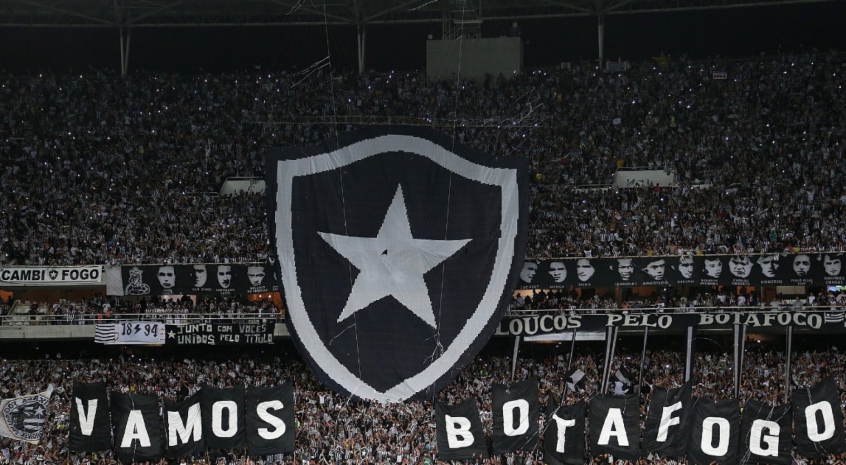
While Botafogo, ranked 15th in the Brasileirão, expects to earn around R$100 million from games broadcast by Rede Globo and its affiliates in 2020, Fortaleza, which came in ninth place, expects just over R$40 million in TV revenues. The gap follows the broadcaster’s rule: they favor Botafogo broadcasts for the sheer number of fans, and consequently, the team ends up getting more for it.
Botafogo has a higher turnover than the three northeasterners, but it accumulates more than R$700 million in debt, just like Fluminense. Cruzeiro will have its turnover reduced four times this year with the relegation and accumulated liabilities. According to their own projections, Internacional, Corinthians, and São Paulo also plan to end the season with a financial deficit despite revenues of around R$400 million, unless some unexpected income arises. These are examples of wealthier management, but with worse administrations than competitors in the Northeast.
“The Northeasterners are challenging the hierarchy of Brazilian soccer to which we are familiar,” Ferreira says. “They mainly threaten Vasco, Botafogo, and Fluminense. The former can still be saved by the size of their fans, but the latter two are in the limelight,” he concludes.
The recent numbers of other São Paulo, Rio Grande do Sul, and Minas Gerais clubs are bad, but not enough to concern as much as the Rio trio, in the expert’s opinion. “They [the trio] have been conducting bad management for decades. When you start losing relevance and the fans stop engaging, it’s an irreversible downfall”.
Guilherme Bellintani agrees: “The geopolitics of Brazilian soccer is changing and that’s something clear and historical, but still very small. Only Athletico Paranaense has overtaken some of the top 12,” he recalls. The most successful stage in the reconstruction of Bahia, which began in 2014, closes at the end of 2020 with the completion of Bellintani’s administration.
The president is confident of the positive work, regardless of his successor, for the club’s democratic process, where its more than 40,000 members select the president. “Democracy goes hand in hand with good management. Since I have thousands of people watching me, my obligations are more serious and effective. We have built a management culture and that is bigger than any president,” he says.
Source: El País
This article was produced by The Rio Times’ automated AI newsroom. Editorial responsibility: Matthias Camenzind, Publisher and Editor-in-Chief. The Rio Times also runs Ask Rio Times, which answers from 100,000+ of our own articles, the daily Latin America Power Map, and prediction-market odds on elections and markets.. How we use AI · Report an error
Read More from The Rio Times