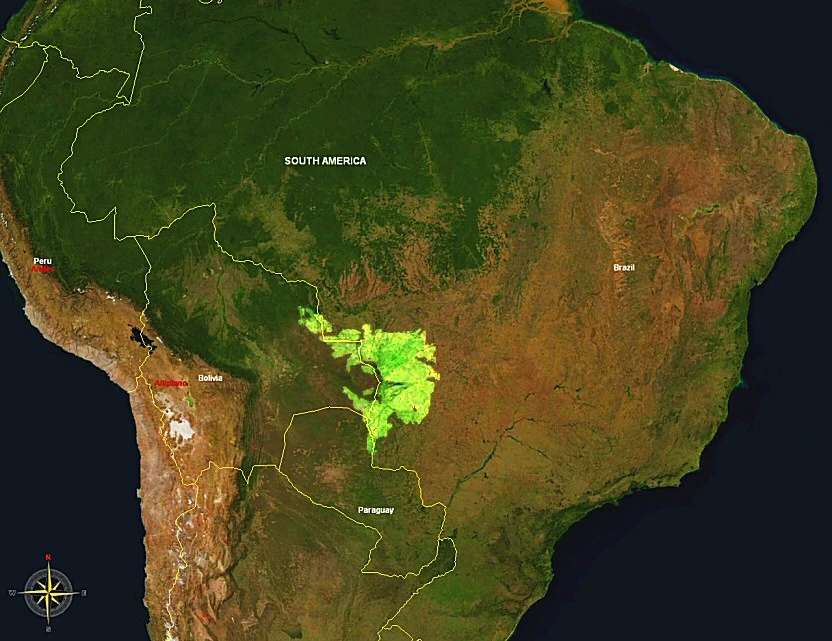
In a new development, Brazil unites to protect the Pantanal, the world’s largest tropical wetland and one of the country’s natural treasures.
Entrepreneurs, farmers, and NGOs lead the charge against threats like illegal logging and agriculture.
They’re pushing for preservation with new laws, land purchases, and advanced monitoring technologies.
The Pantanal Law, a significant milestone, has been ratified. It sets up a sustainable development fund, limiting harmful plantations and constructions.
Diverse ministers supported its inception, reflecting widespread commitment.
Governor Riedel, environmentalists, and rural producers played a pivotal role in crafting this legislation.
Roberto Klabin and Alexandre Bossi, environmental advocates, stressed the importance of these collaborative efforts.
The Pantanal Climate Fund is a crucial element of the law, financially rewarding those who conserve native forests.
This fund encourages preservation and is overseen by a mixed committee of government and civil society members.
Additionally, the 5P Alliance, a group of agricultural properties, is creating a conservation corridor.
They’re committed to sustainable practices and are exploring ecotourism and emission credits as new conservation strategies.
In response to devastating wildfires, the Pantanal Brigades were formed. These private rural teams are crucial in early fire management, aided by an innovative early warning system.
Finally, “Faria-Lima farmers” are bringing new ideas and financial independence to the region.
They’re combining conservation with economic viability, recognizing the Pantanal’s worth beyond its biodiversity.
Together, these initiatives form a strong front dedicated to preserving the Pantanal’s unique ecosystem and biodiversity.
This article was produced by The Rio Times’ automated newsroom system. How we use AI · Report an error
Read More from The Rio Times