Brazil’s Managers Are 31% Black or Brown
Black and brown Brazilians are most of the workforce but a minority of its managers. A new official study shows the top of the pay ladder opening slowly.

Brief: Brazil Society
Black and brown Brazilians make up 55.1% of the country’s employed people but hold only 30.7% of its managerial jobs, according to an official release published on Wednesday 18 November 2026. IBGE, Brazil’s national statistics agency, issued the 2025 figures in the week of Black Awareness Day, a national holiday on 20 November.
For US companies and investors with Brazilian payrolls, the release is a rare national count of who actually reaches management. It also shows the gap closing slowly at the top of the pay scale while violence and unemployment fall hardest on the same groups.
Key Facts
- Who. IBGE, Brazil’s national statistics agency, published the study. It uses 2025 data from its household labour survey.
- What. Black and brown people hold 30.7% of managerial jobs. They are 55.1% of all employed people.
- Top jobs. Black and brown people hold 19.6% of the best-paid management posts. In 2021 they held 14.6%.
- Power Index. Brazil ranks 1st of 14 in The Rio Times Latin America Power Index, with 74.2 points (November 2026 edition).
- As of. 22 November 2026, 18:00 GMT.
Black and brown Brazilians are most of the workforce but a minority of its managers. A new official study shows the top of the pay ladder opening slowly.
IBGE counts Black (preta) and brown (parda, or mixed-race) Brazilians together as the Black population, following Brazil’s Racial Equality Statute, a 2010 federal law. The 2025 figures come from its PNAD Contínua, the continuous household survey that also covers informal work.
IBGE’s previous edition, released on 11 November 2022 with 2021 data, found that white people held 69.0% of managerial jobs and 84.4% of the best-paid ones. In 2025 those shares were 67.4% and 78.3%, while Black and brown people moved from 14.6% to 19.6% of the best-paid group.
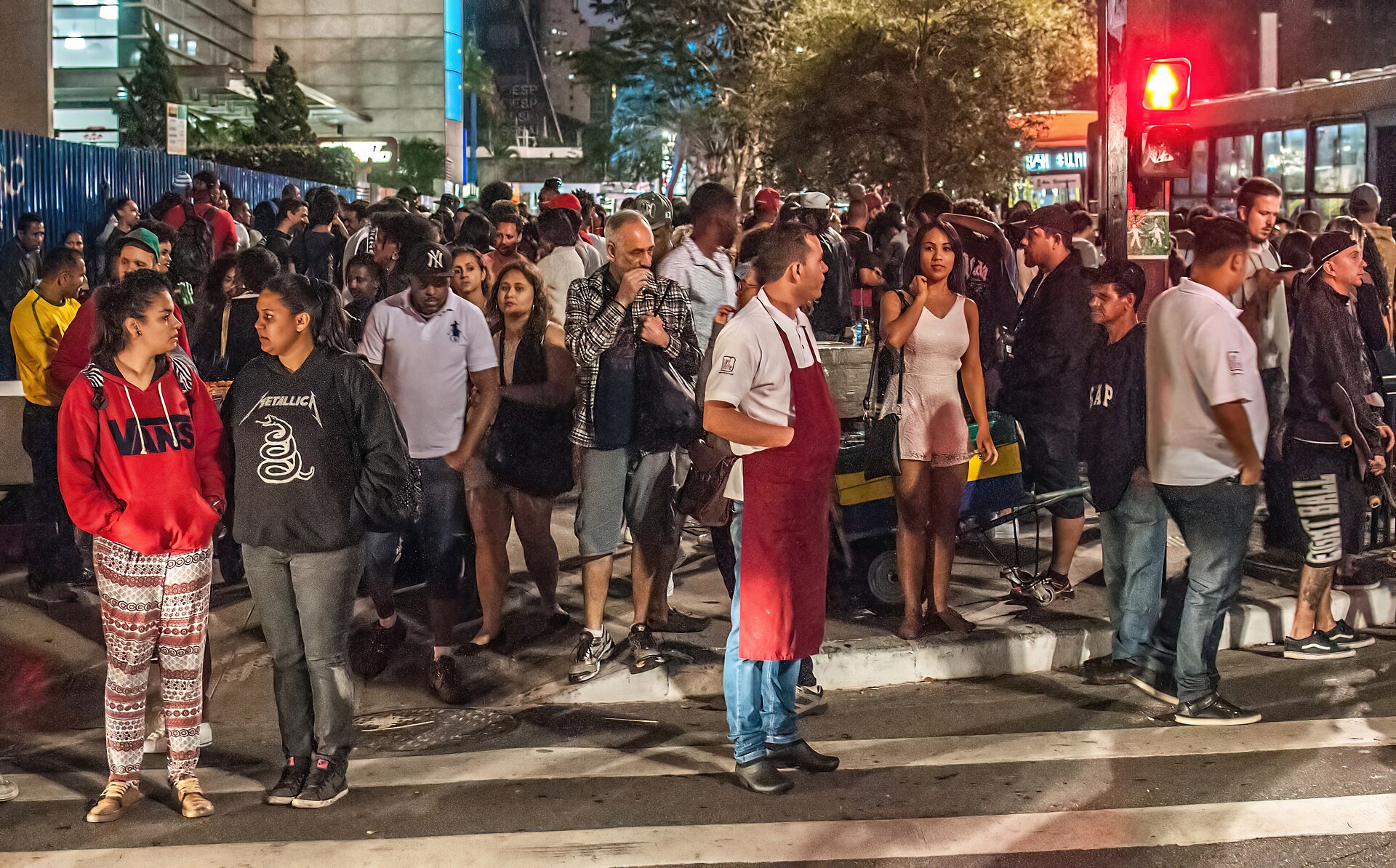
Pay shows the same split. In 2025 white workers earned about R$27 (US$4.55) an hour, Black workers R$16 (US$2.70) and brown workers R$17 (US$2.90), at R$5.93 to the dollar, the market close on 19 November.
The gap persists among graduates. White men with a university degree earned about R$55 (US$9.30) an hour, while Black and brown women with a degree earned about R$29 (US$4.90), or 52.7% as much.
IBGE’s technicians named “segregação e discriminação”, segregation and discrimination, as the forces behind the disparities, said Leonardo Athias, IBGE’s manager of social indicators, on 18 November. Segregation, the study says, channels Black and brown workers into fields of study and occupations that pay less, while discrimination raises barriers to promotion within the same jobs.
For companies with Brazilian payrolls, the release offers a national yardstick: a management team that is 30% Black or brown matches the average, not an outlier. It also shows that four years moved the best-paid Black and brown share by only five percentage points.
Frequently Asked Questions
What does IBGE mean by Black in this study?
IBGE adds together people who identify as preta (Black) and parda (brown or mixed-race), following Brazil’s Racial Equality Statute. It reports white people separately.
Is the gap closing?
Slowly at the top of the pay scale, according to the comparison with the 2022 edition. Pay and schooling gaps remain, so the progress is real but partial.
Why does it matter for foreign companies?
It gives an official national benchmark for who reaches management in Brazil. Employers can set their own payroll against it.
Sources
Sources: IBGE, Desigualdades Sociais por Cor ou Raça no Brasil, 3rd edition (released 18 November 2026) and 2nd edition (11 November 2022) · IBGE publication page · IBGE news release · IBGE 2022 edition (PDF)
Connected Coverage
Brazil Long-Term Jobless Below 1 Million for First Time · Brazil Unemployment Falls to 5.2% in Third Quarter · Rio State Survey Finds 1 in 3 in Gang Areas · Latin America Power Map
This article was produced by The Rio Times’ automated AI newsroom. Editorial responsibility: Matthias Camenzind, Publisher and Editor-in-Chief. The Rio Times also runs Ask Rio Times, which answers from 100,000+ of our own articles, the daily Latin America Power Map, and prediction-market odds on elections and markets.. How we use AI · Report an error
Brazil runoff, Sunday, October 25: Brazil runoff start time and results schedule. Latest: Brazil runoff polls, Flávio 51%, Lula 49%.