Brazil: Paraná farmer sells sustainable soybean credits abroad
Pau Furado Farm, located in Teixeira Soares in the Campos Gerais region of Paraná State, has inaugurated a new way of selling soybean production.
Now, not only the harvested grain is sold, but also the sustainable credits of this crop. And this market is international.
Fabiano Gomes, one of the farm’s owners, which he keeps in partnership with brothers Luciano and Larissa, says that he sold the credits, by auction, to companies from Denmark and Germany, at the beginning of the year.

Gomes is a member of the Frísia Cooperative, which maintains a program focused on the sustainability of the properties and was responsible for the negotiation.
A total of 2,281 credits were sold.
Part of the credits was purchased by the Danish company, which paid US$2.50 each credit (equivalent to one ton of soybean), and the other part was bought by the German company for US$2.80 each credit.
“It was not for the value, which is not so significant, but for the satisfaction of contributing to sustainable agriculture, for the quality of life of our employees and our community, and for the environment,” declares the farmer, who has a degree in Agronomy.
According to him, the amount he received for the sale of the credits is equivalent to 7% of the total value of the soybean.
Remunerated by this differential, Gomes believes that, in a short time, the product cultivated sustainably will become a requirement.
“When this happens, those not producing adequately may be left out of the market,” he warns.
THE SUSTAINABLE SOYBEAN MARKET
The sustainable soybean market is new.
Those who buy these credits are companies that work with soybeans in some way, whether in industry or commerce.
They buy soybeans for processing or sale from different markets, and the soybeans they buy are not necessarily sustainably grown.
In return, they support producers who maintain good practices in producing “responsible soybean”, as they call it, by buying credits for this product.
The credits are made available on an international online platform and auctioned off.
In the case of Fabiano Gomes of Pau Furado Farm, they were made available on December 28 and sold two weeks later.
Selling sustainable soybean credits was possible because the farm conquered the international certification of the RTRS (Round Table on Responsible Soybean Association).
“To get this certification, the farm has been audited by international organizations that evaluate 108 requirements,” says Cid Sanches, external consultant in Brazil for the RTRS.
According to Sanches, among the audited issues are the following:
- labor relations,
- the employees’ quality of life,
- the use of protection equipment (PPE),
- the non-existence of conflicts with the communities surrounding the farm,
- good agricultural practices (such as direct planting, pest management, and the reduction in the use of pesticides), and the adequate disposal of residues,
- non-deforestation,
- and respect for all the country’s current laws, such as environmental and labor laws.
The consultant explains that having the certification brings benefits such as:
- international recognition,
- access to more demanding and conscious markets,
- easier access to credit from financial institutions,
- and special conditions in acquiring machinery, equipment, and inputs that some suppliers offer.
In addition, the producer does not risk being fined by the environmental or labor courts since he fully respects the legislation.
The RTRS is a non-profit association founded in 2016 in Zurich, Switzerland.
It operates practically worldwide, bringing together farmers, traders, industries, banks, commerce, and NGOs.
“It’s not the association that certifies farms; it’s international bodies. The RTRS is the guardian of responsible soybean,” compares Sanches.
According to him, there are about 300 certified farms in Brazil, most in Mato Grosso and Maranhão. Paraná has approximately 10 of them.
SUSTAINABLE SOYBEAN CERTIFICATION IS THE RESULT OF YEARS OF WORK
It was a long road for the Pau Furado Farm to achieve certification.
Fabiano Gomes says the property belonged to his grandfather, who bought the area about 60 years ago.
“My grandfather was a cattle breeder; he raised beef cattle, and, at that time, those dedicated to this activity didn’t take much care with the soil”, he says.
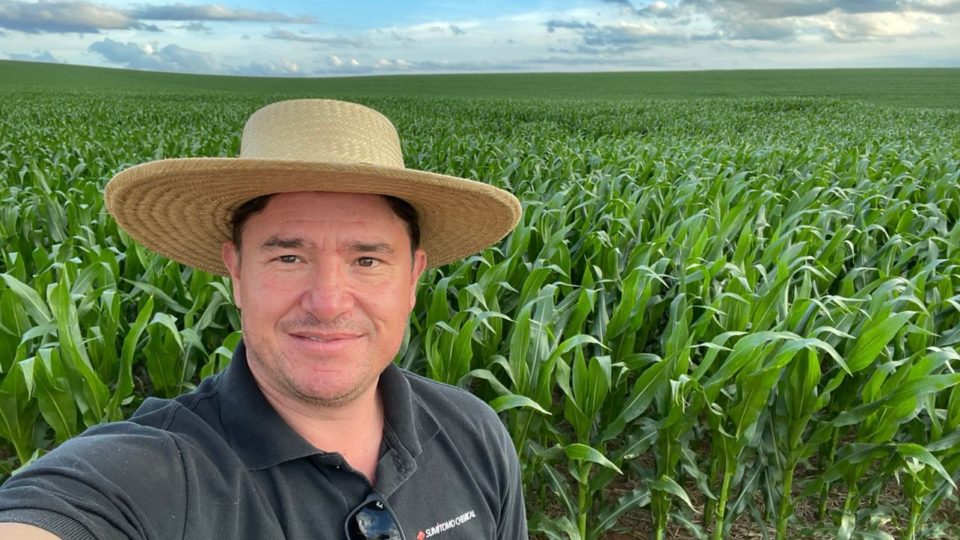
Gomes started planting on the farm in 2002 in partnership with an uncle.
“The soil was in a terrible state. We invested heavily in recovery,” he recalls.
“But the real revolution began in 2008 when my brothers and I inherited the farm from my grandfather and fully took over the business,” he says.
In 2012, the brothers joined the Frísia cooperative.
Although they had managed to structure the farm and maintain efficient management, they felt it was necessary to take a step further.
“Frísia helped us a lot to evolve,” says the producer.
He says he learned about the cooperative project and realized this was missing.
“Although we already had a good level of organization, with Frísia, we have gone up a few steps”.
SUSTAINABLE FARM PROGRAM
Jean Cesar Andrusko, the Environment specialist at Frisia, explains that the objective of the Sustainable Farm program is to add value to the production, considering that there will be traceability and proof of sustainability.
“The cooperative members are not obliged to participate, but when they show interest, they sign a symbolic contract.”
“We start to do the mentoring, which includes a visit to the property, a diagnosis, and creating an action plan. The producer adapts the property at his own speed,” explains Andrusko.
The project was “accelerated” by constructing the malting plant in Ponta Grossa (PR), carried out by a group of cooperatives, including Frísia, for the production in the Campos Gerais.
One of the requirements of the industries that buy the malt is that part of the barley be sustainable, with producers complying with a series of requirements (environmental, social, labor, and infrastructure), which is made up of five levels.
Each level that the producer meets guarantees a bonus.
“The Sustainable Farm is an umbrella in which all the programs aimed at the cooperative in the swine, bovine, and agricultural areas will be allocated, such as labor safety, training for collaborators, process, financial and people management, family succession, and certification,” exemplifies Andrusko.
According to him, it all started because some of the cooperative’s clients started to demand traceability protocols and certain agricultural and livestock sustainability practices from the producers.
The cooperative began to feel the need to implement a program focused on sustainable agriculture in 2016.
The following year, five cooperative members were invited to participate in the sustainable soy certification program, with consulting from international companies.
As a result of these years of work, Frísia acquired the knowledge and developed its own sustainability program, the Sustainable Farm.
The official launch will take place in April, during the Digital Agro Fair, which runs parallel to Expofrisia, one of the most important dairy farming fairs in Brazil, in Carambeí, in the Campos Gerais region of Paraná, the town where the cooperative is headquartered.
Milk production is one of the main activities of the cooperative members, who are also dedicated to cultivating grains.
OCEPAR ENCOURAGES THE IMPLEMENTATION OF ESG IN PRODUCTION
The Cooperative Organization System of Paraná (Ocepar) reports that the Sustainable Farm program came from the initiative of Frísia itself, one of the cooperatives of the System.
Ocepar encourages its organizations to adopt practices related to ESG (Environmental, Social, and corporate Governance) and to stimulate cooperative members to produce within these precepts.
“In recent years, we have been working a lot with this,” says Silvio Krisnki, Ocepar’s economic development area coordinator.
He says that some cooperatives have joined the Global Compact (a United Nations initiative to encourage companies to adopt corporate social responsibility and sustainability policies).
“A large part of the cooperatives in Paraná export part of their production.”
He points out that “if the cooperative exports, it has to have some certification”.
Among the sustainable practices adopted by the cooperative members in Paraná are direct planting (planting over the straw of the previous crop without disturbing the soil, preserving nutrients and fertility).
The technique is present in practically all the properties linked to the cooperative system in the state.
One of the great benefits of this cultivation is the recovery of degraded soils, with the subsequent reduction or even elimination of chemical fertilizers.
Another sustainable practice is producing energy from renewable sources, which is present in many farms of the cooperative members.
Some examples are solar energy and biomass energy (produced from waste from their own agricultural and livestock production).
With information from Gazeta do Povo
More: Brazil news in English, every day from The Rio Times.
Editorial responsibility: Matthias Camenzind, Editor-in-Chief · Editorial standards · Report an error