Nearly 30% of iFood restaurants in Brazil are “ghost kitchens” – study
By Julia Moióli
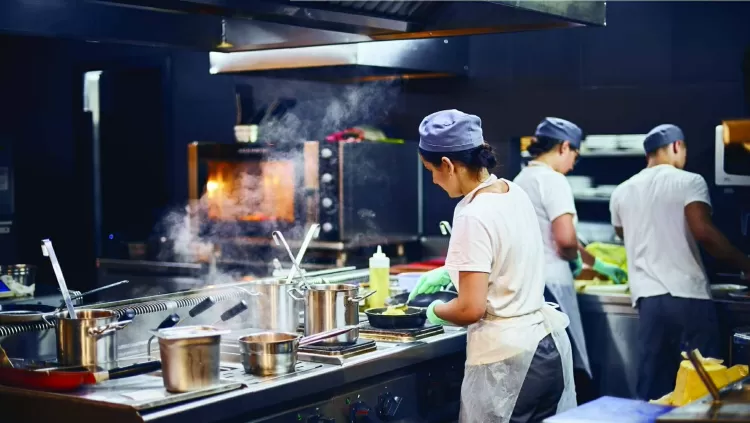
Approximately one-third of the restaurants listed on iFood, the food delivery app most used by Brazilians, are ‘dark kitchens’, according to an unprecedented study in the country – and one of the few ever conducted in the world – on the exclusive kitchens for delivery, which gained momentum during the covid-19 pandemic.
Besides the absence of on-site consumption facilities, these establishments have other characteristics: they are located in areas more distant from urban centers, sell especially Brazilian food, snacks, and desserts, and are cheaper than conventional restaurants.
Researchers from the State University of Campinas (Unicamp) presented these and other conclusions in an article published Thursday (18) in the journal Food Research International.

Data collection was carried out in two stages to identify and characterize the dark kitchens in the app.
The first stage consisted in obtaining through data mining the name, URL address, and CNPJ (National Register of Companies) of 22,520 restaurants in three urban centers (Limeira, Campinas, and São Paulo).
In addition, their linear distance to the city center, estimated delivery time, user ratings, type of food offered, the possibility of scheduling deliveries, and tracking the location of the order were also collected.
In the second, 1,000 establishments located in the center of each city were classified as dark kitchens (727, or 27.1%), standard restaurants (1,749 or 65.2%), or undefined (206 or 7.7%), when not enough information was obtained or whose addresses pointed to non-existent places.
The number of dark kitchens in the capital is even higher: 35.4%.
“We believe, however, that this number is higher since the platform does not require positioning the restaurants or identifying the information for the consumer.”
“So that, in several cases, we did not get enough data,” says Diogo Thimoteo da Cunha, professor of the nutrition course, a researcher at the Multidisciplinary Laboratory in Food and Health (LabMAS) of the Faculty of Applied Sciences at Unicamp (FAC-Unicamp) and research coordinator.
“So much so that we also needed to carry out investigative work, searching for information on social networks and Google Street View, calling and sending messages, and even visiting places to observe facades.”
“We could also see that, in all three cities, dark kitchens are more distant from central regions, which cheapens production costs and leads to lower prices, unlike a well-located restaurant, which needs to invest in the facade and other services,” adds Mariana Piton Hakim, LabMAS researcher and first author of the paper.
“On the other hand, in São Paulo, we observed that conventional restaurants had a higher number of stars [user ratings], besides having more ratings in the three cities, which may be related to the lower sales volume of dark kitchens and the fact that conventional restaurants are generally better known.”

Other data extracted from the research were the types of food most commonly served by dark kitchens (in the capital, Brazilian cuisine, in 30.3% of the cases; while in smaller cities, snacks, and desserts, in 34.7% of the cases).
And their organization models:
- independent (kitchens rented by a brand exclusively for its use and may or may not have a storefront);
- ‘shell’ or ‘hub’ (shared by more than one kitchen/restaurant);
- franchise (with more than one point of sale, well-established social networks, and may be present in different cities);
- virtual kitchen in a standard restaurant with a different menu (set up at the same address as a physical restaurant but with a different name and service);
- virtual kitchen in a standard restaurant with a similar menu but a different name (set up at the same address as a physical restaurant, with the same type of menu, but with a different name);
- domestic (located in residential buildings or houses).
CONSUMER PERCEPTION AND SANITATION ISSUES
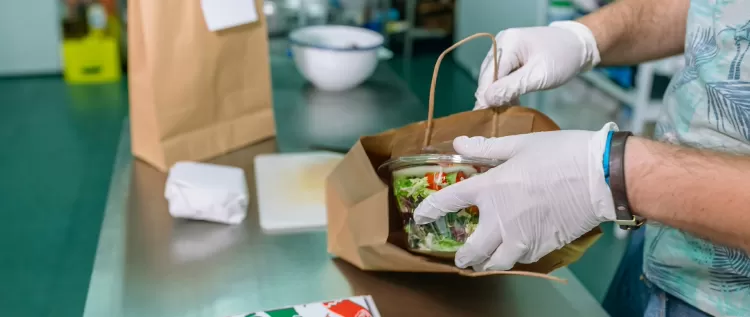
Although dark kitchens often appear in the news due to fights with neighbors because of noise, bad smell, and biker traffic in their residential surroundings, the researchers raise yet another issue to be clarified: their hygienic-sanitary conditions.
“We noticed that this restaurant model seems to be on the margins of legislation – not because it is illegal, but because no one has ever taken the time to properly understand how the sector works and how it can be improved,” says Cunha.
“We don’t want to hinder this type of work, also because we know it brings resources and is a trend that is here to stay, but to understand its impact on the economy and also make it feasible in a legal way so that it can be properly accessed by the health surveillance, which today has difficulties in inspecting domestic kitchens, strengthening the sector and bringing protection to the consumer.”
This should be the focus of the next studies of the group, which intends, later this year, to visit dark kitchens to observe their operation, qualities, and defects closely and to understand the producer’s perception.
The expectation is that sanitary flaws will be found in the case of domestic kitchens, such as the presence of animals and families, as well as single-use refrigerators, but also examples of how to circumvent these weaknesses and bring potential suggestions for the sector.
The researchers also point out that the situation is aggravated by the fact that consumers do not exactly understand the dark kitchen concept and are unaware of possible risks to them and their families, according to a previous study by the group published in the journal Food Research International.
“The perception of consumers is ambiguous: while they believe that a meal ordered through iFood carries a certain seal of protection, they do not consider that the app has responsibility for food safety,” says Hakim.
The study, funded by FAPESP (São Paulo State Research Support Foundation), is being conducted in partnership with the University of São Paulo (USP) and the Federal University of São Paulo (Unifesp), and two international educational institutions (universities of Central Lancashire, UK, and Gdansk, Poland), allowing the comparison of the sector in different countries.
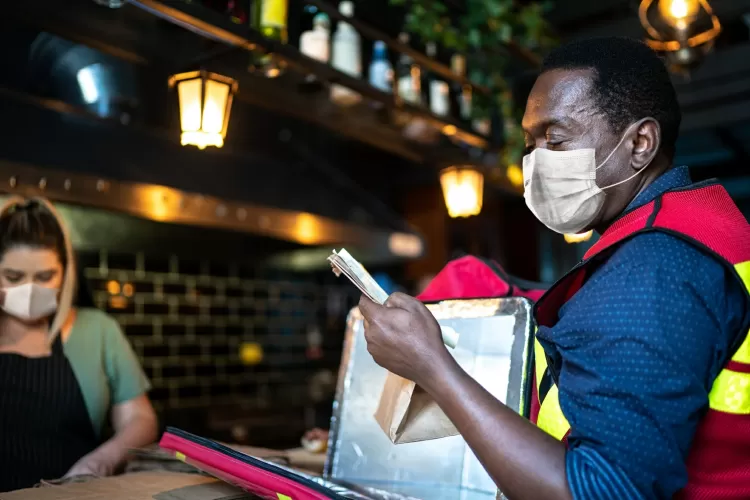
The reporter contacted the iFood platform through its press office but did not get a reply by the closing of this issue.
The article “Exploring dark kitchens in Brazilian urban centers: a study of delivery-only restaurants with food delivery apps” can be read at:
www.sciencedirect.com/science/article/abs/pii/S0963996923005148?via%3Dihub
*FAPESP Agency originally published this text under the Creative Commons license CC-BY-NC-ND.
With information from UOL
News Brazil, English news Brazil, Brazilian food, iFood app
This article was produced by The Rio Times’ automated newsroom system. How we use AI · Report an error
Read More from The Rio Times