Brazil Cuts Battery Loan Rate to 3%
Brazil's new 3% Climate Fund rate rewards battery makers who build in the country. It arrives days before the bidding for grid storage.

BRAZIL ENERGY · BRIEF
Brazil has made loans for home-built battery storage cheaper, but only for the auction on Wednesday, 2 December 2026. The National Monetary Council (CMN), the body that sets national credit rules, cut the annual rate on Climate Fund loans from 6.5% to 3% at an extraordinary meeting on Thursday, 26 November.
Battery storage systems keep electricity when supply is plentiful and send it to the grid when it is needed. The cheaper rate applies to loans from the Fundo Clima, the National Fund on Climate Change, and the resolution takes effect on publication.
Key Facts
- What The CMN cut the Climate Fund loan rate for Brazilian-made battery storage from 6.5% to 3% a year.
- Who Finance Minister Dario Durigan chairs the council; central bank president Gabriel Galípolo is a member.
- When Decided Thursday, 26 November; the lower rate applies only to the auction on Wednesday, 2 December.
- Power Index Brazil ranks 1st of 14 in The Rio Times Latin America Power Index, with 74.2 points (November 2026 edition).
- As of Friday, 27 November 2026, 18:00 GMT.
Brazil’s new 3% Climate Fund rate rewards battery makers who build in the country. It arrives days before the bidding for grid storage.
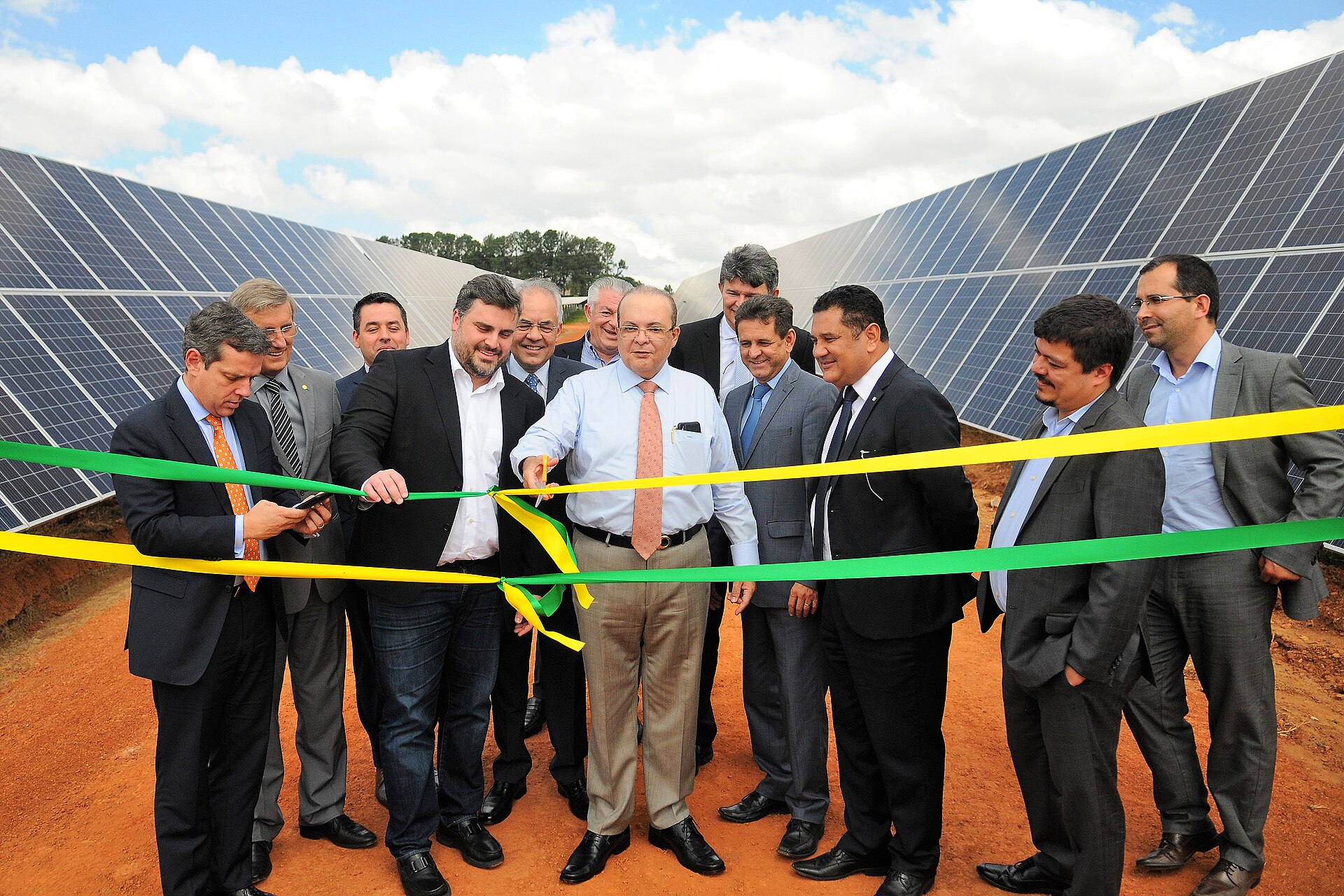
The Finance Ministry said in a note that the aim is to encourage the use of batteries produced in Brazil. To qualify, equipment must meet the national-content rules set by BNDES, the national development bank, so importing batteries or merely installing them in Brazil is not enough.
The favourable rate covers battery-pack systems produced in Brazil. Besides Durigan and Galípolo, the council’s members include Planning Minister Bruno Moretti.
The change builds on a briefing at BNDES in Rio de Janeiro on Monday, 15 June 2026, where the bank said it had the financial capacity to back battery projects. At that time the Climate Fund still charged 6.5% a year.
Nelson Barbosa, BNDES planning director, said at the briefing: “We have R$27 billion in the budget this year, which can reach R$34 billion,” adding that the higher figure needs the government’s wish and Congress’s approval. That is about US$4.8 billion, or US$6.0 billion at the higher figure, at R$5.65 per US$, the market close of 26 November.
José Luis Gordon, BNDES director for productive development, innovation and foreign trade, said the bank has seen “European and even Chinese companies” interested in building in Brazil because of the local-content rule. Local content, the share of a product made in Brazil, had not yet been set, and about 15% was one option under review.
Bidding opens on Wednesday, 2 December, in the 2026 capacity auctions, which buy standby power capacity for the grid. The cheaper credit is aimed at bidders who plan to buy Brazilian-made packs.
Our earlier report covers the legal fight around the auctions. Our Brazil coverage will follow the result.
In our reading, the rule matters to US and other foreign battery makers weighing a Brazilian plant, because cheap credit rewards local assembly. It also matters to US-listed Brazilian power companies bidding in the auctions, which can price the lower loan cost into their offers.
The Finance Ministry has not said how many projects qualify for the 3% rate or how large the discounted loans will be. Bid results will come only after the auction on Wednesday, 2 December.
Frequently Asked Questions
What is battery storage and why does Brazil want it?
It stores electricity when supply is plentiful and releases it when the grid needs it. Brazil is holding auctions in December to buy it for the grid.
Who gets the cheaper loan?
Projects that use battery packs made in Brazil and meet the BNDES national-content rules. Importing batteries, or only installing them, does not qualify.
Sources
- Brazil Finance Ministry note and CMN decision, 27 November 2026
- BNDES briefing, Rio de Janeiro, 15 June 2026
- RT market-data close of 26 November 2026 (R$5.65 per US$) used for conversions
This article was produced by The Rio Times’ automated AI newsroom. Editorial responsibility: Matthias Camenzind, Publisher and Editor-in-Chief. The Rio Times also runs Ask Rio Times, which answers from 100,000+ of our own articles, the daily Latin America Power Map, and prediction-market odds on elections and markets.. How we use AI · Report an error
Brazil runoff, Sunday, October 25: Brazil runoff start time and results schedule. Latest: Brazil runoff polls, Flávio 51%, Lula 49%.