Brazil Court Weighs Trial for Senator-Elect
Accepting the complaint would convict no one, but it would test how far a lawmaker’s immunity protects words spoken at the podium.

Politics: Brazil
Brazil’s Supreme Federal Court (STF) is voting on whether to put a senator-elect, a politician who has won a Senate seat but not yet taken it, on trial over a speech he gave in the lower house of Congress two years ago. Two justices of its First Panel, one of the court’s two working panels, have so far voted to accept the criminal complaint against Marcel van Hattem, a federal deputy for Rio Grande do Sul state from the conservative Novo party.
The vote stalled when Justice Cristiano Zanin moved the case to an in-person hearing with no date set, after voting began on Friday 20 November 2026. Van Hattem, who takes his Senate seat in February, says the case turns a parliamentary speech into a crime.
Key Facts
- Who. Marcel van Hattem, Novo party deputy and senator-elect, and Federal Police delegate Fábio Shor.
- What. The STF’s First Panel has two votes to accept a slander and insult complaint, none against.
- Next. Justice Zanin’s request moves the case to an in-person session; no date is set.
- Power Index. Brazil ranks 1st of 14 in The Rio Times Latin America Power Index, with 74.2 points (November 2026 edition).
- As of. 25 November 2026, 12:00 GMT.
Accepting the complaint would convict no one, but it would test how far a lawmaker’s immunity protects words spoken at the podium.
A defendant, réu in Portuguese, is a person whose prosecution the court has agreed to open. A trial follows, and it is not a verdict.
The complaint comes from the PGR, Brazil’s Prosecutor General’s Office, which filed it earlier this year. It accuses Van Hattem of calúnia, falsely accusing someone of a crime, and injúria, insulting someone, against Fábio Shor, a Federal Police (PF) delegate.
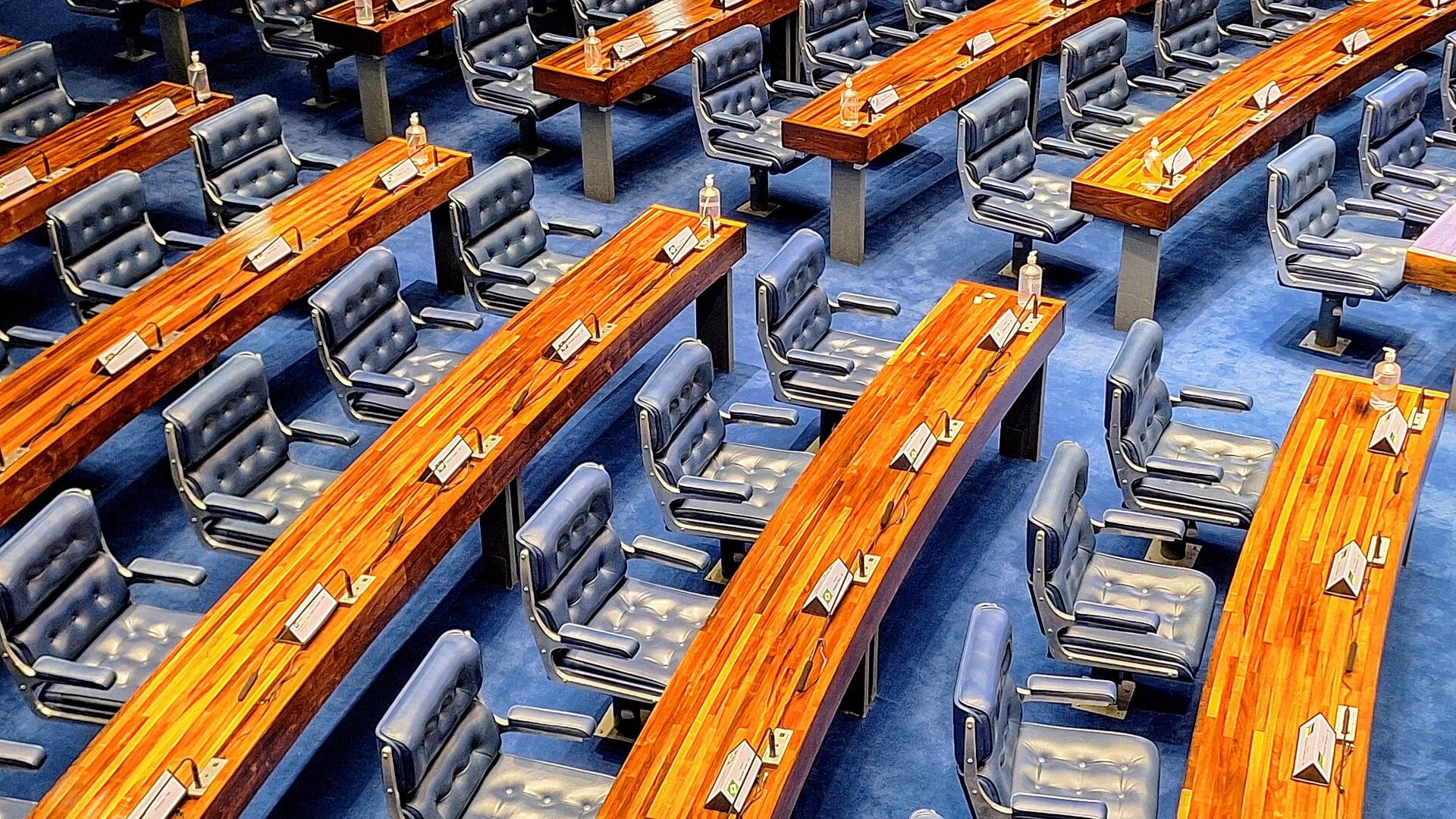
The charges rest on a speech in the Chamber of Deputies on 14 August 2024, in which Van Hattem called the delegate an “abuser of authority” and said his reports were “absolutely fraudulent”. The court file also covers social-media reposts of the remarks from 2024.
Shor now works as an adviser in the office of Justice Alexandre de Moraes, a post he has held since March 2026. Moraes also sits on the First Panel that is judging the case.
Justice Flávio Dino, the rapporteur, the justice who reports on the case and presides over the panel, voted first. He wrote that the reposts of the statements on social networks “do not allow, at least at this procedural stage, recognising outright the application of constitutional protection”.
Justice Cristiano Zanin then asked for a destaque on Friday 20 November, a procedural move that pulls a case out of the online session and into a live meeting of the panel. The online session had been due to run until 30 November.
Moraes registered his vote to accept the complaint on Saturday 21 November. Justice Cármen Lúcia, another member of the panel, has not yet voted.
Earlier, Dino had refused Van Hattem’s request for an oral hearing. Van Hattem said before the session: “The right I have to an oral defence is being denied by Flávio Dino.”
Article 53 of Brazil’s Constitution says deputies and senators are “inviolable, civilly and criminally, for any of their opinions, words and votes”, and sends their cases to the STF. The open question is whether a speech from the Chamber’s podium falls under that shield.
Under the Penal Code, calúnia (article 138) carries six months to two years in detention plus a fine, and injúria (article 140) one to six months or a fine. Article 141 adds one third when the victim is a public servant targeted over his duties.
Article 141 of the Penal Code also triples the penalty when the offence is committed or spread on social networks. Van Hattem says he could face up to four years in jail, which is his own estimate.
He calls the case persecution, and he says a speech from the podium of the Chamber of Deputies is exactly what immunity exists to protect. The court has not answered that argument beyond Dino’s vote.
The Senate has now stepped in. On Tuesday 24 November its president, Davi Alcolumbre, authorised the Senate’s legal office, the Advocacia do Senado, to act at the STF, saying he would act “personally, as president of the National Congress”.
Senator Rogério Marinho, the opposition leader in the Senate and a member of the PL, the conservative party of former president Jair Bolsonaro, had asked for the move. He says the prerogative of the institution, not the privilege of one deputy, is at stake.
Marinho also asked the Senate to join the case as amicus curiae, a friend of the court. No such filing has been confirmed.
The date of the in-person session is not known, nor whether Cármen Lúcia will vote. No on-record reaction from Dino, Moraes, Zanin or Shor has been reported.
For US readers, this pits Brazil’s highest court against the legislature meant to check it. The next signal is the date of the in-person session, which the panel has not set.
Frequently Asked Questions
What does it mean to become a defendant at the STF?
The court accepts the prosecutors’ complaint and a trial follows. It is not a verdict, and the facts are tested only at the trial.
Does parliamentary immunity protect Van Hattem?
Article 53 protects lawmakers’ opinions, words and votes. The first justices to vote say that protection cannot be applied outright at this stage, so the trial would decide.
What happens next?
The First Panel must meet in person, and its remaining members must vote. The Senate’s legal office may also file its own position.
Related coverage: Gilmar Mendes Fights to Derail Moraes Probe at Brazil’s STF
More: Brazil news
Sources: Brazil’s Constitution (article 53); Penal Code (articles 138, 140 and 141); the Supreme Federal Court’s First Panel; the Prosecutor General’s Office complaint; statements by Senate president Davi Alcolumbre, Senator Rogério Marinho and Marcel van Hattem.
This article was produced by The Rio Times’ automated AI newsroom. Editorial responsibility: Matthias Camenzind, Publisher and Editor-in-Chief. The Rio Times also runs Ask Rio Times, which answers from 100,000+ of our own articles, the daily Latin America Power Map, and prediction-market odds on elections and markets.. How we use AI · Report an error
Brazil runoff, Sunday, October 25: When is the Brazil runoff election. Latest: Brazil runoff polls, Flávio 51%, Lula 49%.