Brazil: analysts rule out basic interest rate cut due to the banking crisis in the US
Although the effects and scope of the banking crisis in the United States are still unknown, financial market analysts say that, with the information available so far, the Central Bank of Brazil will not have so soon room to start reducing the Selic rate.
On Monday, after the bankruptcy of SVB Financial Group and Signature Bank, the North American market started pricing higher chances that the US Federal Reserve will raise its interest rates next week by only 0.25 percentage points – and no longer by 0.50 points, as had been expected.
In reaction, the rates of future interest contracts in Brazil also retreated, amid the view that, with interest rates not so high in the US, the Central Bank could also anticipate the beginning of the cut of the Selic, currently at 13.75% per year.
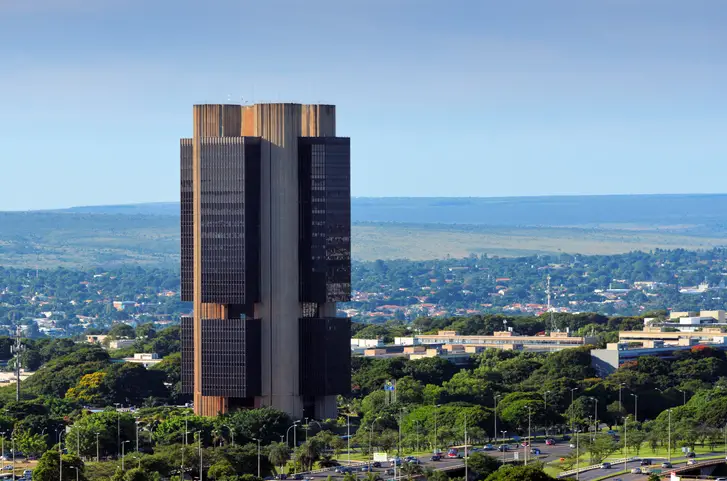
Analysts heard by Reuters, however, ruled out the possibility that the US crisis will cause a cut in the Selic already next week or soon after that – the expectations of cuts remain concentrated in the last months of the year.
“Naturally, when you have problems with banks, even with these two that were closed, which are not of such a significant size, we have to wait, be cautious.”
“There is always the risk of a widespread loss of confidence in financial institutions that were not facing immediate problems”, ponders economist Mauro Schneider from MCM Consultores.
Despite the cloudy scenario, Schneider affirms that, with the current information, a spreading of the crisis is not to be expected.
“This Tuesday was already a day of calm and a certain recovery of assets. If only a temporary interruption of the monetary adjustment occurs in the US, the effect here in Brazil will also be small”, he added.
MCM consultants work with the expectation that the Selic will begin to decrease only in the third quarter of this year.
This is also the perspective of Flávio Serrano, economist, and partner at BlueLine Asset Management, who rules out cutting the Selic already next week.
“There would have to be a very strong deterioration of the markets to cut the Selic. Cutting it now, next week, no way”, he says.
According to the latest Focus report from the Central Bank, with projections collected until last Friday, the day the SVB was closed, the median expectation of the market is that the Selic will start being cut only in early November, to 13.25% per year.
In a report, XP pondered. “Should the Federal Reserve adopt a more flexible stance, we may see Copom discussing interest rate cuts as well,” the analysts wrote.
Even so, the general view is that it is still too early to establish a change in the trajectory of the Central Bank’s Monetary Policy Committee (Copom).
“With the information that we have available to date, there is no argument for our Central Bank to cut interest rates,” Roberto Padovani, chief economist at BV Bank, told Reuters.
“There is concern about the banking risk in the US, but it is not known how this will affect global security, so it is not yet possible for the Central Bank to anticipate a cutting decision.”
He argued that the high prices of raw materials, doubts about what the Lula government’s fiscal expansion will be, a still heated labor market in Brazil, inflation that continues at levels above the target, and uncertainties about the official inflation targets, among other factors, continue to justify the maintenance of interest rates, even with the external risks.
For Matheus Pizzani, an economist at CM Capital, “the Central Bank has been signaling in its communications a slightly greater weight of inertial inflation and the fiscal issue” in its monetary policy decisions.
“I don’t believe that (the SVB issue and the Fed’s reaction) is enough for Copom to anticipate an interest rate cut. The CB would need other elements.”
LIMITED IMPACT
Analysts also say that, from the information available, the impact of the US banking crisis in Brazil will be limited.
“Brazilian banks are not directly exposed to the consequences of SVB. The amounts of unrealized losses on the local books are irrelevant, and capital and liquidity ratios are comfortable,” Itaú BBA said in a report.
In addition to the CB’s response, market agents are also examining how the recent developments in the US financial sector will be used in the government’s rhetoric against the monetary authority.
For CM’s Pizzani, the SVB episode should not be used as new ammunition for the government in its recent push for a drop in the Selic, arguing that the Minister of Finance himself, Fernando Haddad, said the day before that there was less turbulence than expected.
“We are talking about the head of the economy, so I don’t think this event will increase the pressure” to lower the Selic rate.
Padovani, from BV, affirmed that the criticism of the Central Bank does not depend on the scenario and will continue.
For him, “these local credit risk factors – it is not known how intense this credit deceleration will be, regardless of one name or another – and international factors add up” to the government’s pressure for lower interest rates.
Since taking office in January, Lula has repeatedly criticized the level of interest rates in the country, currently at 13.75%, and the inflation target system, which generated significant turbulence in the financial market last month.
The Brazilian presidential candidate has warned of an impending credit crisis in a scenario that he says is harmful to economic growth.
With information from InfoMoney
More: Brazil news in English, every day from The Rio Times.
Editorial responsibility: Matthias Camenzind, Editor-in-Chief · Editorial standards · Report an error