Recent strides in bionic technology are significantly improving how amputees experience mobility. At the Massachusetts Institute of Technology (MIT), researchers have developed a bionic leg.
It not only emulates the natural movement of an ankle but also conserves the energy amputees expend while walking.
This prosthesis mirrors the speed and mechanics of a natural gait, offering a smoother walking experience than traditional prosthetics, which can be inefficient and physically demanding.
Leading this transformative research is Hugh Herr, a professor at MIT and a double amputee himself.
His team at the MIT Media Lab focuses on prosthetic limbs that integrate seamlessly with human biomechanics. One of their notable innovations is the Agonist-Antagonist Myoneural Interface.
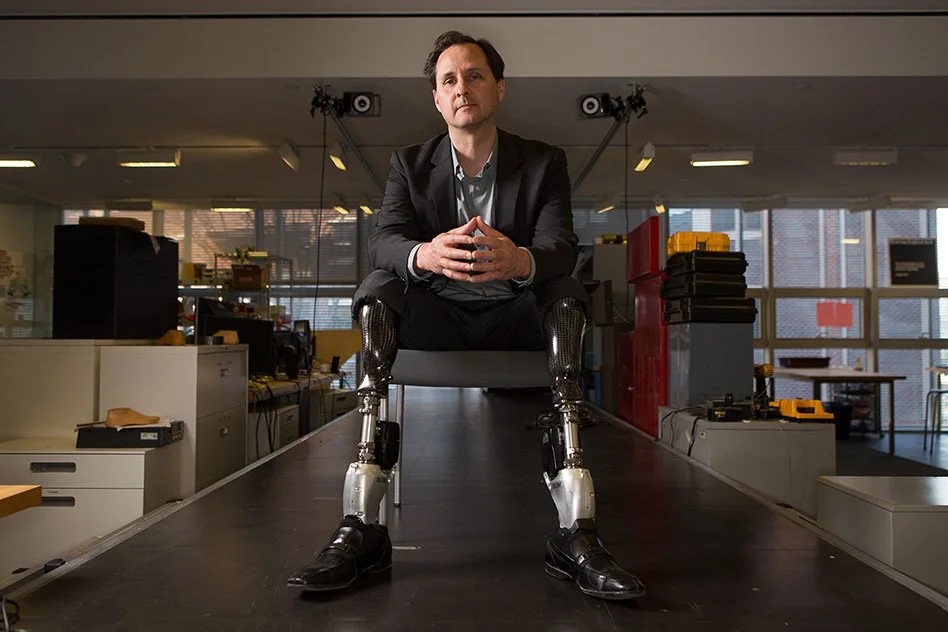
It enables amputees to control their prosthetic limbs through thought alone, representing a significant leap in neuro-prosthetic technology
Expanding the accessibility of these advancements, the University of Michigan and the Shirley Ryan AbilityLab have introduced an open-source, artificially intelligent prosthetic leg.
This initiative provides a universal platform for researchers worldwide, fostering an environment of collaboration and rapid technological progress.
The open-source model ensures that high-quality bionic research is both affordable and widely available.
This speeds up the development of new technologies that can be tailored to individual needs. These advancements are more than just technological achievements.
They are steps toward fundamentally enhancing the quality of life for amputees, offering them greater independence and a return to naturalistic movements.
The synergy of advanced materials, sophisticated robotics, and thoughtful human-centered design is paving the way towards a future.
These bionic solutions are a beacon of hope for many, virtually eliminating the limitations imposed by amputation.
This article was produced by The Rio Times’ automated newsroom system. How we use AI · Report an error
Read More from The Rio Times