
Economy: Barbados
Barbados will tell Parliament at the start of December how it plans to spend about Bds$320 million (Barbados dollars; about US$160 million) in expected health savings, Finance Minister Ryan Straughn said in remarks published on Friday 13 November 2026. The savings would come from a proposed Bds$1.2 billion (about US$600 million) debt swap, with a large part of the money aimed at chronic disease and mental health.
Key Facts
—What. A Bds$1.2 billion (US$600 million) debt swap would free about Bds$320 million (US$160 million) for health.
—Who. Ryan Straughn, the finance minister, will set out the spending in Parliament.
—When. A resolution in the House of Assembly, Barbados’s elected lower house, is due at the start of December 2026; date not confirmed.
—Priority. Chronic disease and mental health, plus hospital upgrades.
—Still open. Final terms, the project list and creditor sign-offs are not yet public.
How the Swap Works
A debt-for-social swap trades expensive debt for cheaper debt on condition that the savings go to a social goal. In remarks published on 13 November 2026, Straughn said the proposed swap would produce savings for healthcare, and the reported aim is to redirect interest savings into social infrastructure.
As reported, the government would buy back its existing Series B bonds, an existing set of government bonds. It would then reissue the debt under specialised multilateral financing arrangements, which is meant to lower debt-service costs.
Barbados dollars (Bds$) trade at two to one against the US dollar, according to the Central Bank of Barbados (page checked 14 November 2026). The US$ figures that follow are our conversions at that rate, except Straughn’s own US$120 million.
In Plain English
Debt-for-social swap: trading expensive debt for cheaper debt on condition that the savings go to a social goal.
Series B bonds: an existing set of Barbados government bonds that the plan would buy back.
NCDs: non-communicable diseases, long-term illnesses that do not spread between people, such as diabetes and hypertension (high blood pressure).
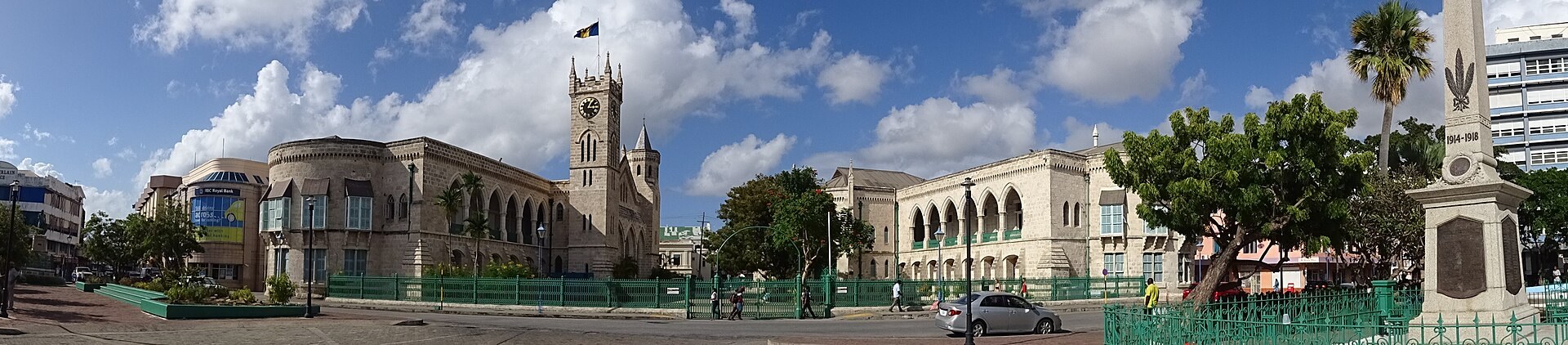
Where the Money Is Meant to Go
In remarks published on 13 November 2026, Straughn said a House of Assembly resolution would seek approval for the operation. He added: “we will outline exactly where the $320m will go, project by project”, meaning Bds$320 million (about US$160 million).
In the same remarks Straughn said a lot of it is “towards NCDs and mental health”, with “probably about US$120m” or so going there (Bds$240 million at the fixed rate). The Health Ministry names the prevention and management of NCDs and mental wellness as the goal of its Health Services Resilience Programme (page checked 14 November 2026).
Straughn said the savings would also fund upgrades at the Queen Elizabeth Hospital, a public hospital, and at the geriatric hospital and other rehabilitation centres. The ministry page lists past public discussions on the Enmore site for the Queen Elizabeth Hospital, Geriatric Hospital Phase II and the National Rehabilitation Centre.
What Happens Next
The first checkpoint is the House of Assembly resolution at the beginning of December 2026, Straughn said in remarks published on 13 November 2026; the exact date is not confirmed. It would seek approval for the operation and give the project-by-project breakdown.
The second is next financial year’s Estimates of Revenue and Expenditure, the annual budget document, where the Finance Ministry will create separate line items for the money, according to his remarks published on 13 November 2026. He said the ministry did the same for two earlier Barbados swaps, one for marine conservation and one for climate resilience.
In his interview published on 9 October 2026, Straughn said execution should happen by 15 December and implementation could begin as early as 1 January. We have seen no government document confirming those dates.
The interview reported that CAF (the Development Bank of Latin America and the Caribbean) had approved the swap the week before. Straughn said the Inter-American Development Bank, the World Bank and the Caribbean Development Bank, all regional or global lenders, were expected to approve their parts within two weeks; we could not confirm any approval.
Parliament has already approved the Special Loans (Amendment) Bill, 2026, which doubles the ceiling on special loans from Bds$2.5 billion (about US$1.25 billion) to Bds$5 billion (about US$2.5 billion), according to a statement by Straughn published on 12 November 2026. He said the higher limit does not mean new debt, because it is needed to replace about Bds$1.2 billion of existing debt on better terms.
What Analysts Say
Jeremy Stephen, an economist, described the swap in an earlier interview, quoted on 12 November 2026, as a form of debt consolidation, but cautioned that repayment obligations remain. “All the same risks that would apply if they borrowed the money locally for capital projects still apply,” he said.
Straughn compared the plan to a family refinancing a mortgage: “They still have a mortgage, but it costs them less.” He said the projected savings come from lower interest and other financing costs over time, not from a new loan or an immediate cash payment.
What Is Not Known
Final terms, the project list and the results of the earlier swaps are not yet public, and Straughn deferred the results to the December debate. Whether the creditors and banks have signed off is also unconfirmed, because the accounts so far come from Straughn’s own statements.
What It Means for Readers
For Barbadian taxpayers and patients, lower interest costs would free about Bds$320 million (about US$160 million) for health, Straughn said in remarks published on 13 November 2026. For US readers there is no direct consequence, except that the Inter-American Development Bank and the World Bank were named as partners by Straughn in his 9 October 2026 interview.
For wider context, see our Barbados news coverage and our guide to who matters in the Barbados economy. Our earlier report on Barbados and the International Monetary Fund covers the country’s other major financing story.
Frequently Asked Questions
What is the Barbados health debt swap?
It is a proposed Bds$1.2 billion (about US$600 million) operation to buy back Series B bonds and reissue the debt under multilateral arrangements. Straughn said in remarks published on 13 November 2026 that the proposed swap would produce savings for healthcare.
How much would go to health, and when will details come?
Straughn said in remarks published on 13 November 2026 that about Bds$320 million (about US$160 million) in healthcare savings will be detailed project by project. That is due in a House of Assembly resolution at the beginning of December 2026; the exact date is not confirmed.
What are the main priorities?
Straughn said in remarks published on 13 November 2026 that probably about US$120 million (Bds$240 million) goes to chronic diseases and mental health. The savings would also fund upgrades at the Queen Elizabeth Hospital, the geriatric hospital and rehabilitation centres.
Sources
Remarks by Finance Minister Ryan Straughn (13 Nov 2026) · Interview with Finance Minister Ryan Straughn (9 Oct 2026) · Barbados Ministry of Health, Health Services Resilience Programme (page checked 14 Nov 2026) · Central Bank of Barbados, the exchange rate peg (page checked 14 Nov 2026)
This article was produced by The Rio Times’ automated AI newsroom. Editorial responsibility: Matthias Camenzind, Publisher and Editor-in-Chief. The Rio Times also runs Ask Rio Times, which answers from 100,000+ of our own articles, the daily Latin America Power Map, and prediction-market odds on elections and markets.. How we use AI · Report an error