Arab Nations and US at Odds Over Gaza Ceasefire Approach
In a significant meeting in Amman, representatives from several Arab countries met with US Secretary of State Antony Blinken.
They urged for a ceasefire in the Gaza Strip. Jordan’s Foreign Minister, Ayman Safadi, spoke to reporters afterward.
He highlighted the dire need for basic supplies in the conflict area. The Arab leaders unanimously called for an immediate end to the conflict.
Safadi also mentioned the Arab nations’ stance, rejecting the notion of the conflict being mere self-defense.
During the conference, Blinken outlined the US position. He argued against an immediate ceasefire, suggesting it could allow Hamas to regroup and launch new attacks.
Blinken proposes “humanitarian pauses” instead. These shorter breaks would allow aid to reach those in need without giving Hamas time to prepare for further conflict.
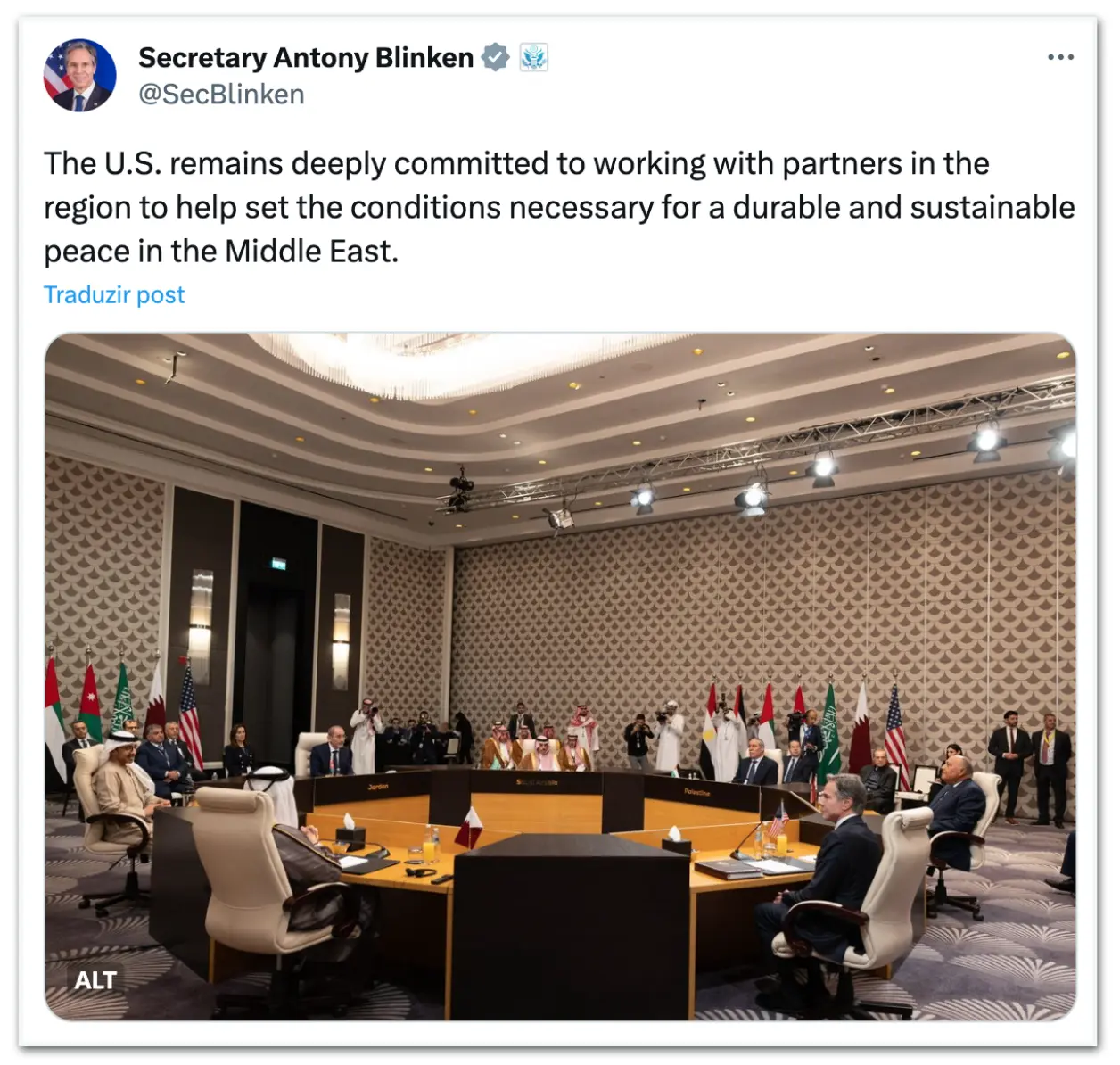
Blinken took to his X profile to reiterate the US’s dedication to peace in the Middle East. He emphasized the commitment to collaborate with regional allies to foster lasting peace.
This meeting displayed a rare public split in strategy on how to handle the situation in Gaza between the US and Arab nations.
Background
The Gaza Strip has been a flashpoint in Middle Eastern geopolitics for decades.
The territory is often at the center of conflict between Palestinian groups and the Israeli government.
Tensions frequently escalate into violence, affecting the lives of millions.
Historically, the United States has played a key role in mediating conflicts in the region. However, the path to peace has been fraught with complexities.
Each ceasefire, often hard-won, is seen as a stepping stone toward a more permanent resolution.
Arab nations have consistently advocated for the Palestinian cause, seeking to address humanitarian concerns and political rights.
The latest calls for a ceasefire in Gaza by Arab leaders continue a long tradition of seeking to alleviate the humanitarian crisis in the area.
These appeals often underscore the need for a durable and fair solution. The disagreements with US strategies reflect the diverse perspectives on achieving lasting peace.
This article was produced by The Rio Times’ automated newsroom system. How we use AI · Report an error
Read More from The Rio Times