Africa Intelligence Brief — Monday, September 7, 2026
Executive Summary
Africa Intelligence Brief for September 7: insurgents take a South African mechanic hostage near Mozambique's Cabo Delgado, Kenya's nurses' strike enters
Africa Intelligence Brief — Monday, September 7, 2026
Key Facts
- The lodge. Insurgents raided a hunting camp near Mozambique’s Niassa Special Reserve late last week, taking a South African mechanic and two staff hostage while roughly eight more Marangira residents are feared missing.
- The wards. Kenya’s nurses have been off duty for 40 days over an unpaid 2017 pay agreement, and the country’s human rights commission this week linked 79 maternal and neonatal deaths to the resulting gaps in care.
- The shop fronts. Kenya also began shutting foreign-run small shops nationwide on Monday, a deadline that drew a formal protest from Burundi’s foreign minister and reports of traders leaving the country.
- The ravine. A privately arranged bus trip plunged into a mountain ravine on Cape Verde’s Fogo island late Saturday, killing at least 25 people, most of them pupils returning from a volcano excursion.
- The coalition. A new alliance called Tsimdo has brought Ethiopia’s Tigray rebels together with two other armed factions against the federal government, nearly four years after a peace deal meant to end the fighting for good.
- The verdict. A Cairo court sentenced television presenter Sarah Khalifa and 11 others to death on Saturday for running a narcotics-supply ring, among 28 defendants tried over a seizure of more than 750 kilograms of drug-making materials.
- The pavement. Harare’s street vendors face a Wednesday deadline to clear undesignated trading sites, a crackdown Zimbabwe’s largest trade union this week called “heavy-handed” against the country’s biggest employer.
Off the books, this week, is where the news kept happening. Mozambique restarted a $20 billion gas project on the promise its north had been pacified, and insurgents answered by taking a hostage from a lodge two provinces away; Kenya’s government spent Monday fighting two fires of its own making, one in its hospital wards and one on its pavements; and a bus trip a driver had organised privately, as his own gift to the pupils he ferried all year, ended in a ravine on a Cape Verdean island most of the continent had no reason to think about before Saturday.
Read in English, French, Arabic, Portuguese and Swahili, across the continent’s largest outlets and our own Africa desk.
Mozambique: The Lodge Beside The Gas Bet
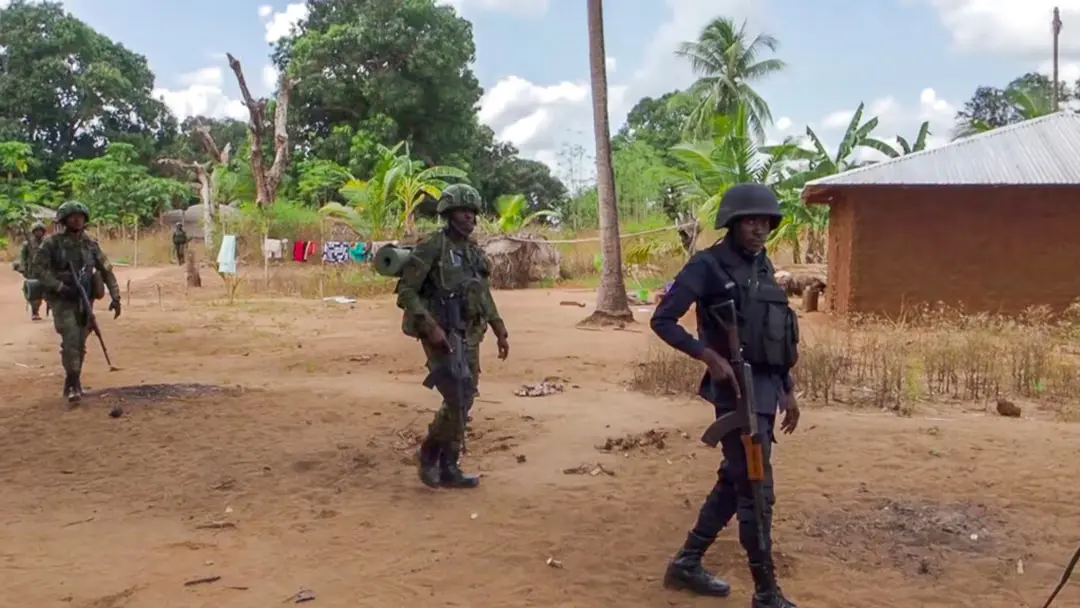
Armed men believed linked to the Islamic State-affiliated insurgency in Cabo Delgado stormed a hunting lodge near Marangira, on the edge of the Niassa Special Reserve, late last week, disabling the local phone mast before hitting the camp, the police post and the medical centre in one coordinated sweep. A South African mechanic and two camp staff, including a chef, were taken, and roughly eight more residents of Marangira town are feared missing or held, while three American guests escaped only because they were out hunting when the attack began.
The lodge’s operator, whose company had put $3.5 million into its infrastructure and conservation work, counts Ghana’s national football coach Carlos Queiroz among its owners; he said on Sunday he had no direct word from the site and was waiting on Mozambique’s own military and security services. The insurgency the attack confirms is still active has displaced 1.3 million people and killed roughly 6,000 since 2017, a toll that sat quietly in the background in January when President Daniel Chapo and TotalEnergies stood together to announce the full restart of the $20 billion Mozambique LNG project the same violence had frozen for four years.
Chapo’s own formula for the north — keep “fighting on the ground while we also try to identify the leaders” — is the reassurance behind an LNG timeline still targeting first gas in 2029. A hunting concession two provinces from the plant has just tested how durable that reassurance really is.
Kenya: A Ward Understaffed, A Pavement Cleared
Kenya’s nurses have now been off public wards for 40 days over a 2017 pay agreement the counties call unaffordable and the union calls binding, and the country’s own human rights commission this week attributed 79 maternal, neonatal and perinatal deaths between August 31 and September 2 to the resulting gaps in care, though it has asked for the figure to be independently verified. President William Ruto and the country’s governors convened Monday’s National and County Governments Co-ordination Summit to search for what union secretary-general Seth Panyako still calls an unresolved fight over the collective bargaining agreement itself.
The same Monday brought a second deadline of Ruto’s own making: authorities began shutting foreign-run small shops and hawking stands nationwide, a directive tied to a promised Local Content Bill even as his own foreign ministry moved to reassure permit-holders they remained protected. Burundi’s foreign minister, Edouard Bizimana, summoned Kenya’s ambassador and warned that continued “hate speech against Burundi” would change how Kenyans are treated at home, as his embassy began issuing free emergency travel papers to citizens choosing to leave.
Cape Verde: The Trip A Driver Gave His Own Students
A bus carrying 32 people veered off a mountain road above São Filipe on Fogo island late Saturday and fell roughly 30 metres into a ravine, killing at least 25 people, most of them primary and secondary pupils returning from an excursion to the Pico do Fogo volcanic crater. The outing was not a school trip at all but one the driver, who died alongside his passengers, had organised privately each year as his own gift to the children he drove to class.
President José Maria Neves attended Sunday’s funeral and called the crash “a great catastrophe” in a message to a nation of roughly half a million people, after rescue crews worked through the night to reach wreckage lodged in a valley emergency vehicles could not enter. The tragedy exposes a gap regulators rarely test: an informally arranged outing carried the same children a state-run school bus would have, and no licence, inspection or manifest existed to catch what the road did not forgive.
Ethiopia: Old Enemies, New Coalition
Nearly four years after the Pretoria Agreement ended Tigray’s war, the region’s old combatants are realigning rather than disarming: a coalition called Tsimdo has brought the Tigray People’s Liberation Front together with the Amhara militia Fano and the Oromo Liberation Army against the federal government they once fought alongside, a grouping Fano leader Zemene Kassie confirmed this week. Reports of renewed TPLF-Eritrea contacts, unconfirmed but persistent, complete a realignment that would have been unthinkable during the two countries’ own 1998-2000 border war.
The peace deal’s own terms have already frayed at the edges: forces aligned with Tigray crossed the Tekeze River into federal-held ground in January, and fighting near the Sudanese border in August sent hundreds fleeing across a frontier in what regional monitors called the most serious clash since the war ended. Debretsion Gebremichael, elected Tigray’s president in May after the regional council’s own reinstatement, now leads a region where, in one young resident’s words, “the fear of being drafted is what’s making many youth lose hope” — a peace still measured in absences rather than returns, with 1.9 million people from the last war yet to go home.
Egypt: The Verdict As Public Theatre
A Cairo criminal court sentenced television presenter Sarah Khalifa and 11 co-defendants to death on Saturday for running an organised gang that procured materials to manufacture narcotics for trafficking, among 28 people tried over a seizure of more than 750 kilograms of the substances involved; nine received life terms and seven were acquitted. Khalifa, who hosted a true-crime programme called “Mission Impossible” on Al-Mehwar television and built a following of more than two million on Instagram, denied the charges in court, telling judges “I have never smoked a cigarette in my life.”
The same session added a separate three-year sentence for assaulting and filming her own driver, and her lawyers can now pursue only a retrial request before an appeals court on the way to Egypt’s Court of Cassation. A celebrity’s fall through the country’s own justice system, staged in a single courtroom on a single day, told Egyptians more about where state authority is still visibly total than any of the economic data the desk tracks each week.
Zimbabwe: The Pavement As The Last Employer
Harare’s street vendors have until Wednesday to clear undesignated trading sites before what Local Government Minister Daniel Garwe calls a “zero-tolerance clean-up operation,” after which municipal police are to dismantle stalls the government blames for disorder and “drug and substance abuse.” The crackdown is meant to be the first stage of a nationwide sweep tied to the government’s Vision 2030 strategy, with compliant traders promised registration into designated structures still mostly unbuilt.
The Zimbabwe Congress of Trade Unions answered the deadline this weekend by calling it “heavy-handed” and “insensitive,” with secretary-general Tirivanhu Marimo arguing that informal trading “has become the biggest employer in the country” precisely because the formal economy has not. His prescription — that the government “restore economic growth and create promised millions of jobs” so vendors would “vanish overnight” — turns Wednesday’s deadline into a test of which the government would rather manage: the pavements, or the economy that fills them.
What This Means From Latin America
Mozambique’s gas gamble is a script this hemisphere knows from Peru’s Camisea fields and Colombia’s Cusiana block, where a security perimeter around the wellhead has never been the same as peace in the province around it — a hunting lodge two provinces from a $20 billion plant just made the same point for free. Cape Verde’s unlicensed bus trip and Kenya’s crackdown on shopfronts run by neighbours share a quieter cousin here too: the packed, unregulated school runs that periodically end in ravines from Bolivia to Peru are exactly the informal arrangements no regulator checks until the morning after.
Ethiopia’s old enemies regrouping under one coalition four years after their own peace deal is a caution any government that has signed a demobilisation deal with FARC dissidents, ELN fronts or Venezuela‘s own armed factions should recognise at once — a ceasefire that only pauses recruitment is an intermission, not a peace. Egypt’s televised verdict against a celebrity trafficker plays the role Mexico’s own narco-celebrity prosecutions have played for years: proof a state can still reach its most visible citizens, offered the same week its reach into an insurgent-held hunting concession or a foreign-run market stall looked far less certain.
The Bigger Picture
Every story this week sits in the gap between what a government formally arranged and what its citizens actually rely on: a gas project’s security claim, a hospital agreement counties will not fund, a school run no regulator licensed, a peace deal that never disarmed anyone, a pavement economy the state calls illegal because it never built the alternative. The state’s paperwork and its citizens’ daily lives are not the same document, and this week five governments were shown the page where the two stop matching.
None of this is unique to Africa; every country runs part of its life off whatever ledger the state actually keeps. What distinguishes this week is only that the gap opened on five kinds of terrain at once — a gas frontier, a hospital corridor, a mountain road, a militia’s roster and a market stall — and only one of them, Egypt’s courtroom, was a place the state fully controlled.
What We Are Watching
- Marangira’s hostages — whether Mozambique recovers the South African mechanic and the missing camp staff, or the standoff forces Maputo to answer for the LNG project’s own safety claims.
- Kenya’s summit outcome — whether Ruto and the governors fund the 2017 nurses’ agreement, or the strike runs into a sixth week.
- Kenya’s trader exodus — whether Burundian, Rwandan and Congolese nationals keep leaving faster than Nairobi’s reassurances can slow them.
- Cape Verde’s bus rules — whether the government moves to license or inspect privately arranged school transport, the gap this week’s tragedy exposed.
- Tsimdo’s next move — whether Addis Ababa treats the TPLF-Fano-OLA coalition as a negotiating partner or a security threat.
- Harare’s Wednesday — whether municipal police actually clear the pavements Minister Garwe has promised, or the vendors’ vow to stay wins again.
More from the Rio Times Intelligence Desk on September 7, 2026: Asia · Europe · USA & Canada. For how these stories developed, see the Africa Intelligence Brief for September 5 and September 4.
The competition for African resources and the money behind it runs through our pillar coverage of Africa: The New Scramble.
Frequently Asked Questions
What happened at the hunting lodge in Mozambique this week?
Late last week, insurgents believed linked to the Islamic State-affiliated group active in Cabo Delgado raided a hunting lodge near Marangira, close to the Niassa Special Reserve, disabling the local phone mast before hitting the camp, a police post and a medical centre. A South African mechanic and two camp staff were taken hostage, roughly eight more Marangira residents are feared missing, and three American guests escaped only because they were out hunting when the attack began.
Why are Kenya’s nurses on strike, and what happened on September 7?
Kenya’s nurses have been off public hospital duty for 40 days in a pay dispute over a 2017 agreement, and the country’s human rights commission this week linked 79 maternal and neonatal deaths to the resulting gaps in care. On September 7, President Ruto and the country’s governors held a summit to seek a resolution, the same day a separate deadline took effect closing foreign-run small shops nationwide.
What caused the fatal bus crash in Cape Verde?
A bus carrying 32 people, mostly schoolchildren returning from an excursion to the Pico do Fogo volcanic crater, veered off a mountain road on Fogo island late Saturday and fell roughly 30 metres into a ravine, killing at least 25 people including the driver. The trip was privately arranged each year by the driver himself rather than school-organised, and President José Maria Neves attended Sunday’s funeral, calling the crash “a great catastrophe.”
Who is Sarah Khalifa and what was she sentenced for?
Sarah Khalifa is an Egyptian television presenter who hosted the true-crime programme “Mission Impossible”; a Cairo criminal court sentenced her and 11 co-defendants to death on September 6 for running a gang that procured materials to manufacture narcotics for trafficking. Twenty-eight people were tried over a seizure of more than 750 kilograms of the substances involved, with nine receiving life terms and seven acquitted; Khalifa denied the charges and can still appeal to Egypt’s Court of Cassation.
Sources: Al Jazeera, Times LIVE, Briefly.co.za, Semafor, allAfrica, Legit.ng, NewZimbabwe.com, Africanews, Sudan Tribune, Nation, Kenyans.co.ke · 5-7 Sep 2026.
This article was produced by The Rio Times’ automated newsroom system. How we use AI · Report an error · Editorial responsibility: Matthias Camenzind, Editor-in-Chief
LatAm Markets: Live Signals → — real-time movers, turnover leaders and FX across Latin America.