Africa Intelligence Brief — Friday, September 4, 2026
Executive Summary
Africa Intelligence Brief for September 4: Kenya orders foreign traders to close by Monday, Zimbabwe gives Harare vendors until September 9 to leave
Africa Intelligence Brief — Friday, September 4, 2026
Key Facts
- The order. President William Ruto gave foreign nationals running small shops and hawking stalls until Monday, September 7, to close them, and separately ordered Tata Chemicals to wind down its soda-ash works at Lake Magadi, a site it has run since 2005.
- The standoff. Harare’s street vendors vowed to defy a government order to clear the capital’s pavements by September 9, in a country where an estimated 1.36 million people work in the informal economy.
- The city underneath. An estimated 34,000 irregular miners are undermining Johannesburg’s roads, water pipes and power substations, with a stretch of Wemmer Pan Road already collapsed.
- The vacancy. Cameroon’s Paul Biya, 93, returned home on August 20 after a 74-day absence in Europe, to a vice-presidency parliament created in April and still has not filled.
- The auction. The UN office that funds and supplies Somalia’s African Union peacekeeping mission began auctioning the mission’s vehicles and equipment after Washington moved to cut off funding by December 31, the same week clashes in Baidoa wounded 71 people.
- The forum. Kigali’s Africa Food Systems Forum closes today around a $100 billion agrifood investment target for 2035, with its own organisers warning that announced programmes are not deployed capital.
A government’s authority shows most clearly in the ground it can still stand on once somebody else is already standing there. This week six African states found out how much of their own street, lakebed, mine shaft, vice-presidency, peacekeeping payroll and investment pledge had quietly become somebody else’s to hold.
Read in English, French, Arabic, Portuguese and Swahili, across the continent’s largest outlets and our own Africa desk.
Kenya: The Corner Shop And The Lakebed
President William Ruto ordered foreign nationals running small shops and hawking stalls to close them by Monday, September 7, telling reporters this week that “it cannot be that a person comes from China or elsewhere to be a hawker or open a small shop.” The directive doubles as a push behind the stalled Local Content Bill, which would reserve small-scale trade for Kenyan citizens, cap foreign staffing at bigger firms and require most goods and services to be sourced locally.
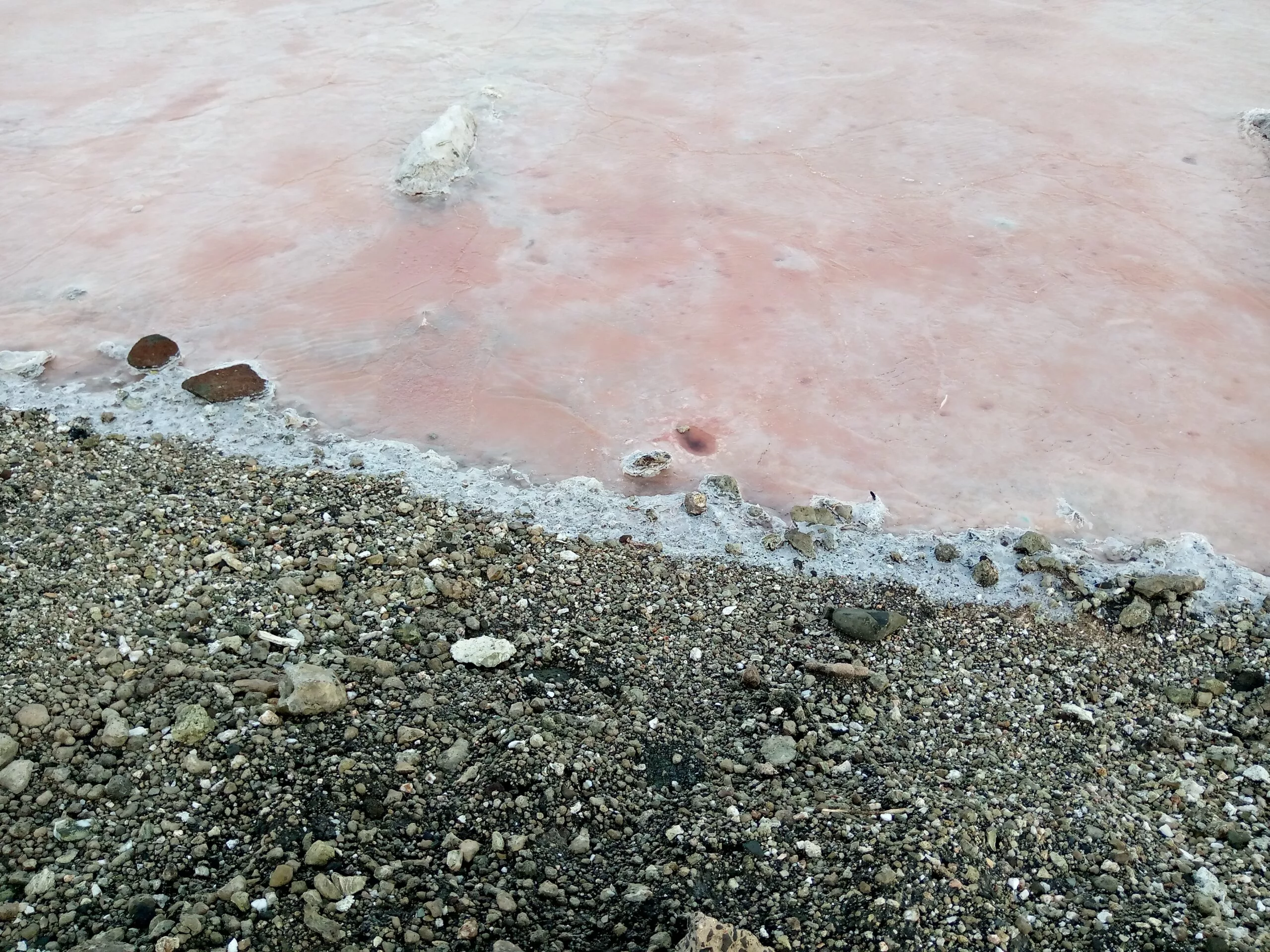
Days earlier, Ruto had ordered Tata Chemicals to wind down its soda-ash works at a site mined since 1911 and run by the Indian conglomerate since 2005, asking of the arrangement, “What do you say? Are we slaves?” His mining minister cites weak local procurement and no skills transfer as the reason, but the order lands on an export line already worth nearly two-fifths less per tonne than three years ago, and a government promising sovereignty over a resource is now betting it can also promise the glass and chemical plants it says will replace it.
Zimbabwe: The Pavement Also Feeds A Family
Harare’s local government minister, Daniel Garwe, has given street vendors until September 9 to leave the capital’s pavements under what he calls a “comprehensive, zero-tolerance clean-up operation,” with the crackdown due to spread to other cities afterward. Vendors have refused; ten-year trader Cephas Muchegwa told reporters, “The minister is insensitive. Our survival is in the streets. We will not go anywhere.”
More than 30,000 traders work Harare’s central business district alone, out of an informal non-agricultural workforce the government itself puts at 1.36 million people, or two-fifths of all employment. A previous clearance drive registered over 100,000 vendors and collected ten dollars from each before they drifted back, and the advocacy group VISET argues that removing traders without an alternative simply relocates the poverty rather than ending it.
South Africa: The Ground Under Johannesburg
An estimated 34,000 irregular miners, known locally as zama zamas, are working abandoned and newly dug shafts beneath Johannesburg, and the blasting has already collapsed sections of Wemmer Pan Road. City Power says the excavations have left substations, transformers, pylons and transmission towers at risk of subsidence, on top of the cables the same networks routinely lose to theft.
President Cyril Ramaphosa deployed troops across Gauteng in March to back police operations against the shafts, and residents say the enforcement has not reached the households living beside them. One local councillor described the miners as the effective authority in some neighbourhoods, calling them “ruthless, gun-toting and happy to kill” — a description of the state’s own writ, offered by one of its own elected officials.
Cameroon: The Deputy Nobody Named
Paul Biya, 93 and in power since 1982, returned to Yaoundé on August 20 after a 74-day absence the presidency described as a brief private stay in Europe, though reporting places him in Geneva for most of it. Parliament voted 200 to 18 in April to create a vice-presidency for precisely this kind of moment, so that a successor’s path would not depend on one ailing man, and the post remains unfilled four months later.
Legal specialists say only a sitting vice-president can trigger the Constitutional Council’s procedure for declaring the presidency vacant, a scenario the constitution describes but Cameroon has never had to use. Biya won an eighth term last October with just under fifty-four per cent of the vote, and a government that wrote its own succession clause is now the reason the clause has nobody left to invoke it.
Somalia: The UN Auctions The Mission’s Trucks
The mission
UNSOS — the UN Support Office in Somalia, which funds and supplies the African Union’s peacekeeping mission there — has begun auctioning vehicles, IT equipment and construction machinery after Washington moved in July to cut off funding beyond December 31, and ten civilian staff on its information support team were told this week their contracts lapse by September 10. Officials briefed on the wind-down expect further layoffs within days, ahead of cuts to the logistics chain that some 11,862 uniformed personnel still depend on for supply and shelter.
The city it is meant to hold
Fighting erupted before dawn on September 3 in Baidoa between government forces and militias loyal to Abdiaziz Hassan Mohamed Laftagareen, the state president federal troops removed in March, wounding 71 people and killing one civilian in the latest of repeated clashes over the same unresolved question in five months. Ethiopian troops serving with the same African Union mission held the airport and the presidential compound throughout and took no part in the fighting, which is either restraint or an early answer to what the mission’s shrinking budget will still be able to do once Washington’s deadline arrives.
Rwanda: The Forum That Wants To Be The Last Of Its Kind
Kigali’s twentieth Africa Food Systems Forum closes today after five days that drew more than 5,000 delegates from over fifty countries around a target, set by the African Union, of $100 billion in public and private agrifood investment by 2035. The week’s actual signings were smaller and more specific: a $200 million blended-finance facility for climate adaptation across Rwanda, Kenya, Tanzania and Uganda, a $21 million partnership between Rwanda’s own Bank of Kigali and international lenders, and Liberia’s pitch for $907.75 million to grow its own rice rather than import it.
The line likely to outlast the week’s photographs came from the forum’s own organisers, who said the continent lacks neither ideas nor ambition, only scale and implementation. Every one of these gatherings files a fresh hundred-billion-dollar target, and the test every year is the same one nobody has yet passed — how much of it survives past the closing session.
This week, the ground each government stood on turned out to be somebody else’s.
What This Means From Latin America
Kenya’s decision to expel foreign small traders and order out a hundred-year-old mining tenant lands in a hemisphere that knows the appeal of the argument even when it distrusts the economics. Bolivia, Mexico and, at various points, half the region have tried variations of reserving small-scale trade or extractive licences for citizens, and the result has rarely been the promised local capacity so much as a harder bargain with whichever foreign investor arrives next. The figure every finance ministry from Quito to Brasília should actually be reading is not the eviction date; it is the export value Kenya’s own soda-ash sector has already lost while nobody built the promised processing plant.
Zimbabwe’s street vendors and South Africa’s zama zamas are two versions of a single Latin American argument that never quite resolves: whether the informal economy is a problem to be cleared from the pavement or a labour market the formal one has simply failed to absorb. Every region that has tried eviction over formalisation — and Latin America has tried both, repeatedly — has learned that the traders return faster than the enforcement budget does. Underground mining that can crack a road in Johannesburg is the same phenomenon, differently priced, as the informal gold pits that answer to no ministry across parts of the Amazon basin.
Cameroon’s unfilled vice-presidency is a governance-design lesson with an unusually direct price tag for any Latin American state weighing its own succession arrangements: a safeguard written into law is worth nothing until the person meant to invoke it actually exists. Somalia’s peacekeeping mission auctioning its own equipment is a harder-edged version of a dynamic this hemisphere has watched up close in its own foreign-funded, multinational-mandate security operations — a mission’s mandate on paper is only as durable as the last country still willing to fund it, and governments that have leaned on outside money for their own security gaps should read the auction notice as a preview, not a curiosity.
The Bigger Picture
Yesterday’s continent was outsourcing its hardest jobs to courts, contractors and foreign bond desks. Today’s discovered it cannot always get its own citizens, its own miners or its own vice-presidency to go where the law says they should.
The common failure is enforcement without alternative. Kenya can order foreign traders out but has not said where its own hawkers will sell instead; Zimbabwe can set a deadline but has nowhere formal for 30,000 vendors to go; Johannesburg can deploy troops but cannot turn 34,000 miners into 34,000 registered jobs; Somalia’s mission and Cameroon’s vice-presidency are the same problem from the state’s own side of the ledger, an institution written down on paper that nobody has yet been asked, funded or appointed to actually inhabit.
None of this is decay by itself; every functioning economy on earth argues with an informal sector, and every government eventually appoints the deputy it has been avoiding. What is notable is the sheer number of African capitals discovering the gap in the same week, and discovering it out loud, in front of the citizens and investors watching.
What We Are Watching
- Kenya’s Monday deadline — whether foreign hawkers actually close on September 7, or enforcement proves as selective as critics of the Local Content Bill expect.
- Tata’s replacement — whether Nairobi can attract, and hold, an operator willing to build the glass and chemicals plants it is now demanding.
- Harare’s clean-up — whether the operation that starts in the capital on September 9 actually reaches the other cities named, or stalls the way past ones did.
- Gauteng’s shafts — whether the deployed troops make any visible dent in the 34,000 estimate before the next stretch of road collapses.
- Yaoundé’s vice-presidency — whether Biya’s government names anyone to the post, or leaves the constitution’s own safeguard empty through another health scare.
- AUSSOM’s countdown — whether any government steps in before Washington’s December 31 deadline, or Baidoa’s pattern of unresolved clashes becomes the mission’s last case study.
More from the Rio Times Intelligence Desk on September 4, 2026: Asia · Europe · USA & Canada. For how these stories developed, see the Africa Intelligence Brief for September 3 and September 2.
The competition for African resources and the money behind it runs through our pillar coverage of Africa: The New Scramble.
Frequently Asked Questions
What did Kenya’s president order regarding foreign traders and Tata Chemicals?
President William Ruto directed foreign nationals running small shops and hawking stalls to close them by Monday, September 7, and separately ordered Tata Chemicals to wind down its soda-ash operations at Lake Magadi, citing the company’s failure to build local processing capacity since it took over the site in 2005.
Why has Cameroon’s vice-presidency remained empty?
Parliament created the post in April 2026 specifically to provide a clear line of succession, but President Paul Biya, 93, who returned to Yaoundé on August 20 after a 74-day absence in Europe, had not named anyone to fill it as of Friday, September 4. Legal specialists say only a sitting vice-president can trigger the constitutional procedure for declaring the presidency vacant.
What is happening with the UN support office that funds Somalia’s African Union mission?
UNSOS, the UN Support Office in Somalia, has begun auctioning vehicles and equipment and laying off civilian staff after the United States moved in July to cut off its funding beyond December 31, 2026, a crisis that coincided with clashes in Baidoa on September 3 that wounded 71 people amid an unresolved dispute over the region’s leadership.
What is driving the informal-economy clashes in Zimbabwe and South Africa?
Harare has ordered street vendors to clear the capital’s pavements by September 9, prompting vendors to vow defiance, while in South Africa an estimated 34,000 irregular miners are undermining Johannesburg’s roads and utilities badly enough that President Cyril Ramaphosa deployed troops in March. Both cases reflect informal economies too large for either government to simply legislate away.
Sources: Business Daily Africa, Sahara Reporters, Channel Africa, AllAfrica, Africanews, NewZimbabwe.com, Somali Guardian, U.S. News & World Report, France 24, EWN, KT Press, Reporters Without Borders · 2-4 September 2026.
This article was produced by The Rio Times’ automated newsroom system. How we use AI · Report an error · Editorial responsibility: Matthias Camenzind, Editor-in-Chief
LatAm Markets: Live Signals → — real-time movers, turnover leaders and FX across Latin America.