Without Targeted Actions, 86% of Favela Residents Face Hunger Due to Coronavirus
RIO DE JANEIRO, BRAZIL – The coronavirus pandemic has already changed the lives of 97 percent of the 13.6 million people who live in favelas throughout Brazil. The majority -2 in every 3 residents – are concerned about their own health, but also about the impact on income during the crisis period.
In fact, seven out of ten families have already seen their family income decline in recent weeks due to the interruption of business activity caused by the novel coronavirus.
And if these people were to remain at home for up to a month, out of work, and complying with the social distancing recommendations of the scientific community, 86 percent would have difficulty buying food and other basic survival goods.

These are some of the main data from the ‘Data Favela/Instituto Locomotiva’ survey released on Tuesday, March 24th. The study conducted 1,142 interviews between March 20th and 22nd in 262 communities in all states of the Federation.
Men and women aged 16 and over were interviewed, and the error margin is 2.9 percentage points, plus or minus.
“We heard the view that the epidemic is a democratic one, that it strikes rich and poor alike. But the research makes it clear that it is not so, that there is a part of society that has no savings, that does not have the resources to maintain its standard of living if they cannot work”.
“It’s easier to stay quarantined with a full refrigerator and a comfortable house than when you live in a favela with an empty refrigerator, where there’s a shortage of water and five people are living in a 20-square-meter space,” says Renato Meirelles, president of the Instituto Locomotiva.
He stresses that the social distancing measures recommended by the World Health Organization (WHO) and the Ministry of Health must be complied with even by those who live in these popular communities, but that the state must ensure a basic structure for these people and inject money directly into these families, workers and small entrepreneurs.
Labor is the main source of income for 71 percent of favela residents. But according to the survey, 47 percent of respondents work on their own or are self-employed, ten percent are unemployed, and eight percent work without a signed worker’s record book. Only 19 percent of favela residents are formally employed.
“This mostly independent workforce is outside the protection network of the Brazilian state,” Meirelles explains.
The results of such economic vulnerability are already being felt by families. The study shows that 86 percent of workers living in the periphery of cities are now experiencing a decline in the turnover or sales from their workplaces. The concern with work or with the risk of losing their jobs is inevitable for 74 percent of people who are professionally active.
Moreover, three out of every four residents are very concerned about income, which is why eight out of ten families are now cutting costs to get through this difficult time.
Among those with school-age children, 84 percent of families have seen expenses increase after they stopped going to school due to the pandemic. For 3/4 of these families, having their children at home throughout the day also leads to hardship when it comes to going out to work and generating income.
In addition, seven out of ten families have seen their family income drop in recent weeks, while 78 percent say they know someone who is struggling financially because of the coronavirus pandemic. In everyday life, this means that the care for the family would be impaired for most, as would the payment of bills and food.
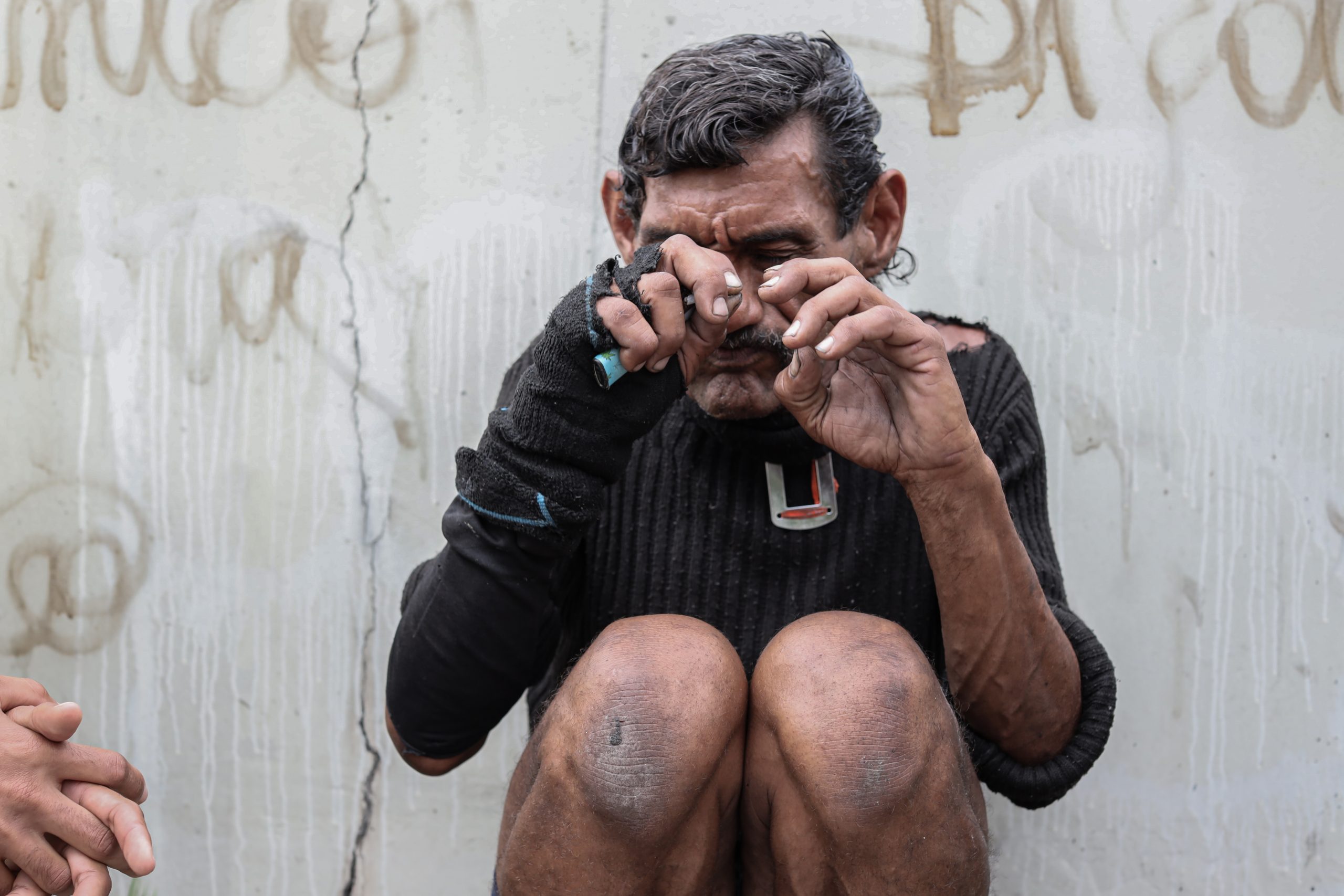
With no income, 72 percent of residents would not be able to maintain their standard of living for some time. And 86 percent would struggle to buy food and other basic items if they were to remain at home, with no income, for up to a month.
“These people have no fat to burn, they sell lunch to buy dinner. They already have little economic means to survive in dignity and quickly feel any effect of a crisis,” Meirelles explains.
“It must be noted that an economy recovers, but human lives do not. If the favela residents were a state of the Federation, they would be the fifth largest state in the country. There are more favela residents than Rio Grande do Sul residents in Brazil. This is no small detail,” he says.
He believes that, despite civil society initiatives, only the Brazilian government would be able to mitigate the effects of the crisis on popular communities.
“The Federal Government would rather fight with governors, with a logic of electoral discourse, than unite the country. This is a politicization of the fight against the coronavirus that can lead to tens of thousands of deaths and a social upheaval. Brazil has never needed leaders so much as it does now,” argues the president of the Instituto Locomotiva.
Movements against the Coronavirus in Favelas
The survey was conducted for the ‘Central Única das Favelas’ (Single Favela Central – CUFA), which created the movement #CUFAcontraovirus (CUFAagainstthevirus”). According to Celso Athayde, who chairs the organization, a network of community leaders has been mobilized in 5,000 favelas throughout the country – 300 in Rio de Janeiro and 250 in São Paulo- and a whole logistical structure has been built to deliver donations and carry out preventive actions.
This means delivering everything from food to soap and cleaning products that could prevent the spread of the virus. For this to be accomplished, CUFA has been asking for the cooperation of those who can help financially, through its website and a fundraising campaign.
In addition to CUFA, other bodies and organizations are engaged in campaigns to mitigate the effects of the coronavirus in the favelas, particularly through the distriution of food, cleaning and hygiene products, among other basic items.
Some of the actions can be found on Twitter through the hashtag #COVID19NasFavelas. The community newspaper ‘Voz das Comunidades’ has launched a donation campaign to assist the residents of the Complexo do Alemão favelas.
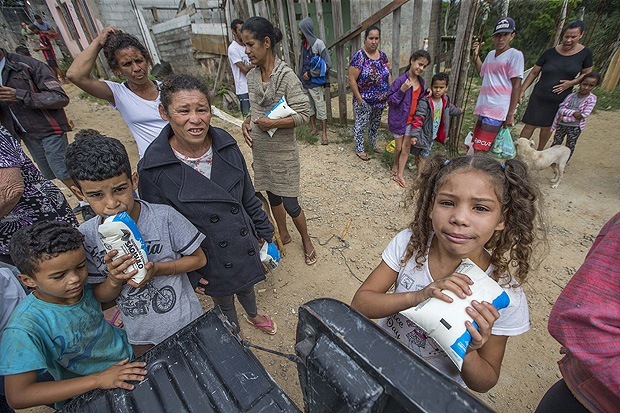
Four organizations also launched a similar initiative to help the residents of Jacarezinho, under the hashtag #JacarezinhoContraOCoronavirus.
In the Complexo da Maré favelas in Rio de Janeiro, ‘Redes da Maré’ also launched a fund-raising campaign to help the neediest portion of the community’s population – using local businesses and service providers, economically affected by the shutdown of activities -, according to Eliana Sousa Silva, the NGO’s founder.
In São Gonçalo, in the metropolitan region of Rio de Janeiro, at least four community organizations joined forces to create the #NaMinhaFavelaNão (#NotInMyFavela) movement, with the support of the collective ‘África em Nós’ (Africa in Us), to work in local communities.
Similarly, leaders and volunteer groups have been working in Paraisópolis, a favela with over 100,000 residents in the city of São Paulo.
“Without a government plan focused specifically on the reality of the more than 13 million people who live in the communities throughout the country, the poorest run the risk of soon being regarded as the great villains of the pandemic,” said Gilson Rodrigues, community leader and president of the Union of Residents and Traders of Paraisópolis.
More: Brazil news in English, every day from The Rio Times.
This article was produced by The Rio Times’ automated newsroom system. How we use AI · Report an error · Editorial responsibility: Matthias Camenzind, Editor-in-Chief