Vale Brumadinho Compensation Data Sought by Top Court Justice
Brazil · Mining
Key Facts
- —What happened Brazil’s Supreme Federal Court asked for data on Vale’s payments to Brumadinho victims before ruling on a bid to stop them.
- —Who asked Justice Gilmar Mendes gave Fundação Getulio Vargas ten days from 15 September 2026 to supply nine sets of figures.
- —What Vale pays now R$133,101,752.13 a month (about US$25.83 million) goes to an account the foundation designates.
- —Who wants it stopped Ibram, the mining industry association, says Vale completed a R$4.4 billion (about US$854 million) income transfer programme in October 2025.
- —The catch The number of people receiving the new benefit and the individual amount have not been published.
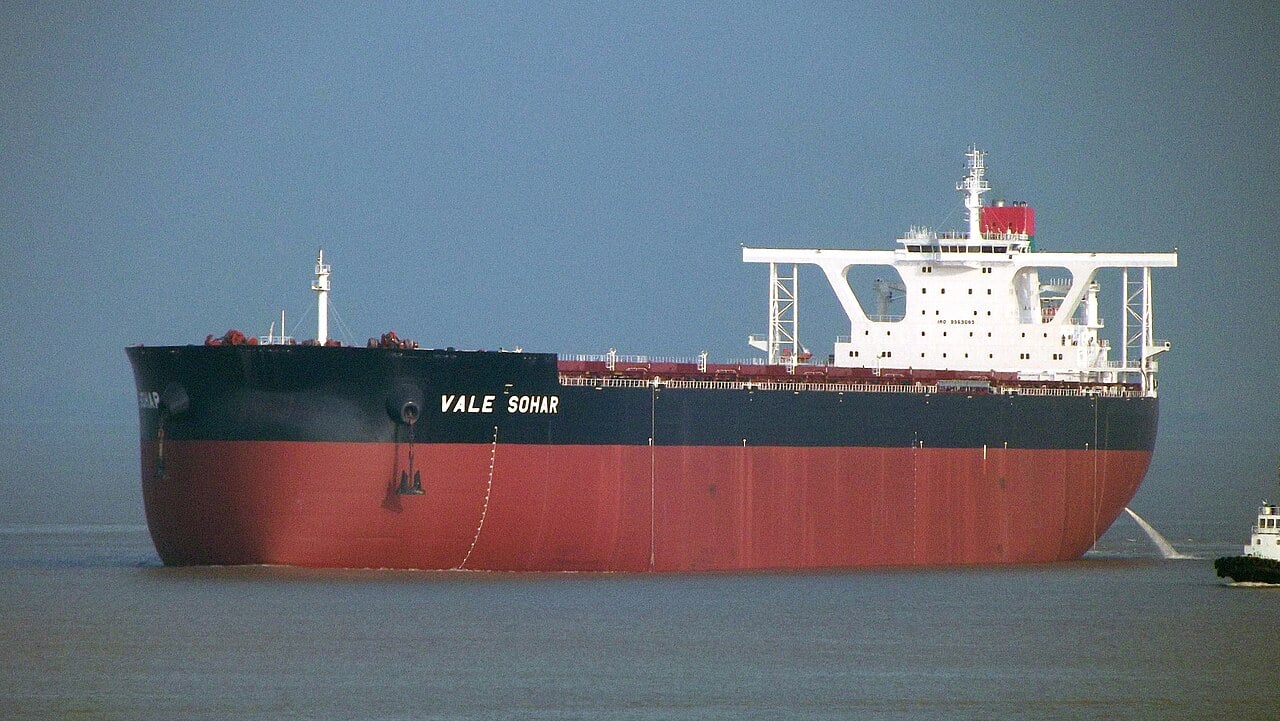
- —Also this week Wooyang Shipping of South Korea ordered four ore carriers in China, underpinned by 25-year Vale freight contracts.
Vale Brumadinho compensation now rests with a Supreme Court justice who wants the numbers first. In the same week, four ore carriers were ordered against Vale charters.
Justice Gilmar Mendes of Brazil’s Supreme Federal Court has demanded a full account of Vale Brumadinho compensation payments. He wants the figures before ruling on a request to suspend them.
The court, known in Brazil as the STF, is the country’s highest judicial authority. Mendes issued the dispatch on 15 September 2026 and allowed ten days for an answer.
A second piece of Vale news landed the same week, and it too commits money for decades. Four ore carriers were ordered in China against long-term freight contracts with the miner.
What the justice asked for
The order went to Fundação Getulio Vargas, the research foundation that administers the payments. Mendes listed nine separate data points.
They include the total transferred each month, the date the payments began and the number of people eligible. He also asked for the individual benefit value, the eligibility criteria and the balance of the previous programme.
Vale transfers R$133,101,752.13 a month (about US$25.83 million) to an account the foundation designates. The scheme is called the Novo Auxílio Emergencial, or new emergency aid.
Neither the number of recipients nor the individual payment has been published. That gap is much of what the justice is now trying to close.
Why the mining industry wants the payments stopped
The suspension request came from the Instituto Brasileiro de Mineração, known as Ibram. It is the trade association for mining companies operating in Brazil.
Ibram argues that Vale discharged its duty under an earlier income transfer programme in October 2025. It says the company paid out R$4.4 billion (about US$854 million) under that scheme.
On that reading the new payments are a second charge for one duty, which Brazilian lawyers call bis in idem. Ibram also invokes coisa julgada, the finality of a matter already settled in court.
Brumadinho’s municipal government told the STF that rising local output does not justify ending the aid. The municipal chamber has also defended keeping the payments in place.
The Minas Gerais Court of Justice has ordered the monthly transfers to continue while the STF decides. Vale has not commented publicly on Ibram’s request.
Live Company IntelligenceVale SA ADR — the full investor dossier
Wall Street view
Valuation & profitability
Price & risk
$9.7652-wk high
$17.44
Revenue trend · 6y
Ownership
Dividend
The collapse behind the payments
Dam I at Vale’s Córrego do Feijão mine in Brumadinho, Minas Gerais, gave way on 25 January 2019. The state government records the time as 12:28 p.m. local time.
The structure was 86 metres high and dated from 1976. Its failure killed 272 people, among them two infants and two pregnant women.
Three victims had still not been recovered as of April 2024. About 12 million cubic metres of tailings escaped, and 2.2 million cubic metres reached the Paraopeba River.
The 2021 settlement and what it was worth
On 4 February 2021 Vale signed a judicial reparation agreement valued at R$37.689 billion (about US$7.31 billion). At the early 2021 rate of roughly R$5.4 to US$1 it was worth about US$7 billion.
Dollar figures here use the Banco Central do Brasil closing rate of 16 September 2026, when R$5.1527 bought US$1.00. Currency movements alone change how large the 2021 commitment looks in dollars.
The state government, the state and federal prosecution services and the state public defender signed alongside Vale. The Minas Gerais Court of Justice mediated.
Of the total, R$11.3 billion (US$2.19 billion) had been handed to the state in cash by March 2024. Those funds are ring-fenced for named initiatives and cannot plug general budget gaps.
The earlier income transfer programme, the one Ibram says was completed, sits inside that agreement as Annex I.2. The state portal publishes no beneficiary numbers, payment values or duration for it.

The ships Vale did not order
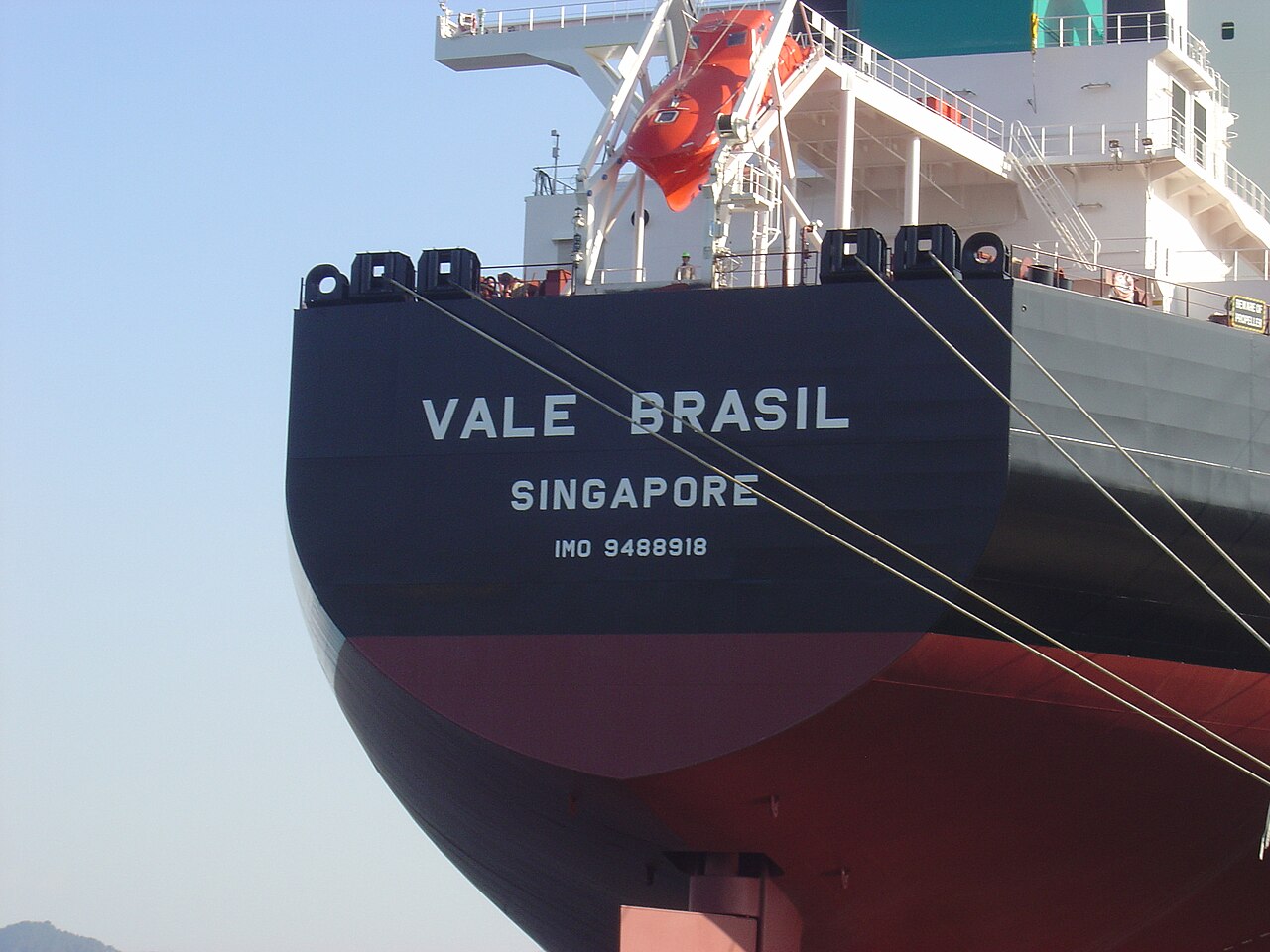
Wooyang Shipping of South Korea has ordered four Newcastlemax bulk carriers of 210,000 deadweight tonnes. Vale is not the buyer.
The builder is New Times Shipbuilding, which Lloyd’s Register lists among Chinese yards. Splash247 reported the order on 16 September 2026 at about US$432 million, or roughly US$108 million a ship.
Shipping Herald, writing on 17 September 2026, put the package at a minimum of US$400 million. It said Korea Development Bank and the Export-Import Bank of Korea arranged the financing.
Splash247 gives delivery in 2029 and 2030, while Shipping Herald says 2030. The vessels are built to burn ethanol, methanol or conventional fuel oil, with designs prepared for wind assistance.
What ties them to Vale is not ownership but freight. The miner underpins the quartet with 25-year transportation contracts worth US$1.65 billion combined, extendable by up to five further years.
Why a miner cares about ships
Iron ore is heavy, cheap by the tonne and mined a long way from the mills that buy it. Freight is therefore a significant part of what the ore costs on delivery in Asia.
A 25-year charter fixes capacity for decades and helps an owner raise finance for a vessel. It also lets the charterer dictate the technology that gets built.
Emissions follow the same logic, because ships are where a miner’s transport fuel is burned. Vale has committed to cut Scope 3 emissions, the indirect emissions across its value chain, by 15% by 2035.
Vale says it has invested about US$1.4 billion since 2020 on cutting emissions. In April 2026 it announced what it called the world’s first ethanol-powered ocean-going vessel.
That programme is with Shandong Shipping Corporation and is separate from the Wooyang order. Vale said second-generation ethanol can cut carbon emissions by up to 90% against heavy fuel oil.
Rodrigo Bermelho, Vale’s Director of Shipping, set out the thinking in April 2026. “Vale’s pioneering efforts towards decarbonization in maritime transport are guided by a strategy that combines flexibility and efficiency.”
What it means in practice
For families in Brumadinho, the question is whether the monthly money keeps arriving. That now turns on a data return to Mendes and on how he then rules.
For investors, the two items point the same way. Vale Brumadinho compensation remains an open liability, while the company fixes its freight costs years ahead.
More: Business and economy coverage, every day from The Rio Times.
Frequently Asked Questions
What happened at Brumadinho in 2019?
A tailings dam at Vale’s Córrego do Feijão iron ore mine collapsed on 25 January 2019. Tailings are the waste left after ore is processed, held back by an earth wall. The wave killed 272 people, including two infants and two pregnant women, and three bodies had still not been recovered as of April 2024. Brumadinho is a town in Minas Gerais, the state at the centre of Brazil’s iron ore industry.
How much did Vale agree to pay?
A judicial reparation agreement signed on 4 February 2021 carried a global value of R$37.689 billion, or about US$7.31 billion at the Banco Central do Brasil rate of 16 September 2026. At the early 2021 rate of roughly R$5.4 to US$1 it was worth about US$7 billion. Of that total, R$11.3 billion (US$2.19 billion) had been handed to the Minas Gerais state government in cash by March 2024, ring-fenced for named projects. Vale separately carries obligations to carry out specified repair work itself.
What is the new emergency aid programme?
It is the Novo Auxílio Emergencial, a monthly payment to people affected by the disaster in Brumadinho. Vale transfers R$133,101,752.13 a month (about US$25.83 million) into an account designated by Fundação Getulio Vargas, which administers the scheme. The number of recipients and the value of an individual payment have not been published, which is part of what Justice Gilmar Mendes has now requested. The Minas Gerais Court of Justice has ordered the transfers to continue while the Supreme Federal Court decides.
Why does Vale charter ships rather than buy them?
Chartering keeps the capital cost of very large ore carriers on somebody else’s balance sheet. The shipowner orders and finances the vessel, and the miner signs a long contract guaranteeing revenue. In the Wooyang case the owner is South Korean, the yard is Chinese and Vale’s commitment is 25-year transportation contracts worth US$1.65 billion combined. The arrangement also lets the miner specify unusual technology, such as engines able to run on ethanol, which a shipowner might not risk alone.
Sources: O Fator on the request for data, Atlas Público on the monthly transfers, Minas Gerais state government on the dam failure, Minas Gerais state government on the reparation agreement, Agência Brasil on the 2021 settlement, Splash247 on the Wooyang order, Shipping Herald on the shipbuilding contract, Lloyd’s Register on the shipyard, Vale on its ethanol-powered vessel, Banco Central do Brasil on the exchange rate
This article was produced by The Rio Times’ automated newsroom system. How we use AI · Report an error
Read More from The Rio Times