Vodafone Arm Lent Vodacom US$512M for Stake
Vodafone’s own group lent Vodacom the money to buy out Vodafone’s small Safaricom holding, and Vodacom now guarantees the replacement funding while a Kenyan appeal hangs over the wider deal.

KENYA · BUSINESS
Vodacom, the South African mobile operator, borrowed about US$512 million (R9,011 million) from a company in the same group as the seller to buy Vodafone’s remaining 12.5% of Vodafone Kenya, which equals about 5% of Safaricom, its results booklet of 10 November 2026 shows. The seller was Vodafone International Holdings B.V., a holding company of Vodafone Group, the UK telecoms company that is also Vodacom’s parent.
The loan was later refinanced through preference share funding, which Vodacom Group guarantees. The purchase now sits beside a Kenyan court ruling that voided the government’s part of the deal, and an appeal date is expected before the end of December 2026.
Key Facts
- Who. Vodacom Group of South Africa, its UK parent Vodafone Group, and Kenya’s Safaricom.
- What. Vodafone’s own group lent Vodacom about US$512 million to buy Vodafone’s 12.5% of Vodafone Kenya.
- Stake. Vodacom’s Safaricom holding is about 55%, up from about 35%; a Kenyan appeal is pending.
- Next. Vodacom expects Kenya’s Court of Appeal to set an appeal date before the end of December 2026.
- As of. 21 November 2026, 10:59 GMT.
Vodafone’s own group lent Vodacom the money to buy out Vodafone’s small Safaricom holding, and Vodacom now guarantees the replacement funding while a Kenyan appeal hangs over the wider deal.
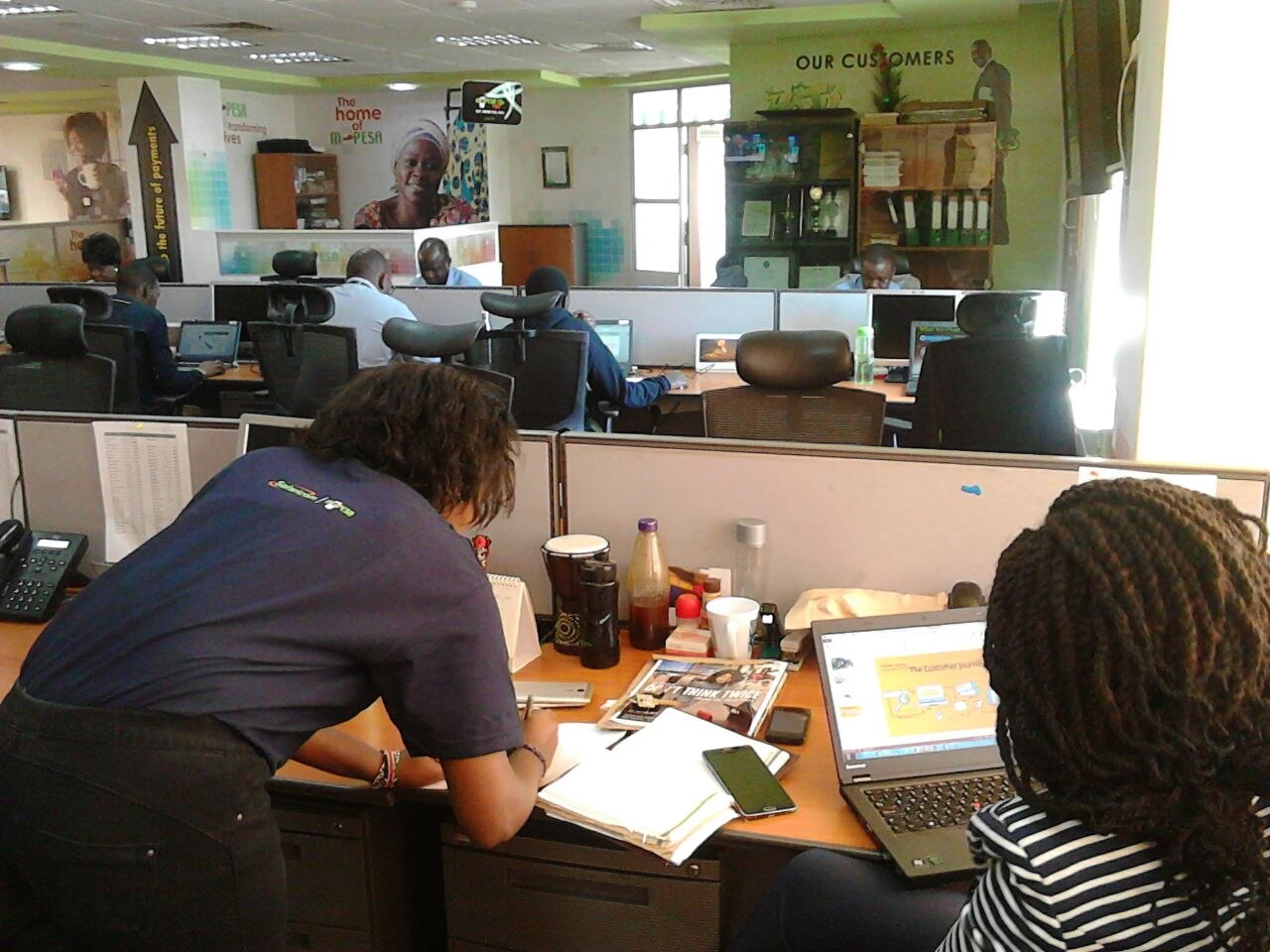
The Safaricom deal, set out in a Vodacom and Vodafone announcement of 4 December 2025, took effect on 30 June 2026. It had two parts: a 15% Safaricom stake bought from the Kenyan government, and Vodafone’s remaining 12.5% of Vodafone Kenya Limited, the vehicle through which Vodafone held its Safaricom shares, which equals about 5% of Safaricom.
Safaricom is the Nairobi-listed operator that runs the M-Pesa mobile money service. Vodacom’s booklet of 10 November says the two purchases lifted its effective holding to about 54.94%, or about 55%, from about 35%.
Vodacom’s chief executive, Shameel Joosub, has said on a media call that Vodacom “did everything by the book”. By the booklet’s own figures, the holding stood at 39.94% before the government’s 15% was added, so it would fall back to about 40% if that purchase is voided.
The booklet says the 12.5% purchase was “initially funded through a bridging loan” from Vodafone Investments Luxembourg, a Vodafone group financing company in Luxembourg. It adds that the loan was “subsequently refinanced through preference share funding”, and that “the preference share funding is guaranteed by Vodacom Group Limited”.
A bridging loan is short-term credit that carries a buyer until longer financing is arranged, and preference shares are equity that pays a fixed dividend before ordinary shareholders and can be redeemed. In effect, the seller’s own group financed the buyer, and Vodacom now stands behind the replacement funding.
The booklet’s borrowings table lists the bridging loan at R9,011 million, about R9.0 billion or about US$512 million at 17.586 rand per US$, the 20 November 2026 close. The booklet shows it as incurred and repaid within the half-year at 7.97% interest, because preference shares took its place, and gives the purchase price of the 12.5% as the same R9,011 million.
For the Kenyan government’s 15% stake, Vodacom paid R25,847 million (about US$1.47 billion). It also paid 40.2 billion Kenyan shillings (KES) (about US$312 million at 129.05 shillings per US$) for rights to part of the government’s future Safaricom dividends, financed by Kenyan bank borrowing at 11.15%, the booklet says.
In all, Vodacom funded the transaction with about R35 billion (about US$2.0 billion) of debt, of which R9 billion came through preference shares. Its net debt stood at R135,639 million (about US$7.7 billion) on 30 September 2026, more than double the level a year earlier, and net debt to EBITDA, a measure of debt against operating earnings, rose to 1.6 times from 0.9 times at the end of the year to March 2026.
The cost shows in the accounts, with net finance charges of R5,372 million (about US$305 million), up 64.5% on a year earlier. After the judgement, lenders gave written undertakings not to demand repayment, and Vodacom obtained waivers for defaults arising from it, the booklet says.
Kenya’s High Court nullified the government’s sale of its stake to Vodacom in a judgement of 15 September 2026, as the booklet describes it. The Court of Appeal in Nairobi ordered the status quo, meaning positions stay as they are, on 13 October 2026, a step covered in our earlier report on the Safaricom court case.
Appeals were filed by the Government of Kenya, Vodafone Group Plc and Vodafone Kenya Limited, and the petitioners, the parties who challenged the sale in court, also appealed parts of the judgement. Vodacom said in the booklet that it expects the Court of Appeal to set a date for the appeal before the end of December 2026.
That date is the next marker, and no ruling date has been set. Our earlier report on Vodacom’s half-year results has the earnings side, and more coverage is on the Kenya news hub.
Frequently Asked Questions
Who lent Vodacom the money to buy Vodafone’s Safaricom shares?
A Vodafone group company, Vodafone Investments Luxembourg, provided a bridging loan that was later refinanced through preference shares. Vodacom Group guarantees that funding.
Does the Kenyan court case affect Vodacom’s stake?
A High Court judgement voided the government’s sale of its stake to Vodacom, and appeals are pending. Vodacom’s holding would fall back to about 40% if that purchase is voided.
What is a bridging loan?
It is short-term credit that holds a buyer over until longer financing is in place. Here it was replaced by preference share funding.
Sources: Vodacom Group interim results booklet for the six months to 30 September 2026 (10 November 2026); Vodacom and Vodafone announcement of 4 December 2025; Kenya High Court judgement of 15 September 2026 as described in the booklet.
This article was produced by The Rio Times’ automated AI newsroom. Editorial responsibility: Matthias Camenzind, Publisher and Editor-in-Chief. The Rio Times also runs Ask Rio Times, which answers from 100,000+ of our own articles, the daily Latin America Power Map, and prediction-market odds on elections and markets.. How we use AI · Report an error
Part of our ongoing coverage
Africa: The New Scramble — the great-power contest over the continent.