Uganda Law Society Seeks to Halt Its Vote
A court order, a committee timetable and a letter from the vice president now collide. Uganda’s lawyers do not yet know whose rules the vote will follow.

Politics: Uganda
Anthony Asiimwe, vice president of the Uganda Law Society, demanded on 23 November that the Society’s own elections committee stop all preparations for a lawyers’ election in December. The High Court of Uganda ordered that vote on 17 November, and the Council, the Society’s governing body, calls the order “unworkable”.
The Uganda Law Society is a professional body created by law for Uganda’s lawyers, and one of the country’s most vocal independent voices on the rule of law. The quarrel now decides who may run it.
Key Facts
- Who. Anthony Asiimwe, vice president of the Uganda Law Society, versus elections committee chairperson Moses B. Mwase.
- What. Asiimwe wants preparations for the court-ordered lawyers’ election suspended at once.
- When. Vote set for Friday 18 December 2026; the court’s deadline for it is 1 December.
- Next. Nominations open on Thursday 26 November at the Society’s secretariat.
- As of. 25 November 2026, 09:00 GMT.
A court order, a committee timetable and a letter from the vice president now collide. Uganda’s lawyers do not yet know whose rules the vote will follow.
The struggle over who leads the Society is two years old. It began when members elected Isaac Ssemakadde president in September 2024.
On 17 September 2025 members voted 251 to 85 to extend the Council’s term by six months. Applicants challenged that vote, and on 16 October 2025 Justice Bernard Namanya of the High Court issued an interim injunction, a temporary court ban, that stopped the annual general meeting planned for 18 October.
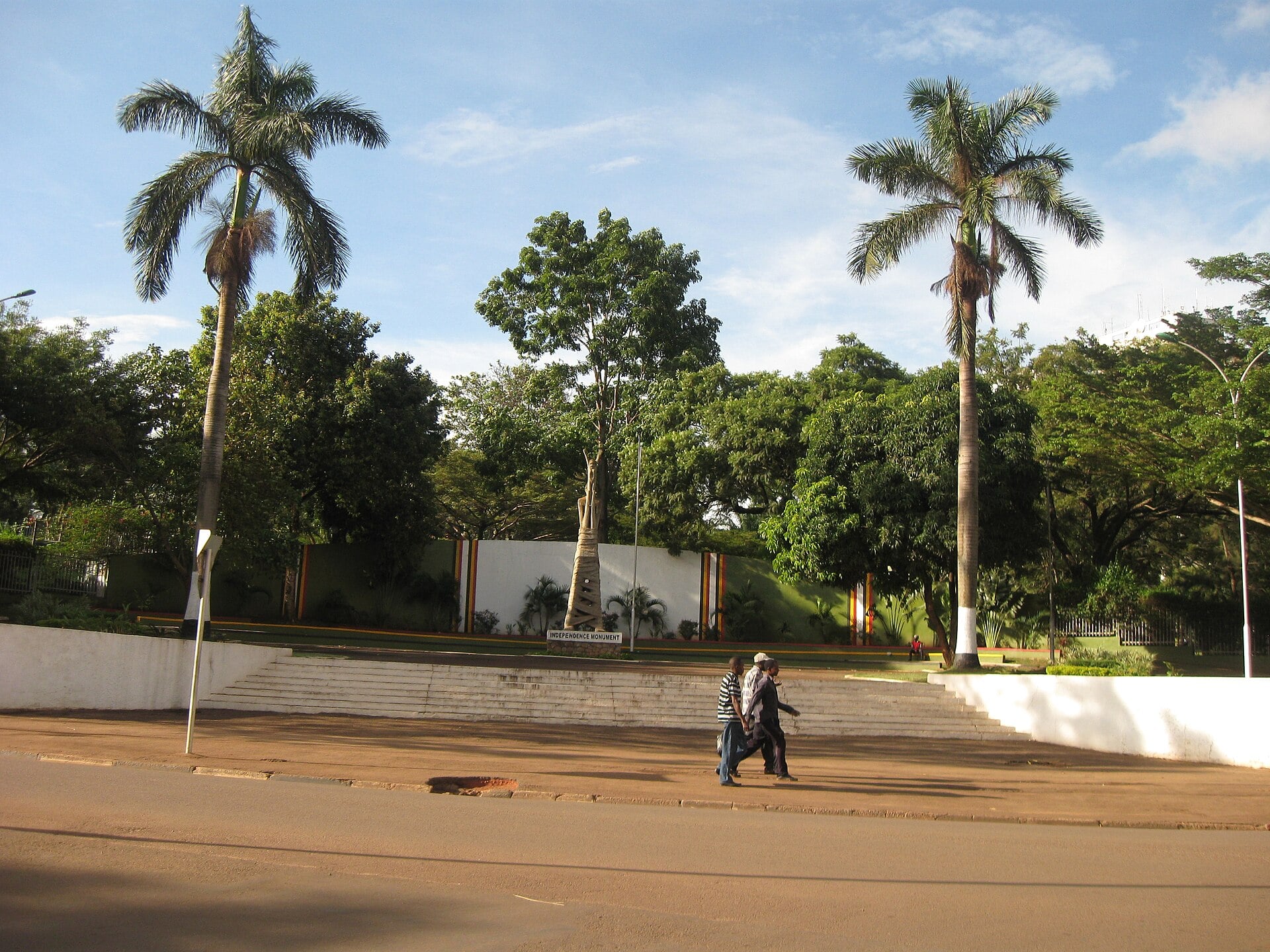
On 17 November 2026 Justice Joyce Kavuma of the High Court, ruling on an application by two lawyers, discharged that injunction. She told the Society’s electoral body and its chief executive to hold the vote within 14 days, which means by 1 December, and declared the Council’s term expired on 28 September 2026.
Lawyers Martha Nabijewa and Tonny Tumukunde brought the application against the Society and five others, including Asiimwe and Treasurer Arthur Isiko. The record does not show their arguments, and no source explains how a six-month extension voted in September 2025 leads to the expiry date the judge gave.
The order rules in an election under the Uganda Law Society Act and the 2016 Elections Regulations, and it records the Council’s term as over. What it does not settle is who may organise that election, which is the question Asiimwe’s letter raises.
The Council answered the same day in a statement signed by Ssali Babu, Acting Honorary Secretary. It said the orders were granted without hearing the Society’s side, and it promised to ask the court to hear it once Asiimwe returns.
On 20 November the elections committee issued a notice convening an Extraordinary General Meeting (EGM), a special meeting of all members, at Speke Resort Munyonyo. The meeting starts at 9:00am on Friday 18 December, with voting from 9:30am to 2:30pm for eight Council seats and for two nominees to the Judicial Service Commission, the constitutional body that recruits judicial officers.
Asiimwe wrote on 23 November to committee chairperson Moses B. Mwase. He argued that the committee cannot convene a general meeting, set a venue or commit Society money without direction from the Council or a properly convened general meeting.
He said the committee had disregarded the Uganda Law Society Act and the 2016 Elections Regulations, and he questioned its composition and the rule that nomination papers be handed in person. “You cannot put something on nothing,” he wrote.
Asiimwe warned that a flawed process risks later challenges and nullification, meaning a court could declare the result void, and he asked for a written reply by 3pm on Wednesday 25 November. No reply from the committee had been reported by then.
The Society’s lawyers plan to ask the High Court to vacate or vary the orders, though no filing or hearing date has been reported. No source explains why the committee’s polling date falls 17 days after the court’s deadline.
Nominees to the Judicial Service Commission must have 15 years in practice, so the vote also decides which senior advocates the Society puts forward. Nominations open on Thursday 26 November at the Society’s secretariat, its administrative office.
The notice sets debates for 10 and 11 December and the final voters’ register for 16 December. Results are due to be gazetted, meaning published officially, on Tuesday 22 December, and winners are to be sworn in on 8 January 2027.
Frequently Asked Questions
Why does the Uganda Law Society want its vote halted?
Vice President Anthony Asiimwe says the elections committee has no power to call the meeting without direction from the Council. The Council also calls the court order unworkable and says it was made without hearing the Society.
Who can stop or change the election?
Only the High Court can change its own order, and the Society’s lawyers plan to ask it to do so. The committee could also change its timetable if it answers Asiimwe’s demand.
What does the Judicial Service Commission do?
It recruits judicial officers and regulates their conduct under Uganda’s Constitution. The Society’s nominees give lawyers a voice in that work.
Sources
High Court of Uganda, order of 17 November 2026; Uganda Law Society Elections Committee notice of 20 November 2026; Uganda Law Society Vice President’s letter of 23 November 2026; Uganda Law Society Council statement of 17 November 2026; Uganda Law Society Act and Elections Regulations 2016
More: Uganda news
This article was produced by The Rio Times’ automated AI newsroom. Editorial responsibility: Matthias Camenzind, Publisher and Editor-in-Chief. The Rio Times also runs Ask Rio Times, which answers from 100,000+ of our own articles, the daily Latin America Power Map, and prediction-market odds on elections and markets.. How we use AI · Report an error