Guyana in Latin America, Its Role, Weight and Alliances

GUYANA · LATIN AMERICA
Key Facts
- —The basics Guyana is an English-speaking South American country of 878,674 people at the 2022 census, home to the CARICOM headquarters in Georgetown and pumping about 902,000 barrels of oil a day in the first half of 2026.
- —Why it matters Oil lifted Guyana’s economy by 19.3% in 2025 and 33.3% in the first half of 2026, while Venezuela’s claim to the land west of the Essequibo River awaits a World Court judgment.
- —The numbers Guyana’s economy reached about US$27.1 billion in 2025, roughly 0.4% of Latin American and Caribbean output, and income per head of US$32,414 was more than four times Suriname’s US$7,070.
- —Who is who President Irfaan Ali leads Guyana; Delcy Rodríguez is Venezuela’s acting president; CARICOM is the 15-member Caribbean Community based in Georgetown; the International Court of Justice is the UN’s top court in The Hague.
- —What to watch The court closed hearings on the merits on 11 May 2026 and had set no judgment date as of October 2026, while a fifth oil vessel, Errea Wittu, is due to start in the fourth quarter.
- —What it means for you US investors in ExxonMobil and Chevron depend on oil from the Stabroek Block off Guyana, and Guyana is a founding member of the US-led Shield of the Americas security partnership.
Guyana is small in people but large in oil, and it sits between the Caribbean and South America. This guide explains its weight, its seats in regional bodies, its alliances and its border dispute, as of October 2026.
The Guyana continent question starts with a paradox: fewer than a million people now produce about 902,000 barrels of oil a day. That output, from US-run offshore fields, has made Guyana a player far beyond its size in Latin America.
For a US reader, the stakes are concrete: ExxonMobil and Chevron, two American majors, lead the oil boom off Guyana’s coast. Venezuela also claims the land west of the Essequibo River, and the International Court of Justice is now writing its judgment.
Guyana is the only South American country with English as its official language, and a founding member of CARICOM. It also belongs to the OAS and CELAC, and it is an associated state of Mercosur.
Figures below come from Guyana’s Bureau of Statistics, the Ministry of Finance, the IMF and the World Bank. Conversions use the open.er-api.com rate of 15 October 2026, GYD 209.17 per US$.
Daily coverage sits in the Rio Times Guyanas section, and the pillar Guyana explained covers the oil boom and politics. Border relations with Venezuela, Brazil and Suriname are covered in Guyana and its neighbours in the Guianas.
The Guyana Continent Story in Numbers
Guyana’s Bureau of Statistics counted 878,674 people on census night, 14 to 15 September 2022, in its preliminary results. That was 131,719 more than in 2012, and the bureau estimates 956,044 residents at the end of 2024.
The country covers 214,999 square kilometres, about the size of Idaho, yet averages only about four people per square kilometre. Nearly 40% of residents live in Region 4, the coastal belt around the capital, Georgetown.
Output has grown far faster than the population since oil began flowing in 2019. The bureau puts real growth at 43.8% in 2024 and 19.3% in 2025.
Gross domestic product reached GYD 5.58 trillion in 2025, or about US$26.7 billion at the October 2026 rate. The World Bank, using its own conversion, puts the 2025 figure at US$27.1 billion.
The Ministry of Finance’s mid-year report, dated 28 August 2026, says the economy grew 33.3% in the first half of 2026. It projects 20.8% growth for the full year, with the non-oil economy expanding 10.2%.
Oil production averaged about 902,000 barrels a day in that period, up from about 639,000 a year earlier. Four floating production vessels in the Stabroek Block pumped 163.3 million barrels in six months.
Crude exports earned US$15.05 billion in the first half of 2026, the ministry says. A fifth vessel, Errea Wittu, is expected to produce first oil in the final quarter of the year.
The IMF’s board concluded its 2026 Article IV review on 8 October, putting 2025 growth at 19.3%. It projects 22.3% growth in 2026 and non-oil growth of about 7% a year over the medium term.
The same review put the 2025 fiscal deficit at 5.5% of GDP, with debt among the lowest in the Western Hemisphere. Oil revenue flows into a Natural Resource Fund, from which the ministry expects to withdraw US$2.37 billion in 2026.
Measured against the region, Guyana remains small, at about 0.4% of Latin American and Caribbean output in 2025. Its people make up roughly 0.1% of the region’s 667 million, on World Bank figures updated on 8 October 2026.
Georgetown, Home of CARICOM
CARICOM, the Caribbean Community, is the region’s main integration bloc, with 15 member states and eight associate members. Its Secretariat, the permanent staff that runs the bloc, is headquartered at Turkeyen in Georgetown.
Guyana is one of four founders, with Barbados, Jamaica and Trinidad and Tobago, which signed the treaty on 4 July 1973. The treaty came into force on 1 August 1973, and Suriname became the 14th member in 1995.
Most members are small island states, so Guyana’s land, farmland and oil give it unusual weight inside the bloc. Its government holds lead responsibility for agriculture and food security within CARICOM, Prime Minister Mark Phillips said in March 2026.
Associate members include French Guiana, Martinique and Curaçao, which tie French and Dutch territories more closely to the bloc. That links CARICOM to Guyana’s wider neighbourhood, from Suriname to French Guiana.

CARICOM has also endorsed Guyana’s candidate for UN Secretary-General, Ambassador Carolyn Rodrigues-Birkett, the foreign ministry says. President Irfaan Ali urged the UN General Assembly on 24 September 2026 to give her the chance to lead the organisation.
Rodrigues-Birkett represented Guyana at the UN during its term on the Security Council in 2024 and 2025. Ali described her as an Indigenous woman who can restore confidence in the United Nations.
The OAS, CELAC and South American Clubs
Guyana signed and ratified the Charter of the Organization of American States on 8 January 1991, the same day as Belize. The OAS spans the hemisphere, including the United States and Canada, though Nicaragua’s withdrawal took effect on 19 November 2023.
CELAC, the Community of Latin American and Caribbean States, is the region’s forum without the United States and Canada. Prime Minister Phillips represented Guyana at its tenth summit in March 2026 and welcomed Uruguay’s turn at the rotating presidency.
CELAC and CARICOM have also acted as brokers on Venezuela. On 14 December 2023 the two blocs’ chairs brought Ali and Nicolás Maduro, then Venezuela’s president, together at Argyle, St Vincent.
Both sides agreed not to threaten or use force against each other, with Brazil’s envoy Celso Amorim among the interlocutors. The declaration also recorded Venezuela’s refusal to recognise the jurisdiction of the International Court of Justice.
In South America, Mercosur, the customs union whose largest members are Brazil and Argentina, lists Guyana as an associated state. That status rests on an agreement under the 1980 Treaty of Montevideo and falls short of full membership.
Mercosur’s full members are Argentina, Bolivia, Brazil, Paraguay, Uruguay and Venezuela, which is suspended. Its other associated states are Chile, Colombia, Ecuador, Panama, Peru and Suriname.
Guyana also belongs to the Amazon Cooperation Treaty Organization, the eight-nation body for the Amazon basin, with a secretariat in Brasília. It is not part of the Andean Community or SICA, the Central American Integration System.
Guyana signed the founding treaty of UNASUR, the Union of South American Nations, in Brasília on 23 May 2008. Six members suspended their participation in 2018, and the union’s current membership could not be confirmed on an official source.
Essequibo, the Dispute at the World Court
Venezuela claims all of Guyana’s land west of the Essequibo River, a claim it revived in 1962 as British Guiana neared independence. Guyana says an arbitral tribunal settled the border on 3 October 1899, under the 1897 Treaty of Washington.
The boundary was demarcated on the ground, and in 1905 the parties signed an agreement recording their acceptance of it. Guyana’s foreign ministry says Venezuela respected the award for more than six decades.
The Geneva Agreement of 17 February 1966 set up a process to resolve the controversy and gave the UN Secretary-General a role. In January 2018 the Secretary-General chose the International Court of Justice, and Guyana filed its case on 29 March 2018.
The court ruled on 18 December 2020 that it had jurisdiction and rejected a Venezuelan preliminary objection on 6 April 2023. It ordered provisional measures on 1 December 2023 and issued a further order at Guyana’s request on 1 May 2025.
Public hearings on the merits ran from Monday, 4 May to Monday, 11 May 2026 in The Hague. The court’s case file listed no judgment date as of 15 October 2026.
Guyana’s foreign ministry said on 5 October that it expects a decision in the coming months. It called the coming judgment final and legally binding on both countries, and said Guyana will abide by it.
Venezuela’s acting president, Delcy Rodríguez, addressed the court on 11 May while rejecting its jurisdiction over the dispute. She argued for a negotiated solution under the Geneva Agreement, Kaieteur News and Caribbean National Weekly reported.
At the UN on 24 September, a day after Rodríguez spoke there, Ali urged Venezuela to respect the forthcoming ruling. Caracas’s own case is set out in this report on the Geneva Agreement.
Washington, Brasília and Other Partners
Guyana’s closest security partner is the United States, and Ali calls Guyana a proud founding member of the Shield of the Americas. The initiative of President Donald Trump aims at intelligence sharing and joint action against drug trafficking and smuggling.
Ali attended its summit in Doral, Florida, in 2026 alongside leaders from 11 other countries of the region. They came from Argentina, Bolivia, Chile, Costa Rica, the Dominican Republic, Ecuador, El Salvador, Honduras, Panama, Paraguay and Trinidad and Tobago.
Brazil and Mexico, the region’s two largest economies, were not on that list. Guyana therefore sits in a US-led security group while keeping its seats in CELAC and on Mercosur’s outer ring.
Oil ties point the same way, because US companies run the offshore boom. ExxonMobil operates the Stabroek Block with Chevron, which bought partner Hess in July 2025, and China’s state-controlled CNOOC.
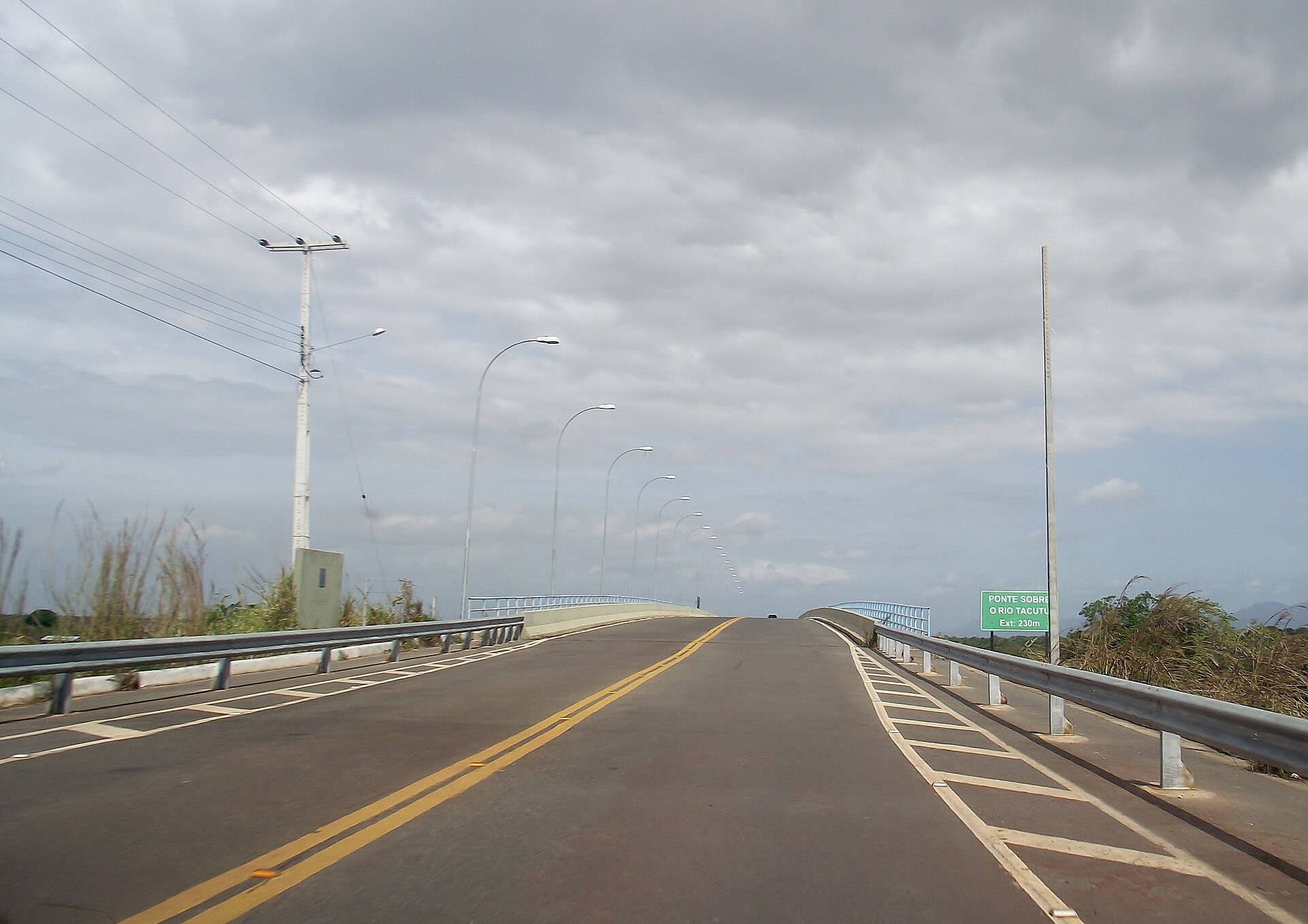
Brazil, Guyana’s giant southern neighbour, is linked to it by a road bridge over the Takutu River between Lethem and Bonfim. Both countries sit in the Amazon Cooperation Treaty Organization, and Brazil’s envoy helped broker the Argyle talks.
At the UN, Guyana has been a member since 20 September 1966, months after independence from Britain. Its government marked the 60th anniversary of that membership with a statement on 20 September 2026.
Within CARICOM, Guyana and Jamaica signed a tourism memorandum in Georgetown on 9 October 2026. Trinidad and Tobago, the Caribbean’s older energy producer, was the only other CARICOM state at the Shield of the Americas summit.
Ali’s record at home is profiled in Who Is Irfaan Ali. His foreign policy pairs close security ties with Washington with active membership of CARICOM, CELAC and the OAS.
How Guyana Compares With Its Peers
On World Bank data, Guyana’s income per head was US$32,414 in 2025, against a regional average of US$11,095. Among independent countries in the region, only The Bahamas, at US$39,455 in 2024, reported a higher figure.
Barbados came next at US$28,365 in 2025, ahead of Uruguay at US$25,216 and Costa Rica at US$19,970. Trinidad and Tobago, long the Caribbean’s energy leader, stood at US$18,967.
In total output Guyana ranked second in CARICOM in 2025, behind Haiti at US$32.1 billion. Trinidad and Tobago came third at US$25.9 billion, and Jamaica fourth at US$22.7 billion.
Suriname, its eastern neighbour, had a 2025 economy of US$4.5 billion and income per head of US$7,070. Belize, another English-speaking mainland member of CARICOM, recorded US$3.3 billion and US$7,865.
Next to Brazil, the scale flips: Brazil’s US$2.28 trillion economy is about 84 times the size of Guyana’s. Yet the average Guyanese now produces about three times as much as the average Brazilian, at US$10,713.
Output per head flatters household incomes, because a large share of oil revenue goes to the foreign operators and the state’s fund. Non-oil growth of 10.1% in the first half of 2026 is a better guide to everyday living standards.
Who Guyanese are, from census groups to the diaspora, is explained in Guyanese people, culture and heritage. A sister guide explains the role, weight and alliances of Haiti, CARICOM’s most populous member.
What It Means for US Readers
Shareholders in ExxonMobil and Chevron are exposed to Guyana’s output, its fiscal terms and the border case with Venezuela. A judgment upholding the 1899 award would confirm Guyana’s legal title, though Caracas does not accept the court’s authority.
Washington’s security partnership with Georgetown is growing through the Shield of the Americas, focused on gangs and trafficking. Ali told the UN that the region must never be overtaken by gangs or criminal networks.
For travellers and job seekers, Georgetown is the capital, the seat of CARICOM and the gateway to the oil economy. Practical details on visas, costs and housing are in Moving to Guyana.
What Is Not Known
The date of the World Court judgment is not known, and nor is Venezuela’s response to it. The bureau still publishes the 2022 census count of 878,674 as a preliminary figure.
It is not confirmed whether the Errea Wittu vessel has started producing, which would lift output further. UNASUR’s current membership, and whether Guyana takes part in any revived meetings, could not be confirmed on an official source.
The race for UN Secretary-General, in which Guyana’s candidate competes, is still open. The final 2026 growth figure will depend on oil prices, the new vessel and the weather.
Frequently Asked Questions
Is Guyana part of Latin America?
Guyana is in South America and belongs to CELAC and the OAS, so it is counted in Latin America and the Caribbean. It is English-speaking and a founding member of CARICOM, so it is also seen as Caribbean.
Where is the CARICOM headquarters?
The CARICOM Secretariat is headquartered at Turkeyen in Georgetown, the capital of Guyana. The bloc has 15 member states and eight associate members as of October 2026.
Is Guyana a member of Mercosur?
Guyana is an associated state of Mercosur, not a full member. The full members are Argentina, Bolivia, Brazil, Paraguay, Uruguay and Venezuela, which is suspended.
What is the Essequibo dispute?
Venezuela claims all of Guyana’s land west of the Essequibo River and calls the 1899 arbitral award void. Guyana asked the International Court of Justice in 2018 to confirm the award and the border.
When will the World Court rule on Essequibo?
The court closed its hearings on the merits on 11 May 2026 and has not set a judgment date. Guyana’s foreign ministry said on 5 October 2026 that it expects a decision in the coming months.
How much oil does Guyana produce?
Guyana produced about 902,000 barrels a day in the first half of 2026, the Ministry of Finance says. A fifth production vessel is expected to start in the final quarter of 2026.
How rich is Guyana compared with its neighbours?
World Bank data put Guyana’s 2025 income per head at US$32,414, against US$7,070 in Suriname and US$10,713 in Brazil. Much of that output comes from oil, so household incomes are lower than the figure suggests.
Sources: Bureau of Statistics, Preliminary Report, 2022 Population and Housing Census; Bureau of Statistics, current GDP 2006 to 2025; Bureau of Statistics, real growth 2007 to 2025; Ministry of Finance, Mid-Year Report 2026; IMF, Executive Board concludes 2026 Article IV consultation with Guyana (8 October 2026); World Bank, World Development Indicators (updated 8 October 2026); International Court of Justice, Arbitral Award of 3 October 1899 (Guyana v. Venezuela); Ministry of Foreign Affairs and International Cooperation, 5 October 2026; Ministry of Foreign Affairs, UN Secretary-General candidacy; CARICOM, member states and Secretariat; CARICOM, history; OAS, Charter signatories and ratifications; Mercosur, member and associated states; Amazon Cooperation Treaty Organization; UN Treaty Series, UNASUR Constitutive Treaty (Brasília, 23 May 2008); Joint Declaration of Argyle; Department of Public Information, X CELAC Summit; Department of Public Information, Shield of the Americas; UN General Debate, Guyana, 24 September 2026; UN General Debate, Venezuela, 23 September 2026; Oil & Gas Journal, 24 August 2026; Caribbean National Weekly, 12 May 2026; Kaieteur News, 12 May 2026; Jamaica Gleaner, 12 October 2026; open.er-api.com exchange rates (all accessed 15 October 2026).
This article was produced by The Rio Times’ automated newsroom system. How we use AI · Report an error · Editorial responsibility: Matthias Camenzind, Editor-in-Chief