A recent solar storm, the most intense observed since 2017, created stunning auroral displays visible worldwide.
This G4-class geomagnetic storm caused disruptions but also brought breathtaking auroras far beyond typical latitudes.
Observers in New Mexico and the UK witnessed these rare, vibrant displays.
These auroras result from powerful coronal mass ejections (CMEs), which are bursts of solar wind and magnetic fields released into space.
CMEs interact with Earth’s magnetic field, producing the northern and southern lights.
The current activity marks a peak phase in the Sun’s 11-year cycle, known as Solar Cycle 25.
Photographers across the globe captured the auroras, showcasing vibrant colors from places like Glasgow, Montana, and the Mendip Hills in the UK.
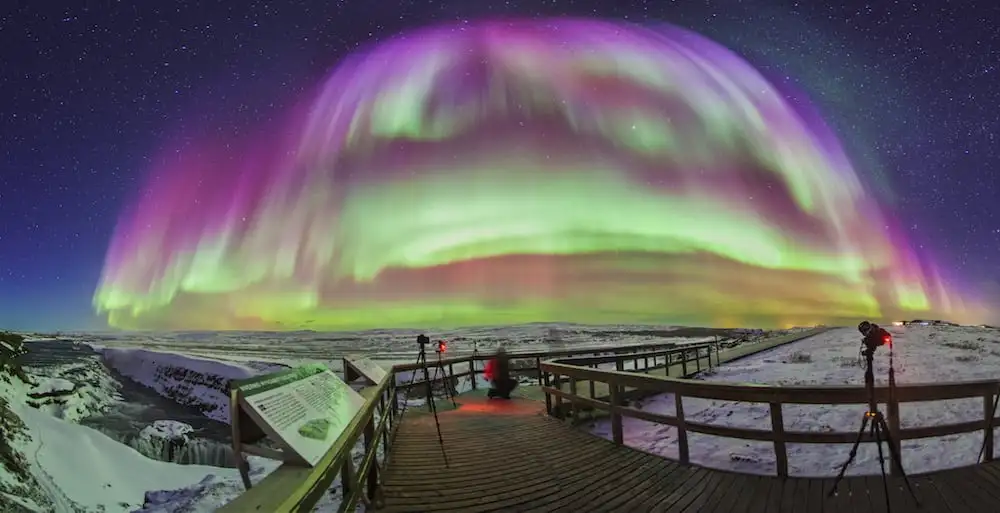
The geomagnetic activity enhances the natural light shows, creating spectacular visual experiences.
Solar Cycle 25, expected to peak around July 2025, is causing increased solar activity.
More solar events are anticipated, potentially leading to even more dramatic auroral displays in the coming years.
These events not only create stunning visuals but also impact satellite operations and electrical grids on Earth.
This recent storm highlighted the balance between enjoying natural beauty and managing potential disruptions.
While the auroras are a sight to behold, they also remind us of the Sun’s power and influence on our technology-dependent world.
The storm caused minor disruptions in satellite communications and some GPS systems, underscoring the vulnerability of space-based services.
However, the stunning light displays captivated people worldwide, offering a reminder of the natural wonders of our universe.
As the Sun’s activity continues to rise, we can expect more such events.
The interplay between these solar phenomena and our technology presents both challenges and opportunities for scientific advancement and public enjoyment.
The recent auroras serve as a vivid example of this dynamic relationship.
This article was produced by The Rio Times’ automated newsroom system. How we use AI · Report an error
Read More from The Rio Times