Peru Ex-Mayor Says Lima Ban Is Vote Theft
Peru's electoral court says a former mayor cannot return to City Hall by the back door. He calls the decision theft, and the fight now moves to other institutions.

Peru · Lima Mayor Ruling
Peru’s electoral court, the Jurado Nacional de Elecciones (JNE), rejected a request for reconsideration on Thursday 19 November 2026 from the party of Rafael López Aliaga, the former mayor of Lima. The ruling closes the file and keeps him out of the capital’s mayoralty.
In a television interview reported on Monday 23 November 2026, he said: “It is the fourth time they steal an electoral process from me” (translated). He says he will go to the Constitutional Tribunal, Peru’s top constitutional court, but no filing there is confirmed.
Key Facts
- What. Peru’s electoral court barred ex-mayor López Aliaga from Lima’s mayoralty; he calls it theft.
- Next. He plans a Constitutional Tribunal appeal; the new municipal term begins 1 January 2027.
- Prediction markets. Polymarket, a prediction market, prices López Aliaga at 3.7% for Lima mayor (4:12 p.m. ET).
- Power Index. Peru ranks 5th of 14 in The Rio Times Latin America Power Index, with 53.9 points (November 2026 edition).
- As of. Monday 23 November 2026, 21:30 GMT.
Peru’s electoral court says a former mayor cannot return to City Hall by the back door. He calls the decision theft, and the fight now moves to other institutions.
López Aliaga leads Renovación Popular, a conservative party, and was mayor of Lima from 2023 until he resigned on 13 October 2025 to run for president. In the regional and municipal elections of 4 October 2026, ONPE, the national electoral office that counts the votes, finished its Lima count with his party first, on 27.685% of valid votes.
The party’s mayoral candidate, Luis Rubio, withdrew in August 2026, and López Aliaga ran as first regidor, the first councillor, who normally steps up when a mayor cannot serve. Article 194 of Peru’s constitution bars the immediate re-election of mayors, and the JNE applied that rule to this route as well.
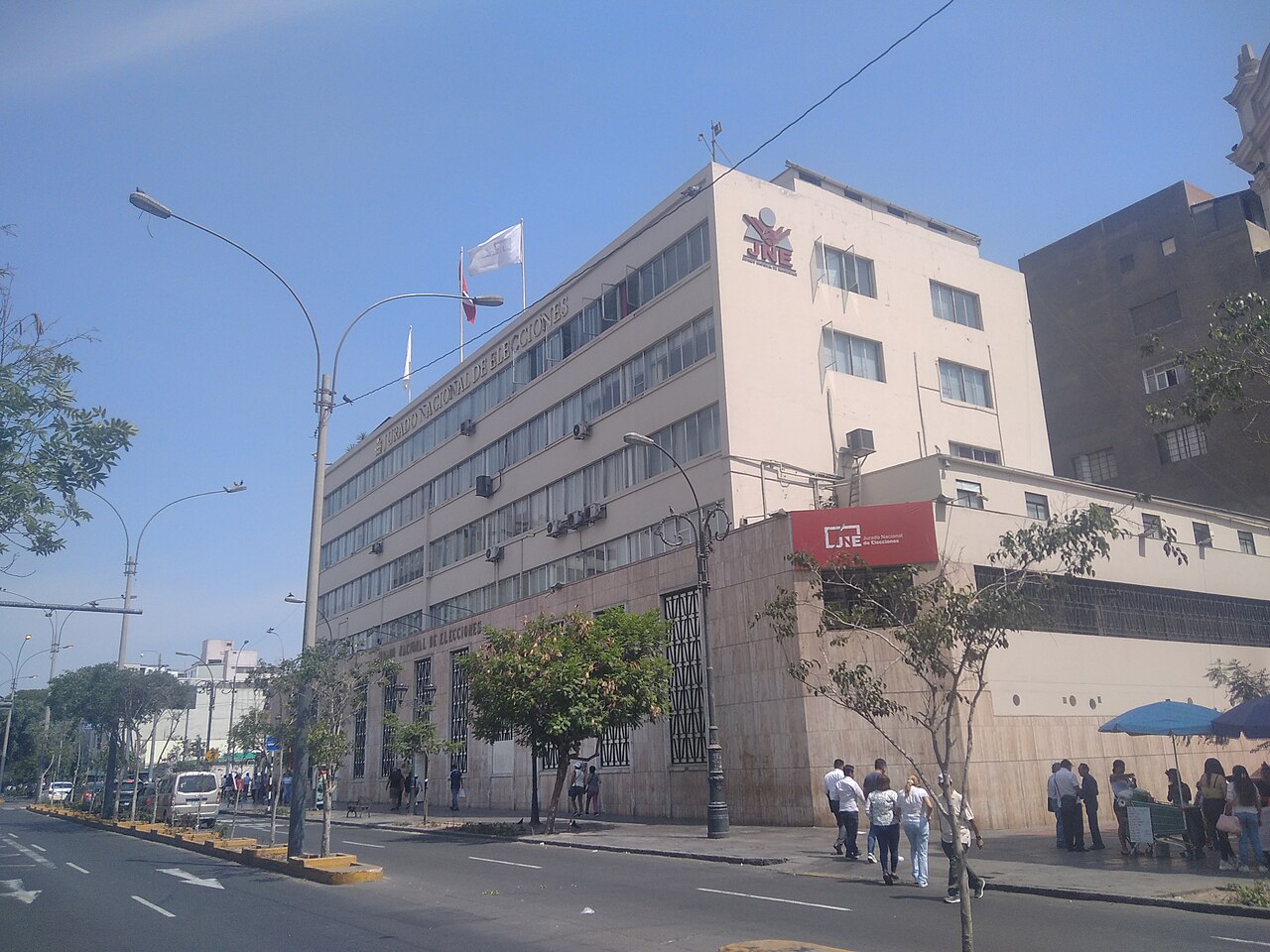
On 2 November 2026 the JNE’s full bench issued Resolution 4557-2026-JNE, whose point 3 says a first regidor who was mayor in the previous term cannot take over the mayoralty, not even by succession. The court’s five magistrates adopted it by majority, under its president, Roberto Burneo.
The credential for Lima mayor therefore goes to the second regidor on the list, Jeanette Alonzo. JNE secretary general Yessica Clavijo Chipoco said on 12 November 2026 that the law, given the supremacy of the Constitution, “clearly establishes that there is no re-election” (translated).
Lima is not the only case: Clavijo said about 20 winning lists nationwide have a former mayor as first regidor, and that the resolution corrects six of those cases. The same criterion therefore applies to those lists.
On 10 November 2026 the party’s legal representative, Fernando Sandoval Ruiz, filed a request for reconsideration. It argued that the JNE changed the rules after the vote.
On Thursday 19 November 2026 the plenary declared the request improcedente, meaning inadmissible, in a ruling that closed the file. The ruling carries the signatures of Burneo, Martha Maisch, Gunther Gonzales, Rubén Torres and Aarón Oyarce, and the JNE’s secretary general has said its plenary resolutions are final.
In the television interview reported on Monday 23 November 2026, he called the ruling a violation of the popular will. He argued there is a legal difference between running directly for re-election and taking over the mayoralty through succession, and cited Articles 195 and 139(9) of the Constitution.
He also said the JNE exceeded its powers by ruling on provisions of the Organic Law of Municipalities, the statute that governs local councils, and renewed his criticism of Burneo, the JNE president, alleging irregularities in earlier elections, including those of 2021 and 2026. These are his claims, and the interview report gives no evidence for them.
The party’s legal representative, Sandoval Ruiz, holds that the rules were changed after the vote. The JNE’s answer is its secretary general’s reading that the constitution leaves no room for re-election at this level.
If nothing changes, Alonzo takes over the mayoralty and López Aliaga becomes a regidor. He said that if his situation is not resolved before 1 January, the next person on the list must take office and he will serve as regidor, as the law requires.
López Aliaga announced he will go to the Constitutional Tribunal, and is weighing criminal actions, a competence conflict and a constitutional complaint in Congress. As of 23 November no filing at the Tribunal is confirmed.
It is not known whether the Tribunal will take a case. It is also not known whether the JNE will hand Alonzo the credential on a set date.
The ruling is mainly a domestic matter for Peru. For US readers the link is limited to investors who follow how Peru’s institutions handle disputed results.
On Sunday 6 December 2026, Peruvian regions where no ticket reached 30% of valid votes elect governors in a second round, convened by Supreme Decree 150-2026-PCM of 11 November 2026 in the official gazette. The new municipal term, 2027 to 2030, begins on 1 January 2027, the date López Aliaga himself cites.
Frequently Asked Questions
Why can López Aliaga not become mayor of Lima?
Peru’s constitution bars the immediate re-election of mayors, and the electoral court applies that rule to a former mayor who steps up as first councillor. It ruled that the ban holds even by succession.
Can the electoral court’s ruling still be appealed?
The electoral court has said its plenary resolutions are final. López Aliaga says he will go to the Constitutional Tribunal, but no filing there is confirmed.
Who becomes mayor of Lima instead?
The credential goes to Jeanette Alonzo, the second regidor on the party’s list. That follows the JNE ruling of 2 November 2026 that keeps him out of the office.
Sources
JNE secretary general statement on Resolution 4557-2026-JNE, 12 November 2026 · JNE plenary ruling on the party’s reconsideration request, 19 November 2026 · Supreme Decree 150-2026-PCM, 11 November 2026
Connected Coverage
Peru news · Peru Senator Says Party Must Obey Mayor Ban · Peru Court Keeps Chief on López Aliaga Case · Latin America Power Index
In depth
This article was produced by The Rio Times’ automated AI newsroom. Editorial responsibility: Matthias Camenzind, Publisher and Editor-in-Chief. The Rio Times also runs Ask Rio Times, which answers from 100,000+ of our own articles, the daily Latin America Power Map, and prediction-market odds on elections and markets.. How we use AI · Report an error
Living in or visiting Lima? See this month's events and our Lima city guide with rents, safety and upcoming concerts.