Paraguay · TRADE
Key Facts
- —What happened Paraguay’s shipping sector is reviving its fight against Argentina’s toll on the Paraguay-Paraná waterway.
- —The toll US$1.30 per net registered tonne on the northern stretch from Santa Fe northwards.
- —The real story The toll can absorb a large part of the margin on agricultural goods, hitting exporters.
- —The catch The dispute has run since 2023 with no resolution; no fresh Argentine statement was found for August 2026.
- —Where it hits Paraguayan cargo uses this corridor to reach the Atlantic, shared by five countries.
- —What comes next Paraguay’s claim within Mercosur remains open, with no ruling or award reported.
Paraguay’s shipping sector is reviving its push against Argentina’s toll on the Paraguay-Paraná waterway, a charge that can eat into agricultural profits.
The Paraguay waterway toll is back on the table. Paraguay’s shipping sector is reviving its effort to cut what Argentina charges on the Hidrovía Paraguay-Paraná.
Argentina says the fee funds waterway maintenance. Paraguayan shipowners say it eats into farm export margins.
The Paraguay Waterway Toll Dispute Reopens
However, Paraguay’s shipping sector is reviving its effort to reduce the impact of the toll charged by Argentina on the Hidrovía Paraguay-Paraná. The report from La Razón on Wednesday 19 August 2026 says the sector seeks to reactivate efforts to lower the toll’s impact.
The toll can absorb a large part of the margin on agricultural products, according to Paraguay’s shipping sector. This warning comes from the sector as a whole, not from any specific chamber or federation.
The dispute has been running since 2023, with no closure found in August 2026. Meanwhile, both governments maintain their positions on the waterway toll.
What Is the Paraguay-Paraná Waterway
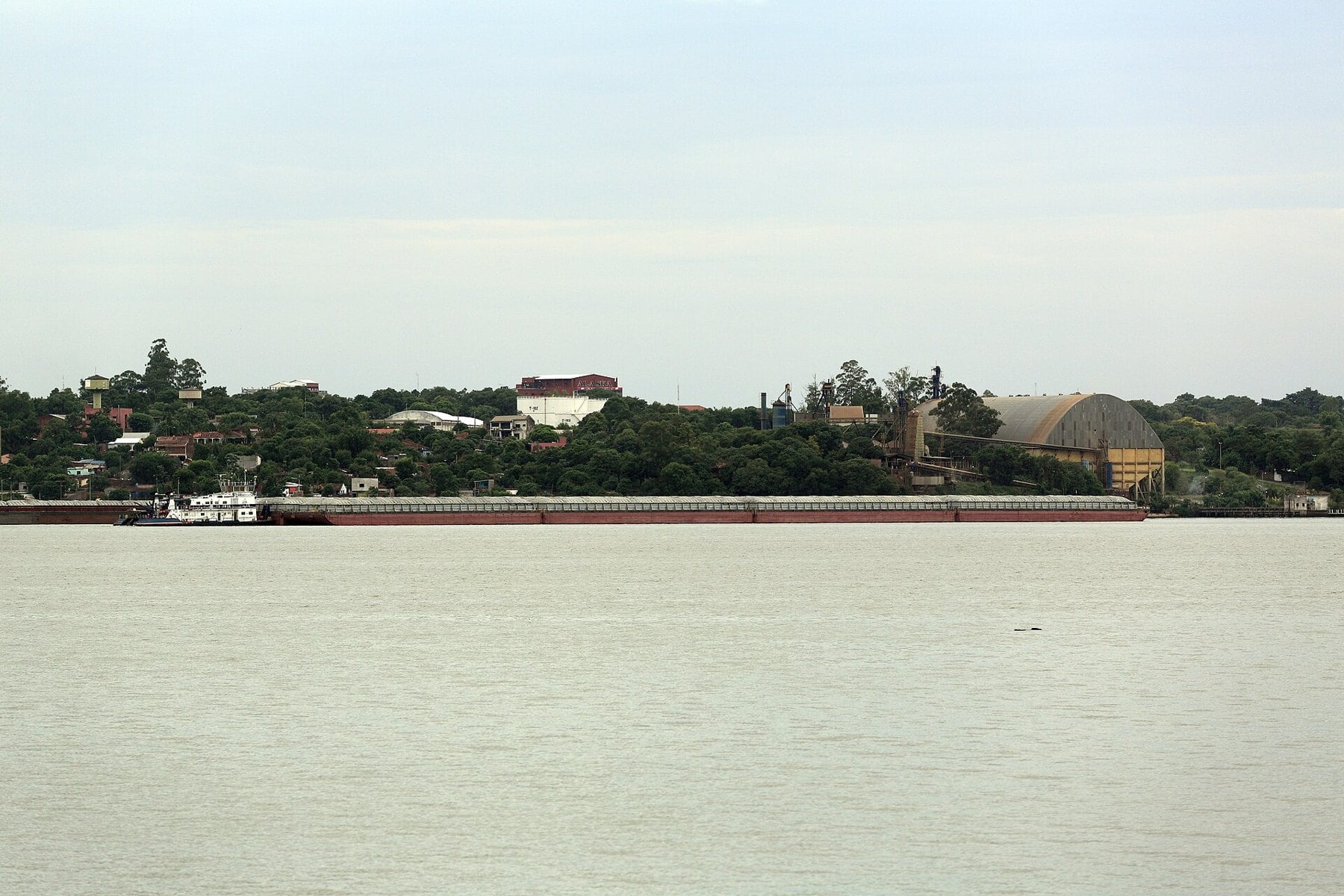
The Hidrovía Paraguay-Paraná is a system of navigable rivers; in fact, it carries transport between Brazil, Bolivia, Paraguay, Argentina and Uruguay. It uses mainly the Paraguay and Paraná rivers and serves as the main export corridor for Paraguayan cargo to the Atlantic.
The waterway is shared by five countries; therefore, its importance to Paraguay is huge. For example, Paraguayan cargo relies on this corridor to reach global markets.
The waterway is the main export corridor for Paraguayan cargo to the Atlantic. However, it is shared by five countries, each with its own interests.
The Toll Rate and Its Stretch
The international toll on the northern stretch of the waterway, from Santa Fe northwards, stands at US$1.30 per net registered tonne. Santa Fe is an Argentine river port city that marks the boundary of this stretch.
By contrast, other tariffs on Argentina’s Vía Navegable Troncal reach US$4.30 per net registered tonne on other stretches. The two figures apply to different stretches and should not be merged.
The northern stretch, from Santa Fe northwards, carries the US$1.30 per net registered tonne toll. In addition, other stretches have tariffs reaching US$4.30 per net registered tonne.
Argentina’s Justification for the Toll
Argentina has maintained the toll and justified it as financing the maintenance of the waterway. This position was documented in coverage from El Destape Web on 23 September 2023 and La Política Online on 2 November 2023.
Argentina’s stance is part of the dispute; in addition, it must be reported alongside Paraguay’s position. The toll applies to vessels including Paraguayan-flagged ones on the Vía Navegable Troncal.
Argentina’s justification, from 2023 coverage, is that the toll finances waterway maintenance. However, no fresh official statement from Argentina was found for August 2026.
Paraguay’s Challenge Since 2023
Since 2023, Paraguay has challenged the toll Argentina imposed and has raised a claim within Mercosur, the Southern Common Market. Paraguay argues the charge affects free navigation of the waterway and the competitiveness of its exports.
The dispute has never been closed. Paraguayan coverage records a formal complaint and diplomatic tension over the toll, but no definitive resolution has been reached.
Paraguay’s claim within Mercosur argues the toll affects free navigation. However, no ruling or award has been reported on this case.
The Waterway’s Cargo Volumes
Overall, the Hidrovía is forecast to move 28 million tonnes during 2026, according to Mundo Fluvial Marítimo on 14 August 2026. This figure describes the entire waterway, shared by five countries, not just Paraguay, although it is often misunderstood.
Moreover, in 2023, the river sector carried 24 million tonnes. Almost 46 per cent of the goods came from Paraguay, as reported on 4 October 2024.
This is a different claim from the 2026 forecast. The 2026 forecast of 28 million tonnes covers the entire waterway, not just Paraguay.
In contrast, the 2023 figure of 24 million tonnes is also waterway-wide, with Paraguay’s share at almost 46 per cent.
Paraguay’s Growing River Fleet
Meanwhile, Paraguay’s shipping sector is expanding. In addition, plans add around 15 new tugs and more than 400 barges over the next two years.
This is according to La Nación on 21 January 2026. This growth reflects Paraguay’s ambition as a regional river power.
Asamar, a Paraguayan shipping association, reports 3,445 Paraguayan-flagged vessels operating on the waterway, including 2,700 dry bulk barges and 380 tugs. Their combined static cargo capacity is 4,507,737 tonnes, plus 10,812 twenty-foot equivalent units, or TEUs, the standard container measure.
Plans add around 15 new tugs and more than 400 barges over the next two years. However, this growth is separate from the fleet counts reported by different sources.
Different Fleet Counts Over Time
Various sources have given different fleet counts over the years. For example, Asamar reported more than 2,500 units in April 2024, while La Nación cited at least 3,200 barges in September 2023.
In addition, Paraguay’s industry minister told ABC Color on 1 August 2024 that the country has 2,200 barges. In fact, it boasts being the third largest fleet in the world.
That claim is the minister’s own wording and should be attributed to him. The industry minister’s claim of being the third largest fleet is his own wording.
Meanwhile, the various counts reflect different dates and sources.
What the Paraguay Waterway Toll Means for Trade
The Paraguay waterway toll is a key issue for Paraguayan exports, as the waterway is the main corridor to the Atlantic. The toll can absorb a significant part of agricultural margins, affecting competitiveness.
Overall, the dispute remains unresolved, with both sides holding firm. The Paraguay waterway toll will continue to be a point of tension between the two countries.
The toll’s impact on agricultural margins is a key concern for the sector. However, no total cost or annual bill has been calculated from the toll rate.
More: Paraguay news in English, every day from The Rio Times.
Frequently Asked Questions
What is the Paraguay waterway toll?
Paraguay’s waterway toll is a fee Argentina charges on ships using the Hidrovía Paraguay-Paraná. This applies to the Vía Navegable Troncal, which lies inside Argentina.
Why is Paraguay challenging the toll?
Paraguay argues the toll affects free navigation of the waterway and the competitiveness of its exports. Since 2023, Paraguay has raised a claim within Mercosur, but no resolution has been reached.
How much cargo moves on the waterway?
The whole Hidrovía is forecast to move 28 million tonnes in 2026. In 2023, the river sector carried 24 million tonnes, with nearly 46 per cent of that cargo coming from Paraguay.
What is Argentina’s justification for the toll?
Argentina maintains the toll and says it finances the maintenance of the waterway. This justification was documented in 2023 coverage and remains Argentina’s standing position.
Connected Coverage
Sources: La Razón; Mundo Fluvial Marítimo; Asamar; La Nación (Paraguay); ABC Color; Revista Protagonista; Primera Edición; El Destape Web; La Política Online.
This article was produced by The Rio Times’ automated newsroom system. How we use AI · Report an error · Editorial responsibility: Matthias Camenzind, Editor-in-Chief