Argentina Hands Its Export Lifeline to a Private Operator at Last
Markets & Finance · Argentina
—The decision. Argentina has formally awarded the 25-year concession of its main river highway, the Hidrovía, to a private consortium.
—The winner. Belgium’s Jan de Nul and local partner Servimagnus take over, forming a new operating company called Vía Navegable Argentina.
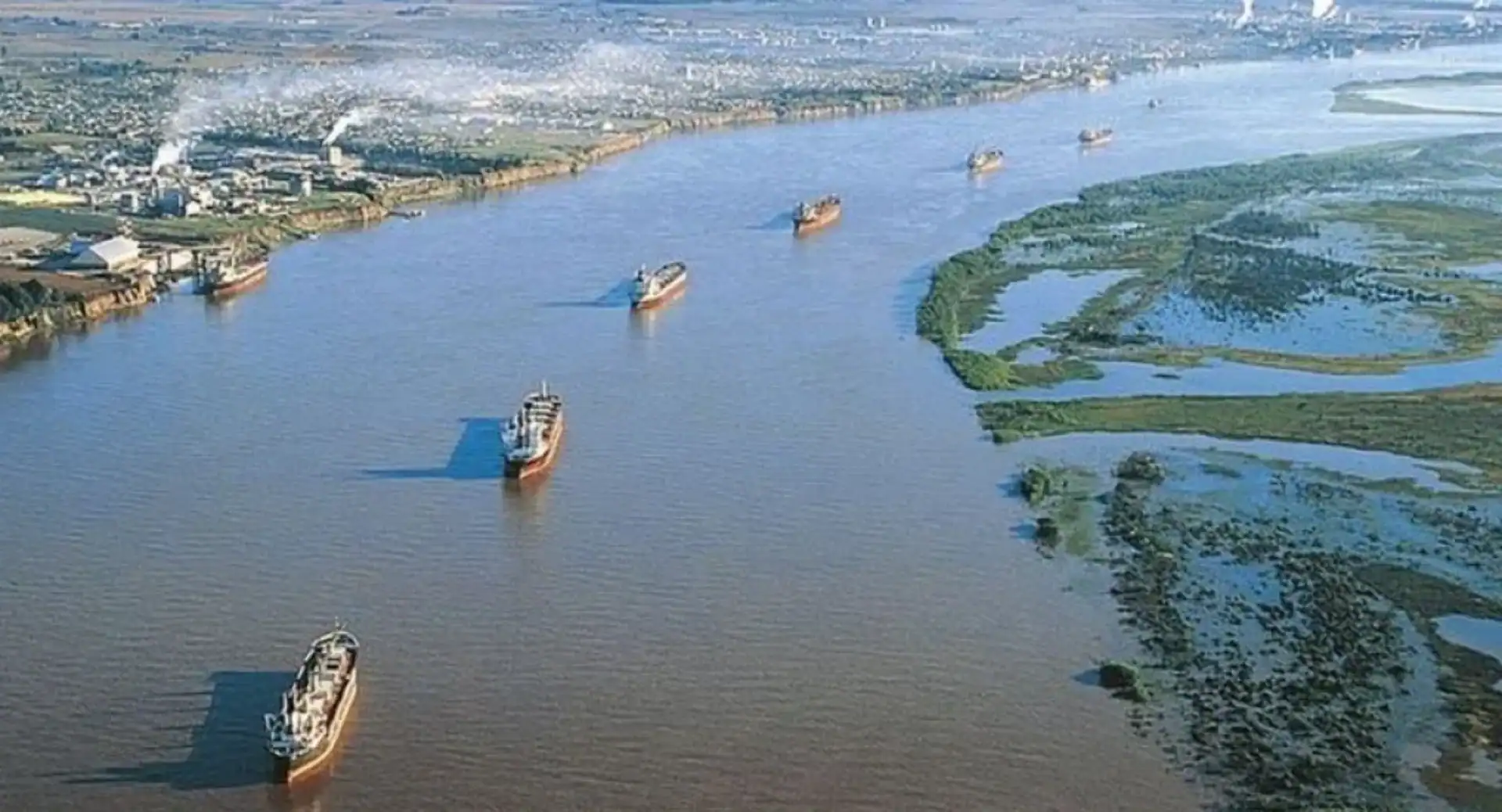
—The stake. Roughly 80 percent of Argentina’s foreign trade physically moves along this Paraná corridor, mostly grain and soybean exports.
—The promise. The government says the new scheme will cut logistics costs by 13.5 percent once the contract is signed.
—The scale. Reported at about $15bn over the term, it is the largest concession awarded under President Javier Milei.
—The timeline. A bidder challenged the result, delaying the contract signing beyond 30 days.
The Argentina Hidrovia privatization is finally done: after years of false starts and a voided tender, the river system that carries most of the country’s exports has a private operator for the next quarter century.
Why the Argentina Hidrovia privatization matters to investors
This is not a side deal. The Paraná-Paraguay waterway is the single channel through which roughly four-fifths of Argentina’s exports physically leave the country.
That makes it the backbone of the soybean and grain trade that earns Argentina its hard currency. Anyone exposed to global agricultural commodities has an indirect stake in how it is run.
Handing it to a private operator for twenty-five years is therefore a structural bet. The state keeps oversight, but day-to-day control of a strategic asset now sits with a foreign-led consortium.
The reach is regional, not just national. The same corridor carries soy from Brazil’s Mato Grosso, Bolivian cargo and Paraguayan grain, so its tariffs ripple across several neighbouring economies.
That shared dependence has caused friction before. A 2023 dispute over tolls levied on international vessels sparked a diplomatic row among Mercosur members, a reminder of how sensitive the route is.
What changes for exporters
The headline benefit the government is selling is cheaper shipping. Officials project a cut of more than thirteen percent in logistics costs once the new contract takes effect.
The mechanism is deeper dredging. A deeper channel lets vessels load more cargo at upriver ports rather than topping up downstream, which lowers the cost of every tonne shipped.
Grain chambers, the oilseed industry and the main port cities all backed the process. For the farm belt around Rosario, a more competitive waterway is close to an existential issue.
Even small savings matter at this scale. When most of a country’s exports pass through one channel, shaving a few percent off freight ripples through margins for thousands of producers.
Live Market IntelligenceArgentina — Live Market Board
Rio Times · Live Market Intelligence
Argentina — Live Market Board
+0.30%
206,220.24
+0.94%
64,851.89
+0.31%
11,024.22
+0.22%
2,832,472
+0.30%
2,525.90
-0.36%
60,766.81
-1.71%
| Instrument | Last | Change | YoY | Prev. | High | Low | Volume |
|---|---|---|---|---|---|---|---|
| MERVAL | 2,832,472 | +0.30% | +30.51% | 3,022,485 | 3,042,365 | 2,991,150 | — |
| USD/ARS | 1,493 | +0.10% | +12.96% | 1,491 | 1,494 | 1,480 | — |
| YPF | 7,810 | +0.26% | +72.84% | 7,790 | 7,850 | 7,600 | 1,763,858 |
| GGAL | 6,980 | -0.78% | +1.82% | 7,035 | 7,115 | 6,920 | 1,564,062 |
| PAMPA | 5,115 | +0.69% | +26.70% | 5,080 | 5,140 | 5,000 | 721,190 |
| TXAR | 747.50 | -2.35% | +18.67% | 765.50 | 770.00 | 742.50 | 771,892 |
| ALUAR | 938.00 | -1.21% | +29.83% | 949.50 | 951.00 | 932.50 | 135,426 |
| TGS | 8,870 | -0.17% | +15.05% | 8,885 | 9,075 | 8,720 | 143,546 |
| CEPU | 2,156 | +1.84% | +28.36% | 2,117 | 2,165 | 2,086 | 404,146 |
| MIRGOR | 1,650 | -1.20% | -92.90% | 1,670 | 1,670 | 1,635 | 20,877 |
| COME | 40.93 | -0.73% | -30.47% | 41.23 | 41.60 | 40.50 | 4,258,884 |
| LOMA NEGRA | 3,130 | +0.08% | +5.80% | 3,128 | 3,205 | 3,090 | 182,992 |
| BYMA | 275.00 | -1.70% | +35.14% | 279.75 | 282.50 | 272.00 | 1,409,575 |
| TELECOM ARG | 4,233 | -0.70% | +55.19% | 4,263 | 4,335 | 4,160 | 31,896 |
| GLOBANT | 38.10 | -2.26% | -49.65% | 38.98 | 38.70 | 36.77 | 793,552 |
| MERCADOLIBRE | 1,870 | -3.59% | -20.71% | 1,940 | 1,927 | 1,870 | 329,640 |
A long road to the award
The path here was anything but smooth. An earlier attempt collapsed when only one bidder showed up, prompting accusations of favouritism and a voided tender.
This time two experienced Belgian dredgers competed, with Jan de Nul edging out rival DEME. Notably, a losing bidder filed a challenge, which the government treated as validation of the process.
The state also leaned on outside credibility. It noted that a United Nations trade body monitored the tender against international good-practice standards.
The winner is a familiar name on the river. Jan de Nul managed the same waterway until 2021, when the state took over operations, so the award is as much a return as a fresh start for the Belgian dredger.
Provincial governments are watching closely. Santa Fe, Entre Ríos, Chaco and Corrientes all sit on the route, and their export economies hinge on how cheaply the channel can move their goods.
A signature win for the Milei agenda
For the government, the timing is political as much as economic. The waterway is the biggest single concession of the Milei era and a flagship of its drive to privatise state-run infrastructure.
The logic is to shift both the cost and the risk off the state’s books. Rather than funding dredging from the treasury, the government now collects a regulated operator while private capital carries the investment.
It lands as the administration pushes a wider sale programme that already covers the water utility, the highway network and other state firms. Each award is a test of investor appetite for Argentine risk.
Investors will price in the politics, too. With a legislative election due later this year, a future government could revisit the terms, and that uncertainty feeds into the risk premium on a quarter-century commitment.
The real proof will come later. A signed contract is one thing; sustained dredging, lower tariffs and steady operation through a full political cycle are what will decide whether the bet pays off.
Frequently Asked Questions
What is the Argentina Hidrovia privatization?
It is the award of a twenty-five-year concession to operate the Paraná-Paraguay waterway, the river highway carrying most of Argentina’s exports. A private consortium will run dredging and maintenance.
Who won the Hidrovía concession?
Belgium’s Jan de Nul, with local partner Servimagnus, won the tender. The two have formed a new company, Vía Navegable Argentina, to run the waterway.
How will it affect Argentine exports?
The government projects logistics costs falling by more than thirteen percent. Deeper dredging should let ships load more cargo upriver, lowering the cost of moving grain and soybeans abroad.
Connected Coverage
Argentina Picks Operator for Waterway Carrying 80% of Its Exports
Argentina Launches Tender to Privatise 90% of Water Utility AySA
This article was produced by The Rio Times’ automated newsroom system. How we use AI · Report an error · Editorial responsibility: Matthias Camenzind, Editor-in-Chief