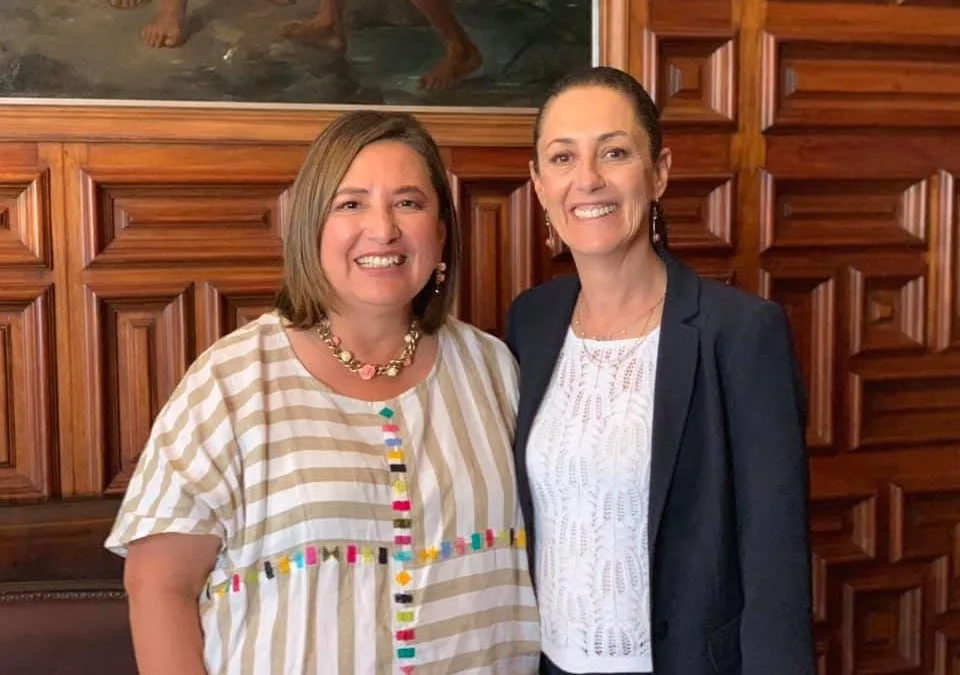
Mexican President Andrés Manuel López Obrador has announced increased security for upcoming election candidates Xóchitl Gálvez and Claudia Sheinbaum.
He disclosed this plan at a press conference. The national defense department has prepared a safety proposal for both.
Obrador stressed that the safety measures are for all public office contenders in the 2024 elections, not just presidential hopefuls.
He also noted that heightened tensions often mark government transitions in Mexico. Hence, he urged vigilance to maintain a stable political climate.
Prior to the campaign kick-off, at least two associates linked to the ruling Morena party have been killed.
Maximiliano García Guzmán, a political science expert, predicts that criminal groups will seek to influence this electoral process.
They aim to shape candidate selection and power dynamics. The June 2, 2024 elections will not just decide the presidency.
They will also choose leaders for nine states and 16 mayors in Mexico City, along with filling all legislative seats.
According to the National Electoral Institute (INE), a record-breaking 19,634 positions are up for grabs across 32 states in Mexico. This makes it the nation’s largest election to date.
Background
This move comes amid growing concerns about election-related violence in Mexico. President Obrador’s decision to enhance security shows the gravity of the situation.
It also presents a chance for him to bolster public trust in electoral integrity.
While protection for candidates is essential, some critics argue that it doesn’t address root causes of election violence.
Indeed, the presence of organized crime groups in the political landscape complicates the issue.
These groups seek to exert influence, a problem not easily solved by security measures alone.
The 2024 elections are shaping up to be a significant political event.
Not only will they be the largest in Mexican history, but they also pose new challenges that require comprehensive solutions, beyond just increased security.
More: Mexico news in English, every day from The Rio Times.
This article was produced by The Rio Times’ automated newsroom system. How we use AI · Report an error · Editorial responsibility: Matthias Camenzind, Editor-in-Chief