LGBTQIA+ Carnival in the countryside: fun and culture outside the big cities
By Rafael Leick
Every Carnaval has its end, it is true.
But the trip I took for this year’s party – which was stopped for two years – was, in fact, a new beginning.
And for several reasons.

Do you know those trips we take that are very nice and leave an important mark on us?
Well, my Carnival “jump” to Monteiro Lobato, a town in the interior of São Paulo, was like that.
I visited the region at the end of 2020, when the pandemic slowed, to isolate myself in an amazing gay-friendly “pousada” [inn] that I wanted to return to.
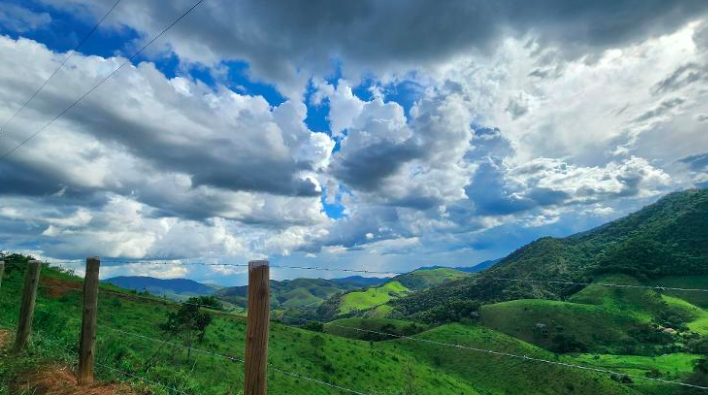
When a friend who lives there called me to choose Serra da Mantiqueira as a destination for the revelry, my expectations were different.
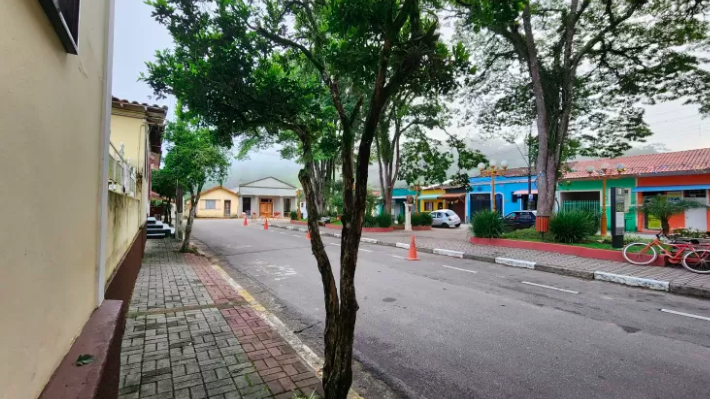
Fans of outdoor experiences, the initial idea was that the two of us and a couple of friends would go on two hikes in the region, interspersed with local shows on the stage set up in the center of the little town, near the bus station.
The plans began to change when our friends had to leave early for a personal problem, and we canceled the hikes because of the rain.
One travel bug after another, right?
With no TV and trying to stay more disconnected, we were oblivious that this rain was destroying the northern coast of São Paulo, especially São Sebastião.
We only knew the gravity of it all afterward. We were closed in a little world without so much external interference.
To my surprise (and that of my friend, because even he thought it would “flop”), everything went much better than I expected.
During the day, the band Filhos da Terra animated the afternoons on the central stage.
At night, the sensational Banda Palace, popular in the region and of very high quality, managed to animate the people with excellent vocalists and a high-spirited dance corps every day, followed by a “musical mess” group formed only by bald men, which led the transition to DJ Diego Benatti.
Despite the same attractions every day, Banda Palace changed its repertoire to play predominant musical styles daily.
On the first day, the axé one, I ended up in the 1990’s “choreôs” under a lot, a lot, a lot of rain. It didn’t stop for a minute, but neither did we.
Let the knee fight in the post-Carnaval period. In the following days, the dancing continued to be intense and fun.
Besides the shows, Monteiro Lobato also offered, in the afternoons, the traditional drumming with the Pereirões, those tall giant puppets with loose arms, which a person carries around in a costume. And a group circulated through the town center daily, attracting attention wherever they went.
At the concerts – and in the rest of the city – I saw homosexual couples and LGBTQIA+ people walking around holding hands or showing off, without much concern for the rest of the 5,000 inhabitants and tourists.
Of course, it is still a small country town, but it is a good sign for the conservative interior of São Paulo State.
A wonderful gay and very effeminate girl was almost a dance teacher, going up on stage, winning the competition, and drawing applause from many people gathered there.
My friend, who has “an ant in his ass”, wiggled it all over the place, threw himself on the floor in the best “anitter” style, resulting in a purple knee – and became an attraction.
The next day, everyone we met told us that we had been the stars of the night. I, unfortunately, in a much more timid and harsh way, it is worth saying.
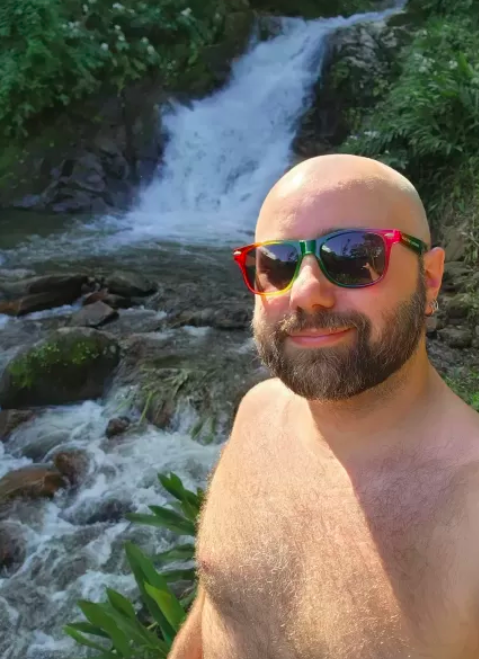
On the last night we held out – but only the third of Carnaval – we were with a friend (straight), who brought another friend (with Down syndrome) and, after spending an afternoon at the waterfall, we got together with a group of several lesbian girls and danced ourselves into the ground. It was a blast.
My point is that a small town of 5,000 inhabitants offered a São Paulo citizen used to the São Paulo blocks, a Carnaval full of parties, diversity and inclusion, fun, and, unlike the capital, safety.
It was a memorable experience!
Another nice thing about spending Carnaval in the countryside with a party and a local friend is the environment where everybody knows each other, greets, and looks at each other.
For a guy raised in an urban megalopolis setting, this is more than I am used to. In São Paulo, we are invisible to others.
And this is one of the points of my conversations with my friend these days.
I started the holiday praising the fact that when I lived in London in 2009, people would not be shocked if someone was in the supermarket wearing wellies, a Scottish skirt, a top hat, and a neon jacket, while in Brazil, at the time, people “took care of other people’s lives”.
This is still true, and I still think it can limit the life experience of an LGBTQIA+ person when the environment is unfavorable.
But, after hours of conversation and such a welcoming and affection-filled holiday, I realized that the stern side of me in São Paulo talked for years.
I don’t want anyone to take care of my life, of course, but this experience in Monteiro Lobato made me reopen to affection and warmth in looks, talking, and relationships.
Lucas, my friend, has a relatively new podcast that deals with the life of the peasant queer, as he jokes that he is, called “Interiormanas” and recorded an episode about this Carnival, the first with a full experience after the beginning of the pandemic.
The trail did not roll. But I already have a great excuse to come back and exercise a little more my distribution of love to people in the best countryside way.
With information from UOL
This article was produced by The Rio Times’ automated newsroom system. How we use AI · Report an error · Editorial responsibility: Matthias Camenzind, Editor-in-Chief
Read More from The Rio Times