Why Japan and China Are Locked in a Dispute
Tokyo will not retract its Taiwan remarks and Beijing will not drop its demand, leaving trade, tourism and US allies exposed.
JAPAN · ANALYSIS
Japan and China are Asia’s two largest economies, and their quarrel has now outlasted a year of diplomacy. This analysis explains what started it, what Beijing has done, who is exposed and what remains unknown, drawing on the Asia Intelligence Brief of 25 November 2026.
Key Facts
- What is happening Beijing still demands that Prime Minister Sanae Takaichi retract her November 2025 remarks on Taiwan, and Tokyo still refuses, as of 25 November 2026.
- Why it matters The row involves China and the United States, Japan’s two largest export markets, and bears on the question of how Japan would act in a Taiwan crisis.
- The numbers Mainland Chinese arrivals in Japan fell 47.0% to 379,500 in October 2026, according to the Japan National Tourism Organization (JNTO) preliminary estimate.
- Who is who Takaichi leads Japan, Xi Jinping is China’s president, and Donald Trump is the US president who has stayed largely quiet in public.
- What to watch JNTO’s November arrivals data, normally released around mid-December 2026, and Chinese New Year travel in February 2027.
- What it means for you US companies that buy from Japanese suppliers should ask whether those suppliers depend on Chinese rare earths, which China has restricted.
The Japan China dispute began in November 2025, when Prime Minister Sanae Takaichi said a Chinese attack on Taiwan could threaten Japan’s survival, and Beijing has answered with seafood, travel and export curbs. For US readers it matters because Japan is a close US ally, a large exporter to the American market and a neighbour of the Taiwan Strait.
How the Dispute Began and Escalated
The Remark
On 7 November 2025, Prime Minister Sanae Takaichi told Japan’s parliament, the Diet, that a Chinese attack on Taiwan could be a “survival-threatening situation”. That is the legal threshold under which Japan’s Self-Defence Forces can act alongside an ally, as reported by Asia Times and CNBC.
Beijing demanded a retraction or an apology, and Takaichi has not withdrawn the remarks.
The Rio Times brief of 25 November 2026 says Beijing still demands a retraction and Tokyo still refuses. It adds that Tokyo wants “a managed dispute rather than a reconciliation staged before Beijing is ready.”
China’s Response
On 19 November 2025, China told Japan it was suspending imports of Japanese aquatic products. Its Foreign Ministry cited missing technical documentation and public anger over the remarks, according to CNA and Caixin Global.
The Irish Times describes the seafood measure as an unofficial ban. We could not confirm its current legal status.
China also urged its citizens to avoid travel to Japan.
In January 2026, China’s Commerce Ministry banned exports of dual-use items to Japan, according to CNN on 6 January 2026. Dual-use items have both civilian and military uses, and the ban covers exports to Japanese military end users and to uses that strengthen Japan’s military, with rare earths reported to be covered.
The ministry did not specify which exports are affected. Kyodo reported on 4 November 2026 that Chinese yttrium oxide exports to Japan fell 98% year on year in January to September 2026, a figure we could not verify independently.
Shenzhen, November 2026
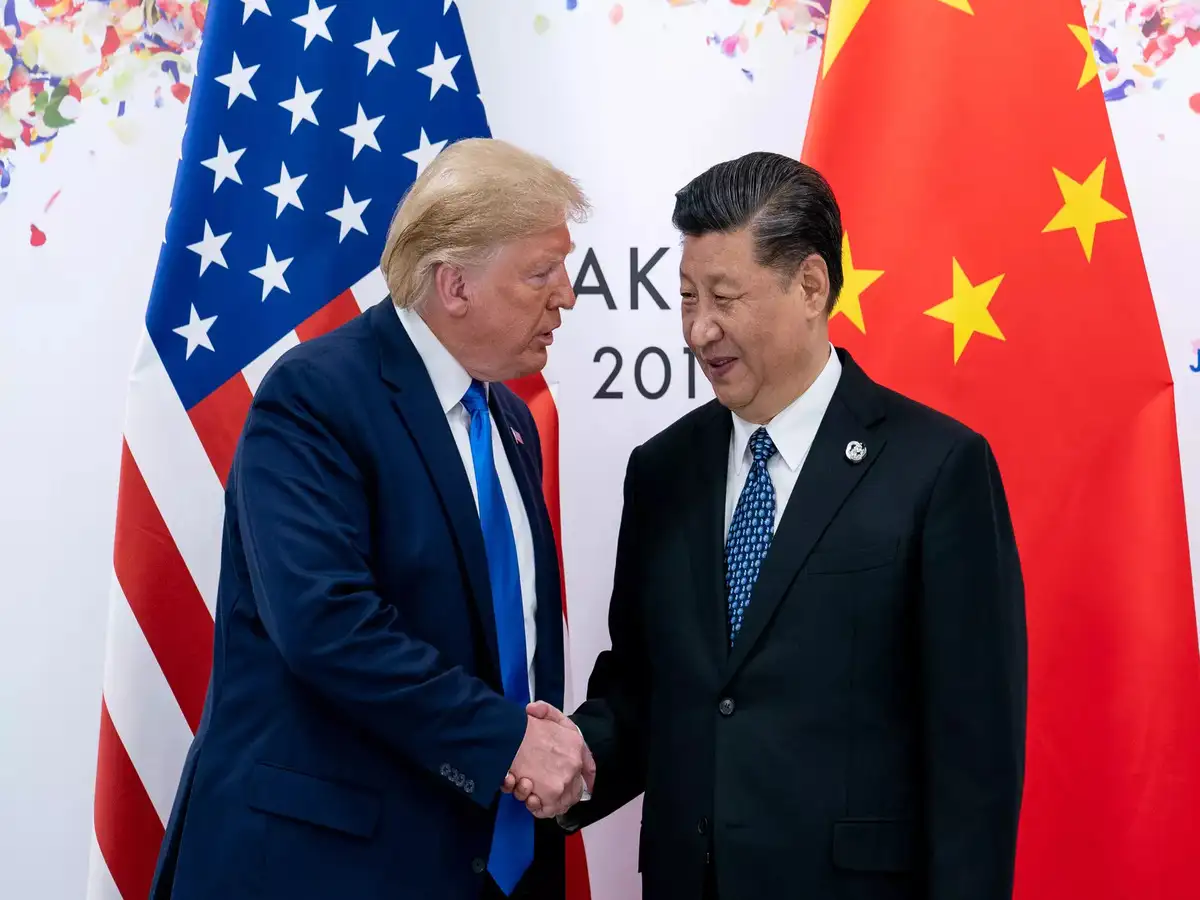
At the Asia-Pacific Economic Cooperation (APEC) summit in Shenzhen, Takaichi was received at the airport on 18 November by Zhang Qiyue, 67, a retired diplomat and former foreign ministry spokesperson who was acting as a foreign ministry “protocol ambassador”. Japan’s ambassador to China, Kenji Kanasugi, also met her on the tarmac. At the welcome dinner on 18 November, Xi shook Takaichi’s hand and smiled but did not speak to her.
Takaichi and Xi shook hands at the welcome dinner on 18 November and again at the leaders’ meeting on 19 November, but held no bilateral talks, according to Kyodo and the South China Morning Post. Beijing still wants the remarks corrected.
The Numbers and the Economic Stakes
Tourism
JNTO’s preliminary estimate, relayed by Travel Voice on 18 November 2026, counts 3,912,500 visitors in October 2026. That is up 0.4% on October 2025 and a single-month record, though January to October arrivals of 34.643 million are down 2.5% on the same period of 2025.
Mainland Chinese arrivals were 379,500 in October 2026, down 47.0% on a year earlier.
Other markets grew in October: South Korea rose 19.4% to 1,035,800, Taiwan rose 6.5% to 634,600 and Hong Kong rose 3.3% to 202,500. The record month suggests other visitors are filling part of the gap, but the year to date is still lower.
Trade
The Bank of Finland Institute for Emerging Economies (BOFIT) and Japan’s Ministry of Finance give the clearest picture of exposure. Yen amounts below carry no dollar conversion because our sources cite no exchange rate.
- China is Japan’s second-largest export market, according to BOFIT.
- Japan’s exports to China fell 0.4% to ¥18.78 trillion in 2025, according to preliminary Ministry of Finance data reported by Yonhap.
- Japan’s exports to the United States fell 4.1% to ¥20.41 trillion in 2025, according to the same data.
The 2025 totals cover only the first weeks after the remark, so they show exposure rather than damage. We found no full-year total for bilateral trade and no figure for trade losses.
Rare Earths
BOFIT puts Japan’s reliance on Chinese rare earths at roughly 60%.
The Daiwa Institute of Research estimates that a full year without Chinese rare earths would cut Japan’s real GDP by 1.3%. That is a model estimate, not an observed outcome.
Japan’s trade minister, Ryosei Akazawa, has called the restrictions economic coercion, according to UPI. Tokyo plans to diversify suppliers, expand recycling and develop alternative materials.
The Actors and What They Want
Each side has a clear position, and none has moved publicly. The list below sets out who leads each and what each stands for.
- Japan’s government. Takaichi leads it, while Foreign Minister Toshimitsu Motegi and Defence Minister Shinjiro Koizumi kept their posts in the 17 September 2026 reshuffle, according to the Korea Times and Nippon.com.
- China’s government. President Xi Jinping leads it, and it demands that Japan retract or correct the remarks.
- The United States. President Donald Trump leads it, and Washington backs Japan against coercion while avoiding sharp public language.
- The Liberal Democratic Party (LDP). Takaichi’s governing party, which won 316 of the 465 lower-house seats in the 8 February 2026 election, more than two-thirds and the first single-party two-thirds majority in the postwar era.
Public opinion gives Tokyo little reason to reverse course. A Yomiuri poll cited in the Rio Times brief shows approval of Takaichi’s China policy at 44%, down from 46% in October.
The figures point to a wary public rather than one demanding a retraction.
What It Means for the US and Latin America
The US-Japan Alliance
Trump stayed largely quiet in public, according to US News, NBC and PBS. On 20 November 2025, Ambassador George Glass condemned China’s suspension of Japanese seafood imports and said the US would “always have the back of Japan and the Japanese fishermen and workers”. He added: “Coercion is a hard habit to break for Beijing.”
Takaichi said the two leaders discussed strengthening the alliance.
The Rio Times brief reads Xi’s warmth toward Trump in Shenzhen as a sign that Beijing wants calmer trade ties with Washington. It adds that one gesture is not a deal, and this is the brief’s interpretation.
Supply Chains and the Taiwan Strait
Japan exported ¥20.41 trillion of goods to the United States in 2025, so Japanese suppliers are embedded in American supply chains. If China’s dual-use ban reaches electronics or aerospace parts, US buyers could feel it second-hand, but we found no source measuring that.
We found no data on military incidents attributed to this dispute. The Taiwan Strait risk here is political, because the quarrel began over how Japan would act if China used force against Taiwan.
Latin America
We found no source measuring the dispute’s effect on Latin American exporters. Any claim about Brazilian soy or beef, Chilean seafood or copper, or Argentine goods would be inference, so we make none.
Three channels are worth checking as data arrive. They are Japan’s search for rare-earth suppliers beyond China, where Brazil has deposits, Chinese seafood demand rerouted away from Japan, and Chinese tourists choosing other destinations.
Scenarios From Here
The three scenarios below are illustrations, not forecasts of fact. They show what could stabilise the dispute and what could tip it.
Scenario one is a managed standoff, which matches the outcome Tokyo says it wants. Takaichi keeps her position, Beijing keeps its measures, and contact stays at the level of diplomats and ambassadors.
Scenario two is a slow easing. A leaders’ or foreign-ministers’ meeting, or a quiet loosening of the seafood and travel measures, would reduce pressure without a formal retraction, though nothing in our sources shows such a meeting is planned.
Scenario three is escalation, through wider export controls or a diplomatic incident.
What It Means for You
Executives with Japanese suppliers should ask whether those suppliers rely on Chinese rare earths or other dual-use inputs. BOFIT puts Japan’s dependence on Chinese rare earths at roughly 60%, so the question is a fair one.
Investors in travel, retail and hospitality can follow JNTO’s monthly data for the gap between Chinese and other visitors. Policy readers should note that the dispute tests how closely Washington will back Tokyo in public.
What Is Not Known
Much of the evidence comes from secondary reporting, and we could not open primary documents from China’s Commerce Ministry or Japan’s Ministry of Finance. The open questions are listed below.
- Whether the seafood ban is formal or informal, and its current scope.
- Which products the January 2026 dual-use ban covers, and how strictly it is enforced.
- How large Japanese companies’ rare-earth inventories are.
- Whether any channel for talks is open, since no formal Xi-Takaichi meeting took place at APEC.
- What the United States has told Tokyo in private.
- How much trade the dispute has cost, because the Rio Times brief gives no figures.
The yttrium figure from Kyodo and the Daiwa estimate should also be read with care. One is a headline number we could not check, and the other is a model result.
What to Watch
- Mid-December 2026. JNTO’s November arrivals release, normally issued around this time, will show whether mainland Chinese arrivals are still down by close to half.
- February 2027. Chinese New Year travel will show whether Chinese holidaymakers return to Japan or choose other destinations.
- September 2027. Takaichi’s term as LDP president, which she took over from Ishiba, runs to September 2027, according to Jiji Press.
- No date set. Any Japan-China foreign-minister or leaders’ meeting would be the first formal sign of a thaw.
Any change in the status of the seafood suspension or the dual-use ban would also matter. Neither has a dated review in our sources.
Frequently Asked Questions
What started the Japan China dispute?
On 7 November 2025, Prime Minister Sanae Takaichi told the Diet that a Chinese attack on Taiwan could threaten Japan’s survival. Beijing demanded a retraction, and Tokyo has refused as of 25 November 2026.
What has China done in response?
China suspended imports of Japanese aquatic products from 19 November 2025, urged its citizens to avoid travel to Japan and banned dual-use exports to Japan in January 2026, according to CNN. Mainland Chinese arrivals in Japan fell 47.0% in October 2026, according to JNTO.
How much does Japan depend on China for trade?
China is Japan’s second-largest export market, according to BOFIT.
Does the Japan China dispute affect the United States?
The US ambassador to Japan said Washington backs Japan against coercion, though President Trump stayed largely quiet in public. US supply chains could be touched if the dual-use ban reaches items such as electronics or aerospace parts, but no source measures that yet.
Are Latin American exporters affected?
We found no source measuring any effect on Latin American exporters. Channels worth checking are Japan’s rare-earth sourcing, Chinese seafood demand moving away from Japan and Chinese tourism moving to other destinations.
Have Takaichi and Xi met to resolve it?
At the APEC summit in Shenzhen in November 2026, they shook hands on 18 and 19 November but held no bilateral talks. Our sources give no date for any later meeting.
Sources: riotimesonline.com, irishtimes.com, cna.com.tw, caixinglobal.com, asiatimes.com, washingtontimes.com. Retrieved 25 November 2026.
This article was produced by The Rio Times’ automated AI newsroom. Editorial responsibility: Matthias Camenzind, Publisher and Editor-in-Chief. The Rio Times also runs Ask Rio Times, which answers from 100,000+ of our own articles, the daily Latin America Power Map, and prediction-market odds on elections and markets.. How we use AI · Report an error
LatAm Markets: Live Signals → — real-time movers, turnover leaders and FX across Latin America.