Flamengo Defeats Internacional and Shows How Brazilian Clubs Turn Football Into Business Power
Flamengo eliminated Internacional from the Copa Libertadores with a 2–0 win in Porto Alegre, completing a 3–0 aggregate result.
Official records confirm Giorgian de Arrascaeta and Pedro scored the decisive goals, with Pedro netting his first in the tournament. The match attracted 43,581 spectators and generated R$ 1.8 million in revenue.
The game started almost 20 minutes late after metallic confetti thrown by fans covered the Beira-Rio pitch. Workers cleared the field with blowers, and play began before it was fully clean.
The delay did not affect Flamengo, which quickly took control. Arrascaeta scored after a mistake by Internacional’s goalkeeper, and Pedro finished the tie late in the second half. Bruno Henrique had two goals disallowed for offside, but his speed and pressure forced Internacional into retreat.
Internacional rarely created danger. Their closest chance came from Rafael Borré, who hit the post, but Flamengo’s defense remained solid and gave little space.
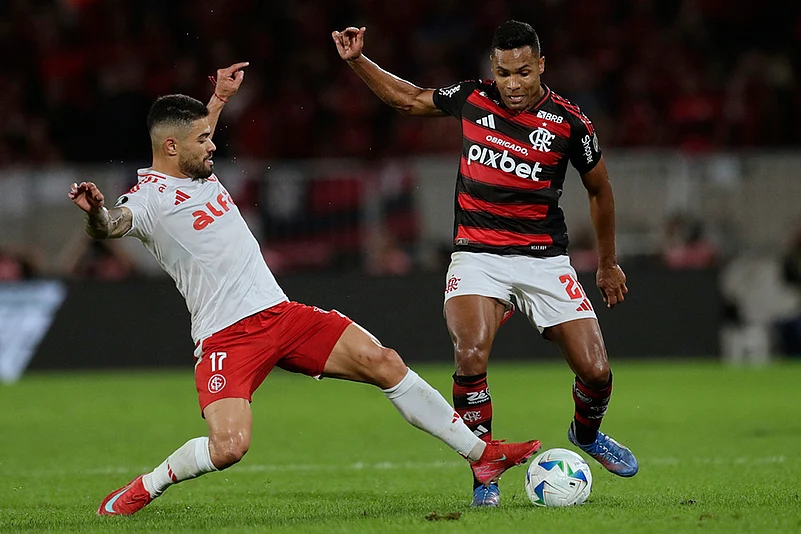
The second goal sealed both the match and Internacional’s early exit, while Flamengo’s supporters left with another demonstration of strength. The result repeated history. Flamengo had already eliminated Internacional in 2019, when it later won the tournament.
This season, Flamengo has beaten Internacional three times across competitions, showing clear superiority. Now, Flamengo will face Estudiantes de La Plata in the quarterfinals, starting at the Maracanã and ending in Argentina.
Beyond the pitch, the story tells more about football’s business. The Libertadores provides strong income through broadcasting rights, sponsorships, and ticket sales.
Clubs that advance earn not just prestige but also higher bargaining power in the regional football market. Flamengo’s progress adds to the current wave of Brazilian clubs asserting dominance in South America and competing internationally.
The figures also show the scale of the industry. A single Libertadores match between two domestic rivals produced nearly R$ 2 million in gate receipts and filled a stadium of more than 43,000 fans.
Advancing further will mean even greater revenue, expanding Flamengo’s influence off the field. What looks like just another victory is also a statement of economic force. Flamengo’s consistent wins underline a model that connects sporting performance with commercial growth.
For international observers, this is not only about a football match, but about how Brazil’s largest clubs use regional competitions to build financial stability, global attention, and a stronger foothold in the football economy.
This article was produced by The Rio Times’ automated newsroom system. How we use AI · Report an error · Editorial responsibility: Matthias Camenzind, Editor-in-Chief
Read More from The Rio Times