An Angolan Company Just Took Chevron’s Oil Blocks From a London Bidder
ANGOLA · ENERGY
South africa latest: South africa news — latest coverage · A Cape Town Start-Up Is Testing Seaweed Feed. The 98…
Key Facts
The deal: Etu Energias will pay US$260 million in cash for Chevron’s 31% operated interest in Block 14 and its 15.5% non-operated interest in Block 14K, both offshore Cabinda. The economic effective date is 1 January 2026.
The displaced buyer: London-listed Energean had signed for the same assets in March. Etu’s contract carries the same extras: contingent payments of up to US$25 million a year, capped at US$250 million in total through 2038 and tied to future development of the PKBB field, oil prices and production levels.
The mechanism: Etu was already a partner in both blocks and held a right of first refusal, which lets an existing partner match an outside offer before a co-venturer can sell to a third party. It served notice on Chevron in June.
What Etu ends up with: 60% of Block 14 and 30% of Block 14K, up from 29% and 14.5% today, making it the largest interest holder. It also intends to take over as operator of Block 14, which needs approval from Angola’s National Agency for Petroleum, Gas and Biofuels (ANPG).
The assets: Block 14 produces about 42,000 barrels of oil a day across nine fields, of which 13,000 barrels a day are net to the Chevron interest. Gross reserves in production are put at about 93 million barrels, of which roughly 29 million attach to the stakes being bought.
The owner: Alberto Almeida de Sousa holds 50% of Etu and is its largest shareholder, having run Sonangol’s geophysics division before going into business alone. Edson dos Santos is chairman and chief executive.
Etu Energias is buying Chevron’s stakes in two Angolan offshore blocks for US$260 million, having used a right of first refusal to displace the London-listed buyer that had already signed the deal. It is the clearest sign yet that Angolan oil assets are passing into Angolan hands.
How Etu Energias turned a partnership into a takeover
A right of first refusal is one of the quieter clauses in an oil joint venture, and it is rarely the thing that decides who owns a field. In Angola this year it has decided two deals in a row.
Chevron agreed in March to sell its Block 14 and 14K interests to Energean, whose chief executive Mathios Rigas described the purchase as the company’s first move into West Africa. Etu was a co-venturer in both blocks and had the right to match.
It served notice in June, which put the Energean agreement into abeyance rather than ending it. The sale contract stayed in force while the validity of the pre-emption claim was tested.
The test was technical rather than financial. Energean pointed out that a matching buyer had to show it operated at least one producing asset in water deeper than 300 metres, both within 15 days of signing and again at the unconditional date.
Neither Etu nor Chevron has said publicly how that condition was met. What is known is that the sale and purchase agreement with Cabinda Gulf Oil Company, Chevron’s Angolan subsidiary, was signed at the end of August and announced over the weekend, with the economics of the deal backdated to 1 January 2026.
What the blocks are actually worth
Block 14 sits in the Lower Congo Basin and pumps around 42,000 barrels a day across nine fields. Roughly 13,000 of those barrels a day were attributable to the Chevron stake now changing hands.
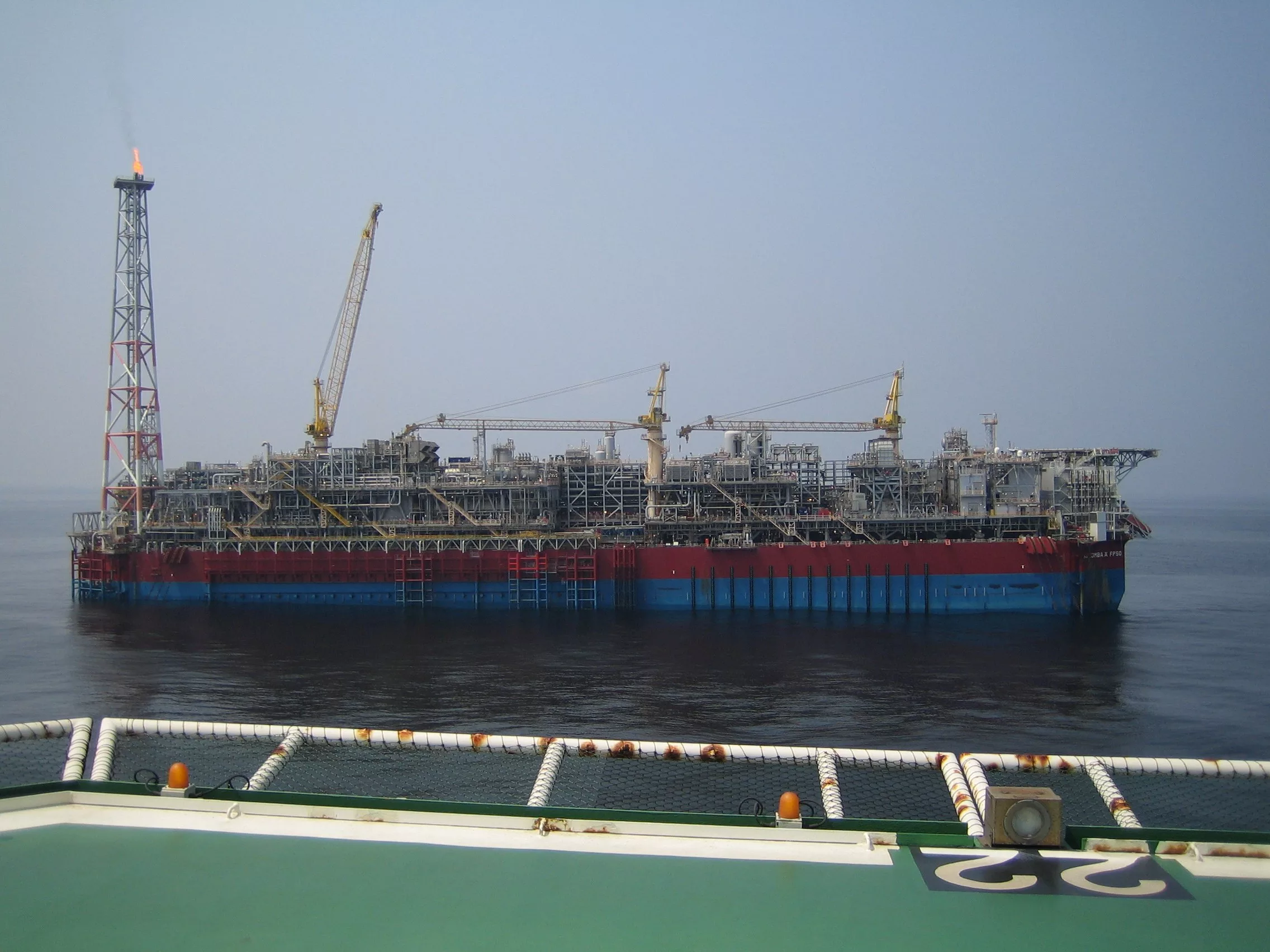
Production runs through the BBLT and Tombua-Landana hubs, which carry spare oil processing capacity as well as gas processing and water injection. Angola’s Expansão newspaper puts gross reserves in production at about 93 million barrels, of which roughly 29 million attach to the interests being acquired; Energean’s own March estimate was 28 million barrels of net proven and probable reserves.
Energean valued the adjusted underlying earnings attached to the stake at US$119 million for 2025. Against a base price of US$260 million, that is a mature asset bought on a short payback rather than a growth story.
The purchase lifts Etu from 29% of Block 14 to 60%, and from 14.5% of Block 14K to 30%, and positions it to take over as operator. That is the part that matters most, because operatorship is where an oil company stops being a passive shareholder.
Angola has been steering this outcome for years
The government has made increasing domestic participation in the oil sector an explicit objective, and it has backed local companies buying producing fields as the international majors sell down. Etu is the country’s largest private oil company.
Its founders spent decades inside the state system before building a private alternative to it. Ana da Conceição Nunes and Alexandre Salgado Costa, both former Sonangol executives, hold the balance of the shares alongside de Sousa.
That pedigree is not incidental. Knowing which clause in a joint operating agreement can be used, and having the standing to use it twice in six months, is a form of capital that outsiders cannot buy.
Eversheds Sutherland advised Etu on the earlier transaction, working through its Portuguese practice with EVC Advogados in Angola and its Dutch office.
Why this matters beyond Angola
The pattern is familiar to anyone who has watched Latin America’s own resource nationalism cycles. A major decides an ageing field no longer clears its hurdle rate, and the asset moves to a buyer with lower costs and a longer local horizon.
What is different here is the instrument. Angola did not expropriate anything and did not change the fiscal terms; a private company simply exercised a contractual right it already had.
For international buyers, the lesson is that West African joint ventures now carry a live pre-emption risk that has to be priced. For African operators, it is a demonstration that partnership rights can be converted into ownership.
What is still unverified
How Etu satisfied the deepwater-operator condition — whether through a partner, its own offshore Block 2/05 record or a waiver — has not been disclosed. Its plan to become operator of Block 14 still requires ANPG approval, and completion depends on regulatory approvals and customary closing conditions. Neither Chevron nor Energean has published a revised timetable, and the terms could still change before closing. Nothing here is investment advice.
This report is based on Etu Energias’ announcement of the sale and purchase agreement, as reported by Angola’s Expansão on 29 August, corroborated against Energean’s March and June disclosures and Reuters reporting on the original Chevron sale.
Frequently Asked Questions
Who is buying Chevron’s Angolan oil blocks?
Etu Energias, Angola’s largest private oil company, is buying Chevron’s 31% operated interest in Block 14 and its 15.5% non-operated interest in Block 14K. The base price is US$260 million in cash.
How did Etu Energias displace Energean?
Etu was already a co-venturer in both blocks and held a right of first refusal, which allows an existing partner to match an outside offer. It served notice on Chevron in June.
How much oil do the blocks produce?
Block 14 produces about 42,000 barrels a day across nine fields, of which roughly 13,000 barrels a day were net to the Chevron interest. Gross reserves in production are put at about 93 million barrels, with roughly 29 million attributable to the stakes being acquired.
Who owns Etu Energias?
Alberto Almeida de Sousa owns 50% and is the largest shareholder, with former Sonangol executives Ana da Conceição Nunes and Alexandre Salgado Costa holding the rest. Edson dos Santos is chairman and chief executive.
Is the transaction final?
No. Completion depends on regulatory approvals and customary closing conditions, and no revised timetable has been published.
Connected Coverage
Angola’s upstream is one front in a wider contest we track in Africa: The New Scramble, and the country’s macro backdrop is set out in Angola’s 8.74% second-quarter growth. Kinshasa and Luanda are separately pursuing a shared offshore oil zone, and more coverage sits on our Southern Africa hub.
More Africa news: Nigeria | South Africa | Kenya | Egypt | Ghana | Morocco | DR Congo | Angola | Ethiopia | Tanzania
This article was produced by The Rio Times’ automated newsroom system. How we use AI · Report an error · Editorial responsibility: Matthias Camenzind, Editor-in-Chief