Kinshasa Orders a Full Review of Its Shared Oil Zone With Angola
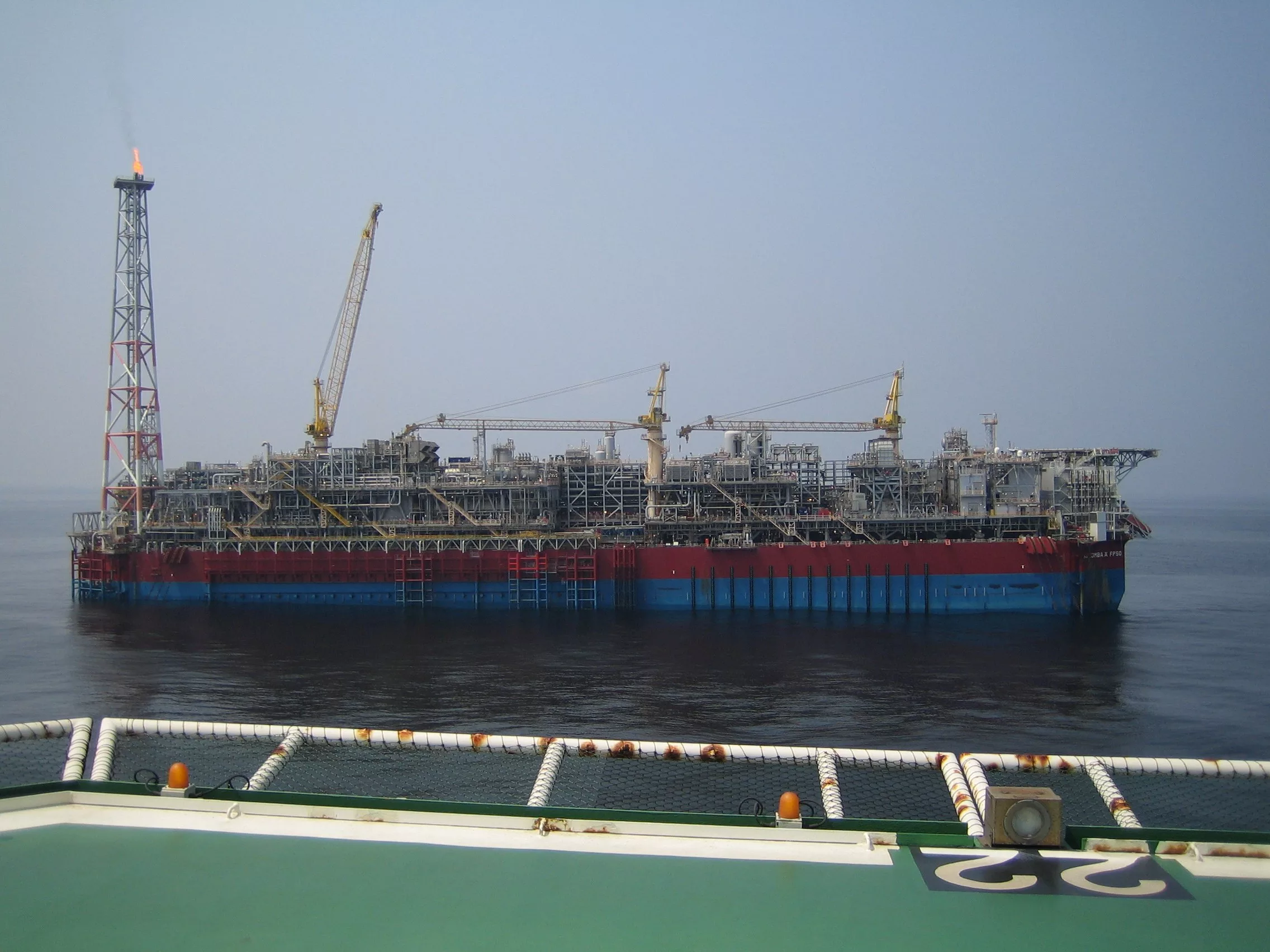
DR CONGO · ENERGY
Key Facts
—The decision: At its 96th ordinary cabinet meeting on Friday 14 August, chaired by President Felix Tshisekedi, the DR Congo cabinet endorsed the operationalisation of the zone’s governance accord, and President Felix Tshisekedi instructed two ministers to report back to him on the file.
—Who briefed: Acacia Bandubola Mbongo, minister of state for hydrocarbons since August 2025. Several regional outlets attributed the briefing to her predecessor, Aime Molendo Sakombi, who now holds the water resources and electricity portfolio.
—The zone: The Zone d’Interet Commun rests on an accord signed in Luanda on 30 July 2007 and ratified by DRC law 07/004 of 16 November 2007, with a governance accord added in July 2023 and annexes in October 2024.
—The split: Revenue is shared equally between the two states. That mechanism is part of the existing architecture rather than something newly negotiated this month.
—The block: On 22 January 2025 Angola’s parliament unanimously authorised the president to redraw the Block 14 concession, de-annexing the Negaje and Menongue development areas into Block 14/23. The consortium is CABGOC, a Chevron subsidiary, on 31 percent, with Azule Energy and ETU Energias on 20 each, Sonangol and DRC’s Sonahydroc on 10 each and Galp on 9.
—The latest instrument: An amendment to the production-sharing contract was signed in Luanda on 22 July 2026 by Bandubola and Angola’s Diamantino Pedro Azevedo. It was a government-to-government act, not a company signing.
The Congo Angola oil zone has not moved to drilling. The DR Congo’s cabinet signed off on 14 August on the machinery that runs its shared offshore zone with Angola, and its president asked for a report on where the file stands before exploration begins.
What the Congo Angola oil zone review actually asks for
The language in the cabinet readout is careful, and worth reading before the headlines. The hydrocarbons minister reported that all the zone’s legal instruments have been ratified and published in the official gazette, that the joint governance organs are in place, and that the next steps lead to the launch of exploration. Separately, President Tshisekedi instructed the foreign affairs and hydrocarbons ministers to work with his own office and submit him a thorough report on the state of the file, its stakes, and the options that best preserve the republic’s interests.
The stated purpose is to identify the options that best preserve the republic’s interests. It is the language of a government that wants the file documented before the drilling starts.
So this is both things at once: a green light on the plumbing, and a president asking to see the paperwork before anyone drills.
The government’s own compte-rendu has not yet appeared on the prime minister’s document portal, where the most recent published record is the 91st meeting from May. What is public comes through press relay.
Thirty-seven kilometres of coast, and a boundary still being argued
The DR Congo’s Atlantic frontage is about 37 kilometres wide, a sliver between Angola proper and the Angolan exclave of Cabinda. Almost everything offshore is therefore a question of where lines are drawn.
Those lines are not fully agreed. The maritime boundary around the mouth of the Congo River has been contested for years, and the cabinet’s own request for a report on deep-water access is the clearest available evidence that it remains open.
This is why the shared zone exists at all. Rather than settle the boundary, the two states agreed in 2007 to pool a defined area and split what comes out of it.
Instruments have been added steadily since: a governance and management accord signed in Kinshasa on 13 July 2023, the Block 14/23 production-sharing agreement in Luanda that December, annexes and a first amendment plus a revenue-sharing accord in October 2024, and a further amendment with a joint implementation declaration on 22 July 2026. Each layer is a sign of progress and of unfinished business at the same time.
The consortium, and a stake that may have changed hands
The production-sharing contract for Block 14/23 was signed in Luanda in December 2023. The consortium is led by CABGOC, Chevron’s Angolan subsidiary, on 31 percent.
Azule Energy and ETU Energias hold 20 percent each, Angola’s Sonangol and the DR Congo’s Sonahydroc 10 percent each, and Portugal’s Galp 9 percent.
There is one live uncertainty. Reuters reported in March 2026 that Chevron had agreed to sell its 31 percent operated interest in Block 14 and 15.5 percent in Block 14K to Energean for US$260 million, plus contingent payments of up to US$25 million a year capped at US$250 million through 2038, while other trade reporting suggested the sale had bogged down.
As of the most recent Congolese reporting, CABGOC is still listed at 31 percent. Whether the Energean transaction has closed, and whether it captures the 14/23 carve-out at all, is not something the public record settles.
The number everyone quotes, and what it really is
A figure of about US$2.78 billion for the DR Congo has circulated widely this week. It deserves a precise description.
It is half of an estimate the DRC finance ministry made in October 2024, putting combined fiscal revenue from the project for both states at about US$5.56 billion. It is a projection, contingent on exploration results, discovered reserves, production volumes, capital spending and the oil price.
No well has been drilled in the zone and no reserves have been booked. The money is a modelled outcome, not a receivable.
The comparison that gives it meaning is the DR Congo’s existing oil economy. Hydrocarbons delivered about US$234 million in state revenue in 2023, against US$5.61 billion from mining, on the country’s own extractive-industries reporting.
Estimates of the country’s underlying resource range absurdly widely, from a presidency talking point of 22 billion barrels of potential down to roughly 180 million barrels of proven reserves in the CIA World Factbook. Any single figure quoted without that spread is misleading.
Why Kinshasa is asking now
The timing is not accidental. A month after signing an amendment in Luanda, the DR Congo’s cabinet has asked its own minister to explain where the file stands and what the options are.
The stated purpose, in the cabinet’s own words, is to identify the options that best preserve the republic’s interests. The explicit inclusion of deep-water access in the same request points the same way.
For an investor, the practical reading is that the shared zone is a real asset with a real legal framework and no production. The upside is genuine and the timeline is not yet a timeline.
For the region, it is a reminder that Angola, which left OPEC at the start of 2024 and now produces a little over a million barrels a day, remains the senior partner in every conversation on this coast.
More: Angola news in English, every day from The Rio Times.
What is the Congo Angola oil zone?
It is a jointly managed offshore area, the Zone d’Interet Commun, created by an accord signed in Luanda on 30 July 2007 and ratified by DRC law 07/004 of 16 November 2007. Revenue from it is shared equally between the two states.
Has drilling started in the shared zone?
No. No well has been drilled and no reserves have been booked, and the DR Congo cabinet has asked for a report on the file rather than announcing an exploration launch.
How much money is at stake?
The DRC finance ministry estimated in October 2024 that the project could eventually generate about US$5.56 billion in combined fiscal revenue for both countries. That is a projection contingent on exploration results, production volumes and oil prices.
Who holds Block 14/23?
The consortium is CABGOC, a Chevron subsidiary, on 31 percent, Azule Energy and ETU Energias on 20 percent each, Sonangol and Sonahydroc on 10 percent each, and Galp on 9 percent.
Connected Coverage
Angola remains the larger producer of the two, and the pressure on its receipts is set out in our account of the 22 percent fall in its oil export revenue. The regional politics of who captures resource value ran through the SADC summit in Durban. Both belong to our pillar, Africa: The New Scramble.
This article was produced by The Rio Times’ automated newsroom system. How we use AI · Report an error · Editorial responsibility: Matthias Camenzind, Editor-in-Chief
LatAm Markets: Live Signals → — real-time movers, turnover leaders and FX across Latin America.