Economy, culture, and more: here’s how migrants from Latin America have powered the US
By Angélica Ferrer
The migration of people from Latin America to the United States is a phenomenon that has been booming since the beginning of the 20th century, in the wake of World War II (1939-1945), but is currently in vogue throughout the region.
According to the International Organization for Migration (IOM), approximately 51 million foreigners live in the United States, making it the main migratory destination worldwide, according to 2020 data.
And, taking into account the last census conducted in the US, with data updated to 2021, more than 62 million people living in that nation are originally from Latin America.
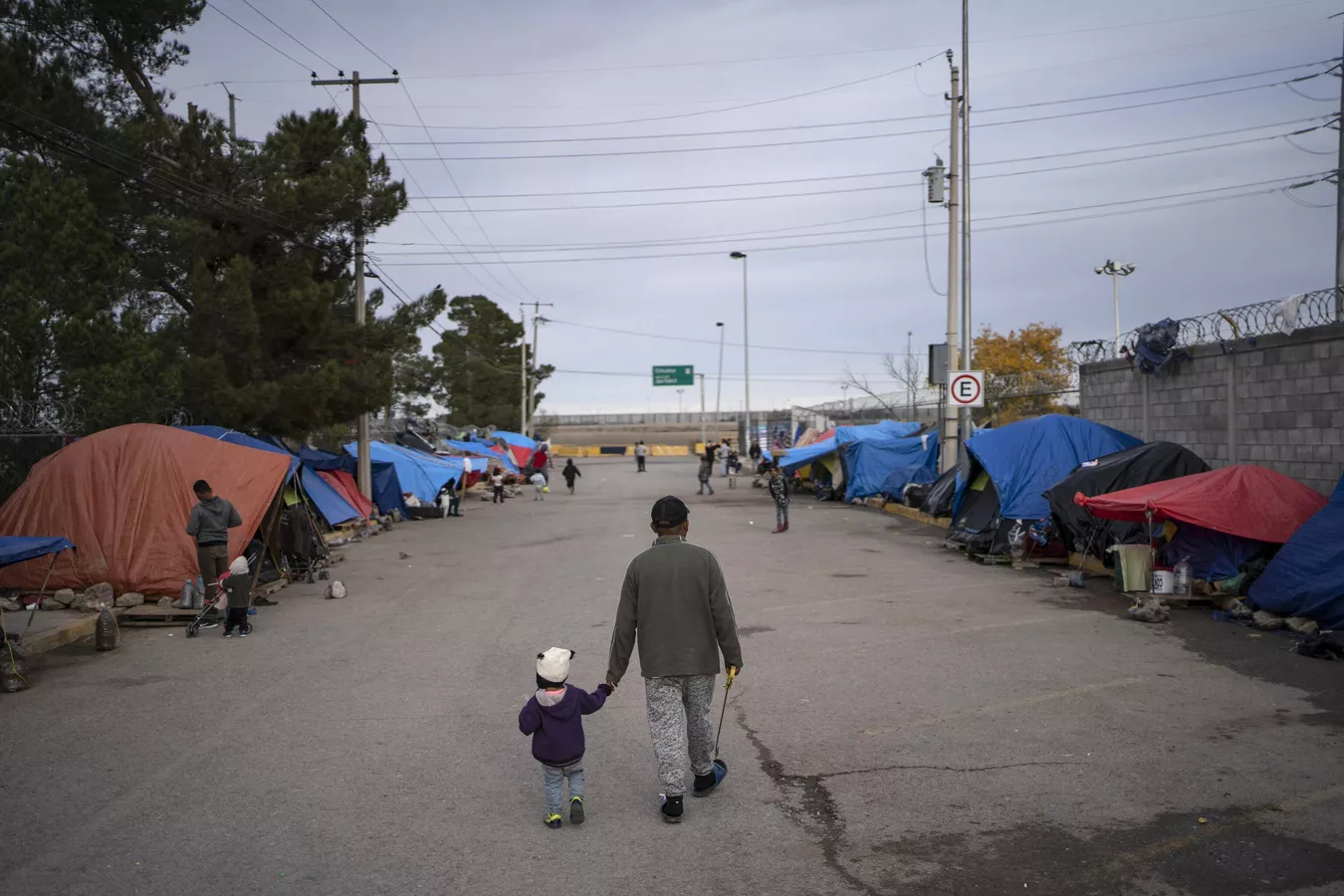
In addition, the political and social vicissitudes have accentuated the interest in this group.
Beyond the elections to be held in Washington in 2024, there is a constant quarrel between this nation and Latin America, especially Mexico, which is its closest neighbor geographically, its main trading partner and also the target of constant attacks in security matters, with whom it shares more than 3,000 kilometers of land border.
For example. On May 5, Mexican President Andres Manuel Lopez Obrador stated that migrants are pillars in the shaping and growth of the United States.
Some US politicians and media “have made many people, millions of Americans, believe that migrants take fentanyl to the US, that migrants take drugs to [US territory], when the migrant goes to make a living, to work”, he assured in his press conference that he gives every morning from the National Palace, seat of the federal executive of the Latin American country.
“The United States was not founded with migrants? Who in [that nation] are not migrants?”
“When they arrived, were they carrying drugs? Weren’t they going to work?”
“Weren’t they going to contribute to turning the United States into a great nation?” challenged López Obrador.
Although migratory flows have always existed, the influx of Latin American migrants to the United States increased notably during World War II, that is, between the end of the 1930s and the first half of the 1940s, as a result of the labor programs that were promoted in that country to face the economic situation derived from the world military conflagration.
“It was with the bracero programs in those years where migration constituted a legal way to be able to work in the US and obtain an income due to the need for labor required in that nation.”
“Those projects -mainly focused on Mexicans- continued until the 1950s and so it went on until they ended and, by then, people began to opt for illegal ways to cross and start living this so-called American dream,” says internationalist Juan Daniel Garay Saldaña, a graduate of the National Autonomous University of Mexico (UNAM) who specializes in the relationship between Washington and Mexico City, in an interview for Sputnik.
The expert points out that one of the high points of this phenomenon occurred during the lost decade, that is, the 1980s.
“It is a time of economic crisis that affects the entire region and one of the ways out is to opt for migration. On this occasion, the majority are not only Mexican migrants, but from practically the entire continent.”
“That is where we found this boom in these years and, in the following years, we have seen how these migratory waves have increased in the face of crises or instabilities in these nations,” the scholar points out.
According to Garay Saldaña, some of the countries of origin of people migrating to the US are Mexico, Cuba, Venezuela, Guatemala, Honduras, El Salvador and, to a lesser extent, Brazil and Argentina.
The IOM states that around 11 million people living abroad in 2020 (the most current data on the subject) originate from Mexico. This makes Mexico the nation with the largest number of emigrants in Latin America and the Caribbean.
RELEVANCE OF LATINO MIGRATION IN THE ECONOMY
The specialist in Mexico-US relations highlights some issues about the weight that Latino migration has in US territory, starting with the economic aspects.
“A very important part is the agricultural aspect; it is a very relevant support in the US economy. While we know that it bases its Gross Domestic Product [GDP] mainly in the area of services and, later, in manufacturing, a large section is focused on agriculture, especially grains.”
“Some say that the US is the breadbasket of the world, as it has been at times, and this tells us about the relevance it gives to the primary sector,” Garay Saldaña points out.”
To achieve this positioning, he stresses, it has required the work of Latin American migrants, especially those from Mexico.
“They are employed in harvesting some products in the US, and I believe that the US agricultural economy could not be understood without this labor force.”
“It would be impossible to imagine its large production volumes without migrants from Latin America,” recalls the expert.
In addition to this area, there is also a strong influence of the Latino migrant population in the food, restaurant and cleaning services sector.
“But there is also an increasing presence in other sectors where traditionally we did not observe them, with an important flow of skilled workers, for example, in the automotive industry.”
“They are starting to become visible in specialized areas, where migrants arrive, even overqualified ones,” he points out.
CULTURE AND MORE
The arrival of migrants – whether Latin American or from other regions – to the US brings an unparalleled cultural mix.
In an interview for Sputnik, history expert Enrique Ortiz says that a sign of this is the celebrations that, little by little, the US population is beginning to adopt.
“Values mean that the ephemeris and commemorations [of each Latin nation, but especially Mexico] have a strong presence mainly in the southern US, in the states bordering the border, such as New Mexico, Nevada or California,” he describes.
“One example is the holiday of May 5, which is a day of celebration in many states of the North American country and which is mistakenly thought to be Independence Day, when in fact it is the day on which the Mexican Army, under the command of Ignacio Zaragoza, defeated the French.”
“We could say that the magnitude of this event in the U.S. may be greater than the one that takes place in Mexico,” he says.
However, he emphasizes that the changes have been present since the 19th century, when a large part of the southern United States belonged to Mexico.
“Let’s remember that Texas was part of the national territory and was lost in 1836. By 1845, the US had integrated it into its country.”
“In addition, the US invasion between 1846 and 1848, in which several routes took the country, but the most relevant ones were towards Nuevo León and Coahuila.”
“By 1848, more than 50% of the national territory was lost, with states such as New Mexico, California and part of Nevada.”
“Therefore, there has always been a strong Mexican presence in that region,” the specialist points out.
Garay Saldaña adds that another example is the entertainment industry, with greater emphasis on music.
“The influence of the Spanish language is increasing, and it is being learned more frequently not only by Hispanic descendants, but also by the Americans themselves, who position this language behind English,” he explains.
THE FUTURE FOR LATINO MIGRANTS IN THE US
For the internationalist, the relationship of Latino migrants in US territory will develop in two aspects, which will depend on the results of the 2024 elections.
“There will be a greater acceptance of certain sectors, but also a confrontation and a clash of other groups where they consider that this cultural advancement can be negative for their country.”
“Those who think this way will expose greater rejection and xenophobia (…), which may lead to confrontations.”
“This is what Samuel P. Huntington once called ‘the clash of civilizations’,” concludes Garay Saldaña.
With information from Sputnik
More: Latin America news in English, every day from The Rio Times.
Read More from The Rio Times