Daros Latin America resurfaces with utopian art against oppression
By Eduardo Simantob
Tools for Utopia is an exhibition premiered at the Bern Art Museum in 2020.
It integrates an important selection from one of the largest private collections of Latin American art with works that bear the imprint of political commitment.
For a few years, at the beginning of this century, Daros anticipated a golden era for Latin American art on the international circuit.
With a multimillion-dollar investment not only to build the collection but also to renovate a huge and abandoned neoclassical building in Rio de Janeiro to house it. All parallel to the foundation’s ample spaces in the Swiss city of Zurich.

But in 2015, the dream ended: the promoter of this important project, Ruth Schmidheiny, abruptly canceled it.
It meant an unexpected shock for those responsible for the project, including the artistic director Hans-Michael Herzog.
Since then, the Latin American collection can only be seen partially in groups of works lent to various institutions worldwide and which animate a wide variety of exhibitions.
‘Verbivocovisual’ is a term coined by the Irish writer James Joyce that stimulated the Brazilian Leonora de Barros to explore the senses through language in all its aspects: verbal, visual, and vocal.
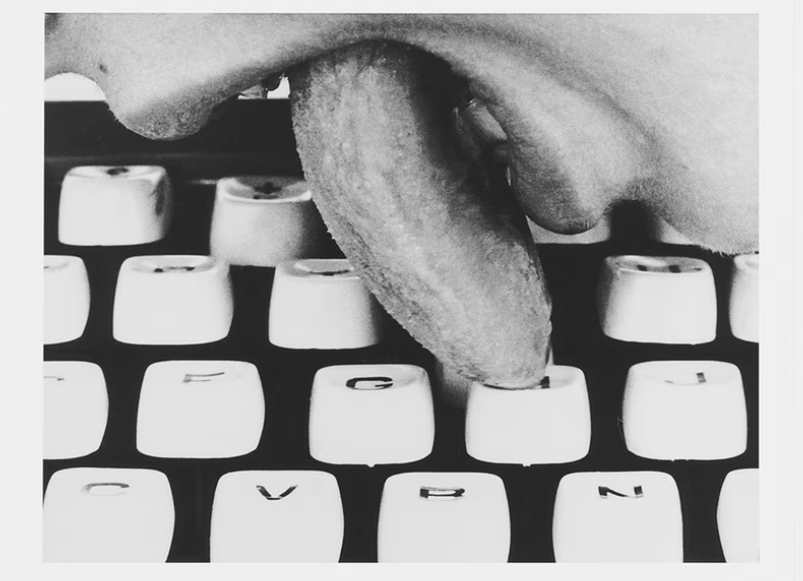
Now the Kunstmuseum Bern is exhibiting the first major exhibition of the collection since the project was completed.
However, approaching this rich body of work constituted a challenge as big as the subcontinent itself.
“It is very difficult to tell the story of the arts in Latin America, being a continent as diverse as it is large,” curator Marta Dziewanska emphasizes to swissinfo.ch.
“I propose a reading that is just one of many possible ones. I am interested in the aesthetic quality – all the works are obviously beautiful – and the way they were shaped politically. In other words, what these works of art say about the reality that framed the artists and how they navigated those times of oppression and censorship”.
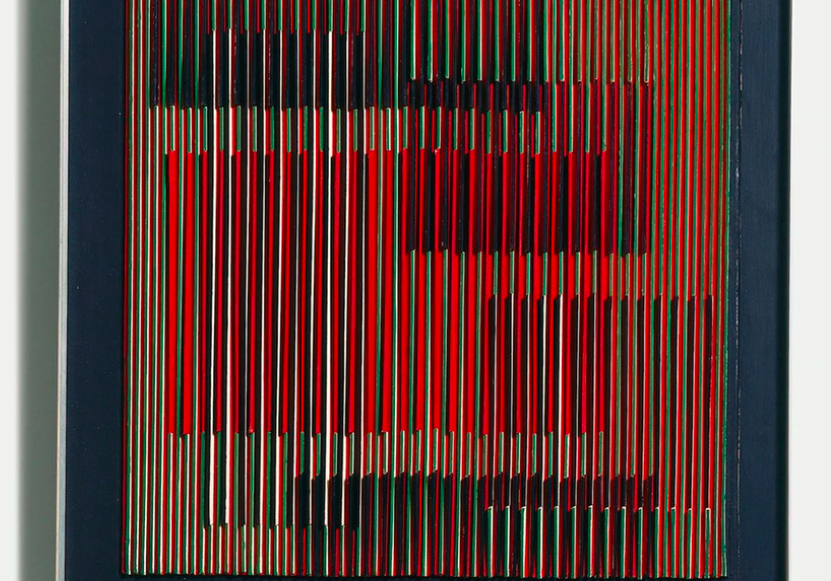
The starting point is a selection from the 1950s-1970s, the “decades of lead,” when military dictatorships swept virtually the entire subcontinent, leading to another set of contemporary works.
Dziewanska herself was born and raised in then-communist Poland and finds a clear parallel between the attitudes of the artists of those times -non-conformism and commitment despite serious risks for their work- both in Eastern Europe and Latin America.
It might sound almost like a provocation to talk about utopia at a time like the present when many Latin American countries, and Brazil in particular, live in a true dystopia, we suggest by way of interrogation.
“Between the 1950s and 1970s, the theme of utopia was very present among artists,” says Dziewanska. “But when we look at contemporary works from the late 1990s until today, we realize these utopias have become significantly more modest. They are now more local and much closer to queer, feminist, and indigenous movements, for example,” she adds.
DAROS COLLECTION & LATIN AMERICA
In 1997, Swiss industrialist Stephan Schmidheiny (very controversial given the famous asbestos case in which his company Eternit was involved) promoted the Daros Collection with renowned works of modern and contemporary art of high commercial value – Cy Twombly, Basquiat, Pollock, Warhol, etc. – managed by fully professional management.
Daros Latin America was created as the family business expanded its presence in the subcontinent, but separate from the main collection, and was managed by Stephan’s first wife, Ruth Schmidheiny.
It has around 1,200 works of art, also renowned and of great value, belonging to great Latin American artists of the last 70 years – Lygia Clark, Hélio Oiticica, Miguel Ángel Rojas, Doris Salcedo, Cildo Meirelles, Antonio Dias, and many others.
In Rio de Janeiro, Casa Daros was bought for fr5 million, and Ruth Schmidheiny spent another fr25 million on its renovation. It ran for only two years (2013-15) before Ruth decided to stop the project overnight.
The unexpected decision triggered all kinds of speculation that did not cease with Ruth Schmidheiny’s death last year.
swissinfo.ch spoke to some former Daros officials, and so far the most plausible explanation is the official one.
Faced with rising insurance and maintenance costs, plus uncertainties surrounding the safety of the collection in Rio, Ruth Schmidheiny decided not to continue. Casa Daros is now a large private school.
MANIFESTOS
Among the utopian tools of resistance, artistic manifestos used to play a provocative role in postwar cultural debates and gain prominent space in both the current exhibition and the carefully crafted catalog.
“They did not attach much importance to authorship or competition within the art world; what interested them was to bring new ideas, new vocabularies. They had to go beyond the vocabulary and the alphabet to create a new world; that’s why these manifestos are so important.”

Three Argentine manifestos from the 1940s prefigure their Brazilian counterparts from the 1950s, a group of poets and graphic artists who launched the Concrete Movement, with special attention to the use of typography and graphic elements together with the word, and that would have a considerable influence not only in the arts but in many different media, including advertising.
THE POWER OF ENGAGEMENT
But returning to the central motif of the exhibition, it is clear that none of these utopias ever happened, not even close.
Still, even so, the artists continued to produce their tools because they could not stop themselves from getting involved and dreaming about other possible realities – the times then demanded a critical and political stance of the arts.
Otherwise, they would hardly be considered by their peers or the public.
Marta Dziewanska is not at all naive in considering the importance of these works of art and their contexts far beyond their times.
“We need this power of engagement today, and not only in Latin America, but everywhere, and especially here in Europe and the USA, because we are in the midst of a global crisis with local effects. At this time, ideas take on great importance. Even if art is not politics and has no immediate impact on reality, it can still change perspectives and provide another vision for the future and the relationships between people”.
With a pandemic across the planet and a climate crisis approaching, waves of refugee migration on almost every continent, and regional conflicts exploding for the most varied reasons – land, water, faith, preconception – it is quite difficult today to create new grand ideas of modernity or a road to paradise.
“That’s why I decided to go for a title that is paradoxical in its very essence,” says Dziewanska. “Utopia is extremely abstract, but the tools are extremely concrete and precise.”
With information from SWI
This article was produced by The Rio Times’ automated newsroom system. How we use AI · Report an error
Read More from The Rio Times