Colombia Finds Drones Spying on Migrants, 24% Extorted

COLOMBIA · SECURITY
Key Facts
- —The country Colombia, a longtime US security partner, shares a 586-kilometre border with Ecuador. Its main crossing is the Rumichaca bridge between Ipiales and Tulcán.
- —What happened On Monday 5 October, Colombia’s ombudsman office released a joint report with Ecuador’s on abuses against migrants at that crossing.
- —The drones New gangs in Ecuador’s Carchi province, in and around Tulcán, are spying on migrants with drones and extorting them, the report says.
- —The numbers Of 59 migrants interviewed in July 2026, 42.4% reported discrimination, 32.2% robbery, 23.7% extortion and 13.6% physical attacks.
- —The US link The report names Los Choneros and Los Lobos, two Ecuadorian gangs the US designated as foreign terrorist organisations in September 2025.
- —Still open The report does not say who is spying on migrants with the drones, how much they demand, or whether police have opened cases.
Criminal groups on the Ecuadorian side of the main Colombia–Ecuador border crossing are spying on migrants with drones and extorting them. Colombia’s and Ecuador’s human rights ombudsmen made the finding in a joint report published on Monday 5 October 2026.
The report also lists Los Choneros and Los Lobos, Ecuadorian gangs on Washington’s list of foreign terrorist organisations, among groups active at the border. Nearly one in four of the 59 migrants interviewed, 23.7%, said they had been extorted along the route.
What the Ombudsmen Found at Rumichaca
The Defensoría del Pueblo, or Ombudsman’s Office, is Colombia’s state human rights watchdog, and Ecuador has an office of the same name. Their teams monitored the Ipiales–Tulcán corridor in July 2026, with technical support from the UN Human Rights Office.
Colombia’s office released the joint report on Monday 5 October. Caracol Radio, a Colombian broadcaster, highlighted its drone findings on Tuesday.
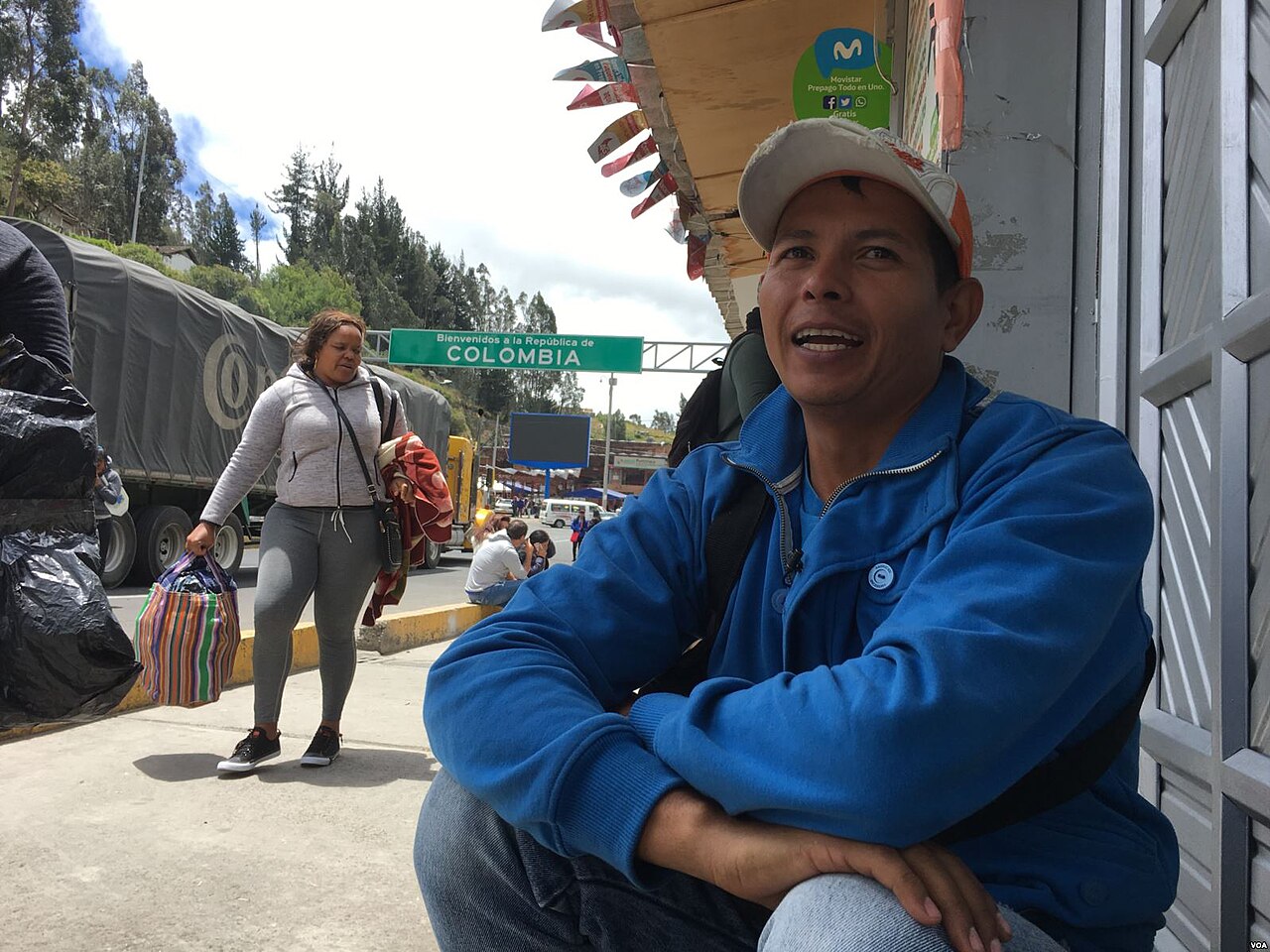
The Rumichaca International Bridge links Ipiales, in Colombia’s Nariño department, with Tulcán, capital of Ecuador’s Carchi province. The report calls it the main land crossing between the two countries and a transit corridor toward Central and North America.
According to the report, new criminal groups in Tulcán, El Carmelo and Espejo are spying on migrants with drones and systematically extorting them. All three places lie in Carchi, on the Ecuadorian side.
At bus terminals, recruiters posing as tour operators sell migrants “safe routes” to third countries for up to US$300. The report says this exposes travellers to scams, abandonment and exploitation.
Who the Armed Groups Are
The report maps Colombian armed groups and Ecuadorian gangs fighting over corridors for drugs, contraband, weapons, human trafficking and migrant smuggling.
On the Colombian side it lists the Coordinadora Nacional, known by its Spanish initials CNEB, a bloc of former FARC guerrilla fronts. They split from the Segunda Marquetalia, ex-FARC commanders who rearmed after the 2016 peace deal.
It also lists Comuneros del Sur, a faction that broke away from the central command of the ELN, a leftist guerrilla army. President Abelardo de la Espriella, a conservative, ended peace talks with both groups in late August and early September.
On the Ecuadorian side, the report names Los Choneros and Los Lobos. Washington designated both as foreign terrorist organisations in a Federal Register notice of 5 September 2025.
It also cites references to members or collaborators of Tren de Aragua, a Venezuelan gang the US designated a terrorist organisation in February 2025.
Migrants Are Now Heading North and Home
Most of the people interviewed were heading north. Of the movements recorded, 79.7% went from south to north, and 66.1% were entries into Colombia.
Most were travelling from Chile, Peru and Ecuador, and 71.2% planned to continue home to Venezuela. Many, especially Venezuelans, wanted to check on relatives after the June 2026 earthquake.
Work or income was the main reason to move for 69.5%, family reunification for 16.9% and violence for 13.6%. The report says the Ecuador border accounts for 49% of irregular migration recorded by Migración Colombia, the national migration agency.
In 2025, after Ecuador announced it would deport 1,000 prisoners, 410 people crossed into Colombia at Rumichaca without joint protection protocols, the report says.
Abuse, Aid Cuts and a Shift to Border Security
Armed civilians were the main alleged attackers, linked to 75% of sexual violence cases and 57.9% of robberies reported. Victims tied members of the security forces to 21.4% of extortion cases and 20% of discrimination cases.
Three in four of those consulted, 75%, filed no complaint at all. Some women and girls were pushed into “survival sex” for food or shelter, the report says.
Ipiales had about 25 international aid organisations in 2024 and about five in 2026, the city’s migrant-aid coordination group told the mission.
The Pastoral Social shelter in Ipiales, run by the Catholic Church, serves about 70 people a day and struggles to provide food. Children and teenagers made up 40% of those it sheltered in the first half of 2026.
Donor money, the report says, has moved from social projects toward border-control technology such as biometric systems and toward security strategies. It points to US cooperation announced with Colombia in March 2025 and signed with Ecuador in June 2026.
Ecuador’s deal, the Frontera Segura (Safe Border) strategy, starts with a pilot in Carchi province. The US State Department’s narcotics and law enforcement bureau provides training and equipment, the trade site Segurilatam reported.
What It Means for You
For Americans following migration, the map has changed at Rumichaca. Of those interviewed, 71.2% were heading home to Venezuela and the rest planned to stay in Colombia, not travel to the United States.
Three groups named in the report, Los Choneros, Los Lobos and Tren de Aragua, are on the US terrorism list. Knowingly giving material support to such a group is a federal crime under US law.
Rumichaca is also the usual overland route for tourists travelling between Colombia and Ecuador. The State Department rates Colombia at Level 3, “Reconsider Travel”, and Ecuador at Level 2, “Exercise Increased Caution”.
Ecuador’s advisory says “do not travel” to “the area north of Esmeraldas City to the Colombian border and east to Carchi province”. Travellers should use official crossings and ignore anyone at bus terminals selling “safe routes”.
The “safe route” sellers work from border bus terminals that tourists also use. Washington backs border security here, while international aid groups in Ipiales have fallen from about 25 to five.
What Is Not Known
The report does not name the gangs spying on migrants near Tulcán, how much they demand, or how many people they target. Nor does it say whether police have opened cases.
Its figures come from 59 interviews, so they show patterns rather than the whole migrant population. It is unclear whether the US-backed Frontera Segura pilot targets the gangs spying on migrants at all.
The ombudsmen urge intelligence work against trafficking networks, better protection for women and children, and public money to replace lost aid. They say the border cannot be handled “only from a migration-control or security perspective”.
More: Colombia news in English, every day from The Rio Times.
Frequently Asked Questions
Where is the Rumichaca border crossing?
Rumichaca is the main land crossing between Colombia and Ecuador. Its bridge links Ipiales, in Colombia’s Nariño department, with Tulcán, capital of Ecuador’s Carchi province.
Who is using drones against migrants?
The report says new gangs in Tulcán, El Carmelo and Espejo, in Ecuador, are spying on migrants with drones to extort them. It does not name these gangs.
Are the gangs in the report on US terrorism lists?
Los Choneros and Los Lobos, two Ecuadorian gangs in the report, became US-designated foreign terrorist organisations in September 2025. The report does not tie them to the drones.
Is it safe for tourists to cross at Rumichaca?
The US rates Colombia at Level 3 and Ecuador at Level 2 in its travel advisories. Ecuador’s advisory, however, lists the northern border strip from Esmeraldas east to Carchi as do not travel. Travellers should use official crossings and avoid informal “safe route” sellers at bus terminals.
Sources: Defensoría del Pueblo de Colombia, press release, 5 October 2026; Defensorías del Pueblo de Colombia y Ecuador, joint report “Una frontera, desafíos compartidos” (PDF), October 2026; Caracol Radio, 6 October 2026; Federal Register, FTO designation of Los Choneros and Los Lobos, 5 September 2025; Federal Register, FTO designation of Tren de Aragua and others, 20 February 2025; Página 10, 4 September 2026; Revista RAYA, 26 February 2026; Segurilatam, 25 June 2026; US State Department, Ecuador travel advisory, 18 August 2026; US State Department, Colombia travel advisory, current.
This article was produced by The Rio Times’ automated newsroom system. How we use AI · Report an error · Editorial responsibility: Matthias Camenzind, Editor-in-Chief