Chad Moves Gold Export Permits to One Office
Chad has put gold and other mineral export permits under one roof. Exporters holding papers from other offices would hold void documents.

Chad Gold Exports
On Friday 27 November 2026, Chad’s one-stop shop for gold and mineral exports said it alone may now issue export authorisations for the sector. The Guichet Unique d’Exportation de l’Or et autres Substances Minérales (GUEOSM), now run by the Ministry of Mines, Petroleum and Geology, announced this in a communiqué signed by its coordinator-general.
Any permit obtained elsewhere is void, so gold buyers and exporters now deal with a single desk. Chad’s report to the Extractive Industries Transparency Initiative (ITIE) says a significant share of the country’s gold output escapes formal control.
Key Facts
- Who. The GUEOSM, Chad’s one-stop shop for gold and mineral exports, under the Ministry of Mines.
- What. One office alone may issue export authorisations for gold, silver, diamond, antimony, tungsten and copper waste.
- Rule. Authorisations obtained from any other office will be treated as void.
- Open. No reason, enforcement method or fee change has been given.
- As of. 27 November 2026, 19:20 GMT.
Chad has put gold and other mineral export permits under one roof. Exporters holding papers from other offices would hold void documents.
The rule completes a move begun in September, when Decree No. 2194/PR/PM/MMPG/2026 of 15 September 2026 shifted the one-stop shop from SONEMIC, the state mining and trading company, to the Ministry of Mines. Gold is already contested at home, where Chad’s opposition has urged talks on the Miski gold zone.
A ministry circular of 21 September 2026 then said procedures are handled “exclusivement auprès des services dédiés du ministère des Mines, du Pétrole et de la Géologie”. In plain English, that means only with the dedicated services of the Mines Ministry.
Earlier, order No. 024/MFBEPCI/SE/SG/DGDDI/DELDC/2026, published on 17 February 2026 and signed by Finance Minister Tahir Hamid Nguilin, set a statistical fee of 2% of taxable value on exports of antimony and other mineral substances. It also required proof of payment of the 12.5% mining royalty and made the Ngueli customs office the only office for antimony export formalities.
The customs director-general may grant a one-off written exception to that office rule, the same order says. The communiqué of 27 November does not mention the order or the fee.
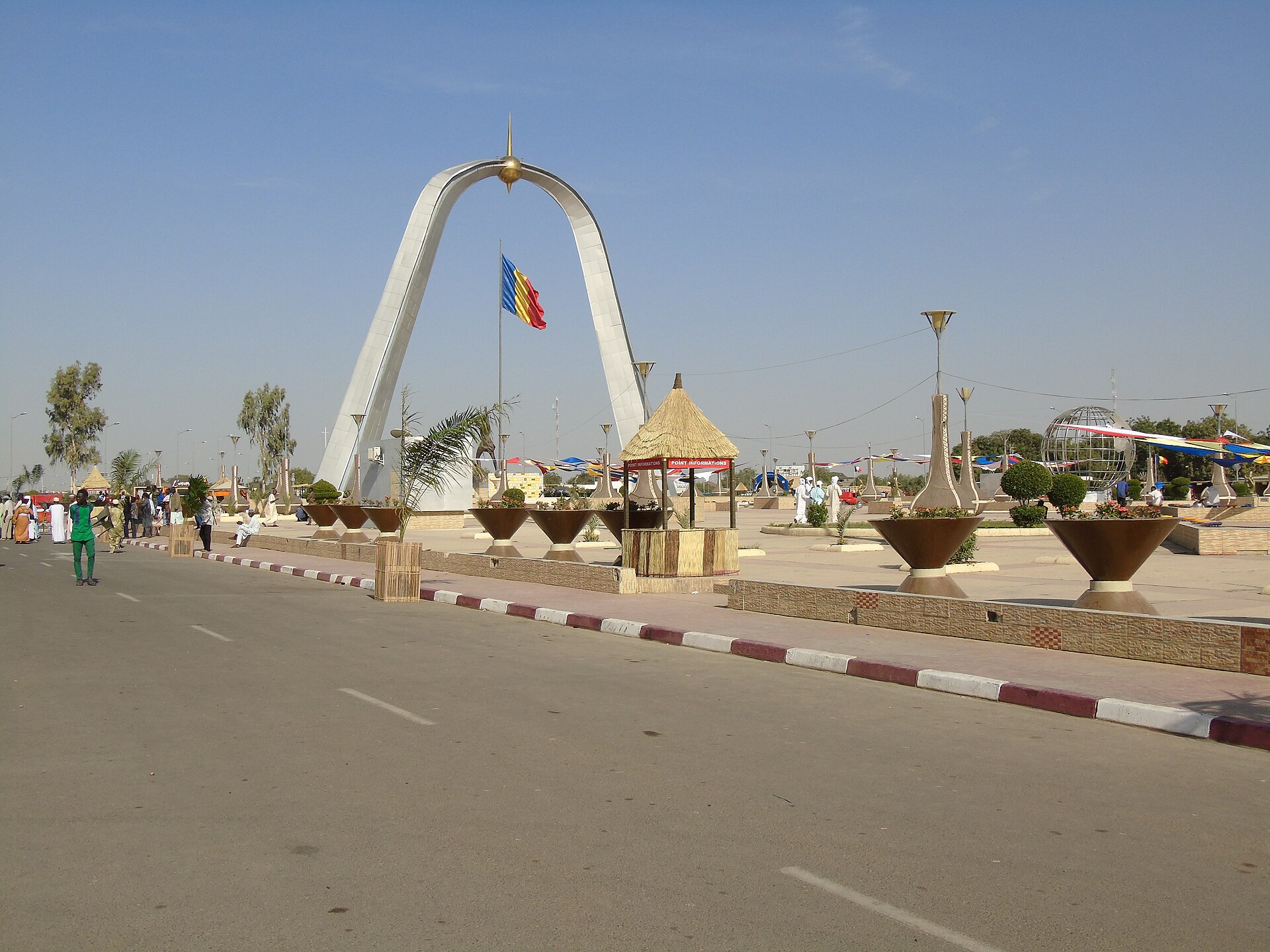
The communiqué gives three directives: every authorisation request must be filed with the GUEOSM coordination, and no other structure, service or person may issue or promise such authorisations. Any document obtained outside this framework “sera considéré comme nul et non avenu”, meaning it will be treated as null and void.
The coordination says the issue of all mineral authorisations “relève désormais de sa compétence exclusive”, now falling under its exclusive competence. It “invite” all economic operators, exporters and mining players “à se conformer strictement à ces dispositions”, meaning to comply strictly with them.
The communiqué itself could not be opened for this report, so these quotations come from its text as carried on 27 November 2026 by Chadian news sites. The same applies to the decree of 15 September 2026, whose number, 2194/PR/PM/MMPG/2026, Chadian reports of September 2026 give.
The numbers show why the permit desk matters. The Extractive Industries Transparency Initiative (ITIE), Chad’s multi-stakeholder transparency body, said in its 2023 report of 30 December 2025 that the mining directorate (DGTM) recorded 2,660.343 kg of gold exported and taxed in 2023.
Tax paid on that gold was 249,407,205 CFA francs (about US$416,000 at about 600 CFA francs per US$), according to the same report. The report sets this formal record beside foreign import data.
UN Comtrade, the United Nations trade-statistics database, shows the United Arab Emirates declared 17.7 tonnes of Chadian gold worth US$1.107 billion for 2023. That is up about 18% from 15.03 tonnes (US$875.7 million) in 2022, when Chad’s own figure was 3.68 tonnes.
Put as a ratio, 2.66 tonnes is about 15% of 17.7 tonnes. The ITIE report says the gaps “peuvent refléter, en partie, les volumes issus des activités informelles”, meaning they may partly reflect informal activity.
It cites a national study that puts annual artisanal gold output at about 8.2 tonnes, which it says “confirme qu’une part importante de la production échappe au contrôle formel”. The communiqué does not link its new rule to these gaps.
For exporters the mechanism is simple: a permit from any other office is void, so every request goes to one desk. Against the 2.66 tonnes taxed in 2023, the 17.7 tonnes declared by the UAE mark the size of the gap between formal and foreign records.
The communiqué gives no reason for the move and does not say how the rule will be enforced. It also does not say whether fees change.
No dated next step has been published for the rule. Operators are asked to comply strictly, but the reports of the communiqué name no deadline.
More: Chad news in English, every day from The Rio Times.
Frequently Asked Questions
Who can now issue gold export permits in Chad?
Only the GUEOSM, the one-stop shop run by the Ministry of Mines, according to its communiqué of 27 November 2026. Other offices may not issue or promise them.
What happens to permits issued elsewhere?
The communiqué says any document obtained outside the GUEOSM framework will be treated as null and void. It does not say how this will be enforced.
Does the new rule change export fees?
The communiqué does not say whether fees change. The 2% statistical fee and 12.5% royalty were set by earlier texts.
Sources
Guichet Unique d’Exportation de l’Or et autres Substances Minérales (GUEOSM), communiqué of 27 November 2026; Decree No. 2194/PR/PM/MMPG/2026 of 15 September 2026 and Ministry of Mines, Petroleum and Geology circular of 21 September 2026; Ministry of Finance order No. 024/MFBEPCI/SE/SG/DGDDI/DELDC/2026, published 17 February 2026; ITIE Chad, 2023 report, 30 December 2025.
This article was produced by The Rio Times’ automated AI newsroom. Editorial responsibility: Matthias Camenzind, Publisher and Editor-in-Chief. The Rio Times also runs Ask Rio Times, which answers from 100,000+ of our own articles, the daily Latin America Power Map, and prediction-market odds on elections and markets.. How we use AI · Report an error