Brazil Budget Panel Cuts US$370M in Spending
The cut is small and may not survive: Braga says the numbers will change as amendments, sector reports and government changes arrive.

Brazil Budget
Brazil’s Congress has begun trimming the federal budget to pay for its own wish list, and the first cut is small. On Thursday, 26 November 2026, Congress’s Joint Budget Committee (CMO), which has members from both houses, approved a preliminary 2027 report that cancels R$2.09 billion (about US$370 million at R$5.68 per US$1) of government spending.
The cut equals 0.78% of the discretionary spending the government can adjust, as set out in the report. Senator Eduardo Braga of the MDB party, the budget’s general rapporteur who writes the main report, says he will restore priority areas as lawmakers worry about Brazil’s economy slowing.
Key Facts
- Who. Congress’s Joint Budget Committee, with Senator Eduardo Braga writing the main report.
- What. Preliminary 2027 report cancels R$2.09 billion (US$370 million) of discretionary spending.
- Where. The national health fund carries R$658.3 million (US$116 million), nearly a third of it.
- Next. Sector-by-sector reports begin on 1 December 2026.
- As of. 26 November 2026, 21:00 GMT
The cut is small and may not survive: Braga says the numbers will change as amendments, sector reports and government changes arrive.
The government sent its 2027 budget bill to Congress on 31 August 2026, projecting a primary surplus of R$18.6 billion (about US$3.3 billion), meaning revenue minus spending before interest. The official target is a surplus of 0.5% of GDP, and the report says the projection comes before adjustments meant to reach it.
Lawmakers want money for their own projects. They filed 8,212 amendments worth R$286.3 billion (about US$50 billion), while the government’s bill reserved only about R$45 billion for the mandatory individual and state-delegation ones.
To pay for them, the report cuts spending across the board in a linear cut. Sector rapporteurs may steer R$1.1 billion of it to collective amendments, and the rest is split between state delegations and the general rapporteur.
More revenue does not solve it, because the R$17.6 billion (about US$3.1 billion) the committee added to the revenue forecast on Wednesday cannot be spent: the R$2.6 trillion (about US$458 billion) spending ceiling already has a destination. Only 8.3% of the R$3.4 trillion (about US$600 billion) in primary spending is discretionary, so every cut lands on a thin slice.
The national health fund carries R$658.3 million of the cancellations. Cuts may also reach the infrastructure ministry and parts of the PAC, the government’s flagship public-works plan, with ceilings of up to R$400 million (about US$70 million) for areas such as health, infrastructure and cities.
Sixteen sector rapporteurs, each covering one area such as health or infrastructure, will decide which items to cancel. A cut in one programme can be offset by amendments in the same area, so the net result for each area is not yet known.
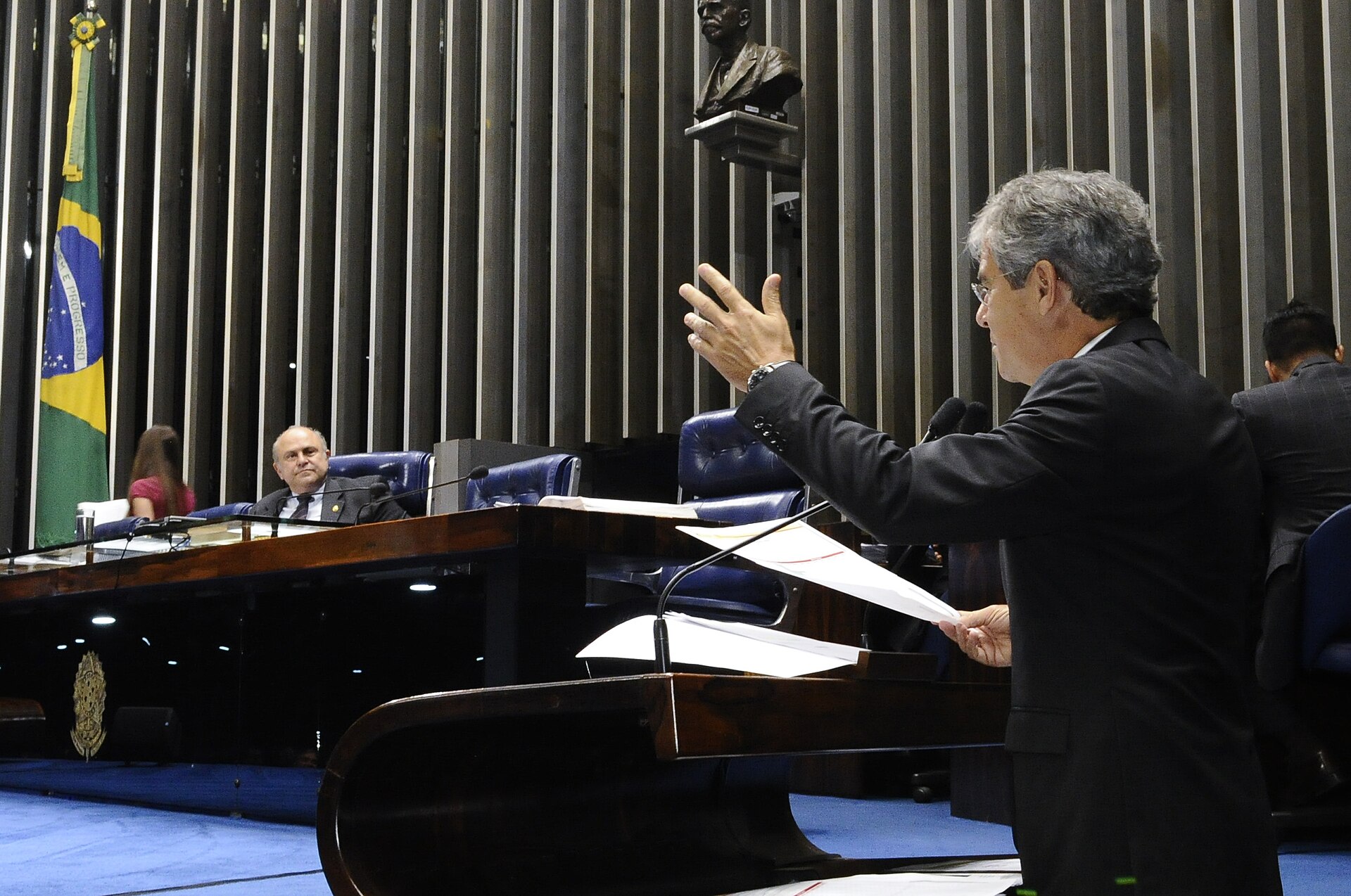
Deputy Lindbergh Farias of the Workers’ Party (PT), the party of President Luiz Inácio Lula da Silva, warned that cuts could hit universities. “I think the country’s big debate today should be this: how we keep the economy from entering a recession, given that the signs of slowdown are there,” he said, in the Portuguese original translated here.
Braga answered that he is committed to “extremely sensitive” programmes such as Farmácia Popular, the subsidised-pharmacy scheme, which “cannot, under any circumstances, suffer any budget cut.” Lindbergh then backed the report after Braga promised to restore R$123 million (about US$22 million) for universities and federal institutes as soon as next week.
The report also shows how much is already locked in. It sets R$209.7 billion (about US$37 billion) for investment by state companies, the largest share of it for Petrobras, the state oil giant.
The report assumes a 2027 minimum wage of R$1,741 (about US$306), which drives pension and welfare costs. Mandatory items like these make up 91.7% of primary spending, leaving the rest to investment and running the state.
Braga also used the debate to attack the cost of credit. He pointed to interest of up to 500% on revolving credit-card balances and asked why Congress does not discuss it, saying that has nothing to do with the deficit.
For investors, the cut is too small to change the fiscal picture, and the backdrop is public debt that the central bank put at 82.9% of GDP in September. The gap between the R$18.6 billion projected surplus and the 0.5%-of-GDP target is what holders of Brazilian debt in dollars will keep watching.
Braga said the cuts may change or not fully happen, because the report will be adjusted after amendments, sector reports and any government changes. The first real test comes on 1 December 2026, when the sector reports start and each area learns what it keeps.
Frequently Asked Questions
What is the preliminary report?
It is the first version of the budget text, which sets limits for later stages. The final report can still change what it cuts and adds.
Will the cuts actually happen?
Not necessarily. Braga says they may change as amendments and sector reports arrive, and he has promised to restore money for priority areas.
Why does a small cut matter?
It shows how little room Congress has. Almost all spending is mandatory, so each amendment must be paid for by cancelling something else.
Sources
Joint Budget Committee (CMO) preliminary report and session on the 2027 Budget bill (PLN 24/2026), 26 November 2026; Chamber of Deputies statement on the session, 26 November 2026; 2027 Budget bill as sent to Congress, 31 August 2026; central bank public debt statistics, September 2026; RT market rate for the exchange rate.
More: Brazil news in English, every day from The Rio Times.
Related Coverage
This article was produced by The Rio Times’ automated AI newsroom. Editorial responsibility: Matthias Camenzind, Publisher and Editor-in-Chief. The Rio Times also runs Ask Rio Times, which answers from 100,000+ of our own articles, the daily Latin America Power Map, and prediction-market odds on elections and markets.. How we use AI · Report an error
Brazil runoff, Sunday, October 25: Brazil runoff start time and results schedule. Latest: Brazil runoff polls, Flávio 51%, Lula 49%.