Argentina Votes Wednesday on Central Bank Reform
A central bank charter is the closest thing a country has to a promise it cannot easily break. Argentina is about to rewrite its own.
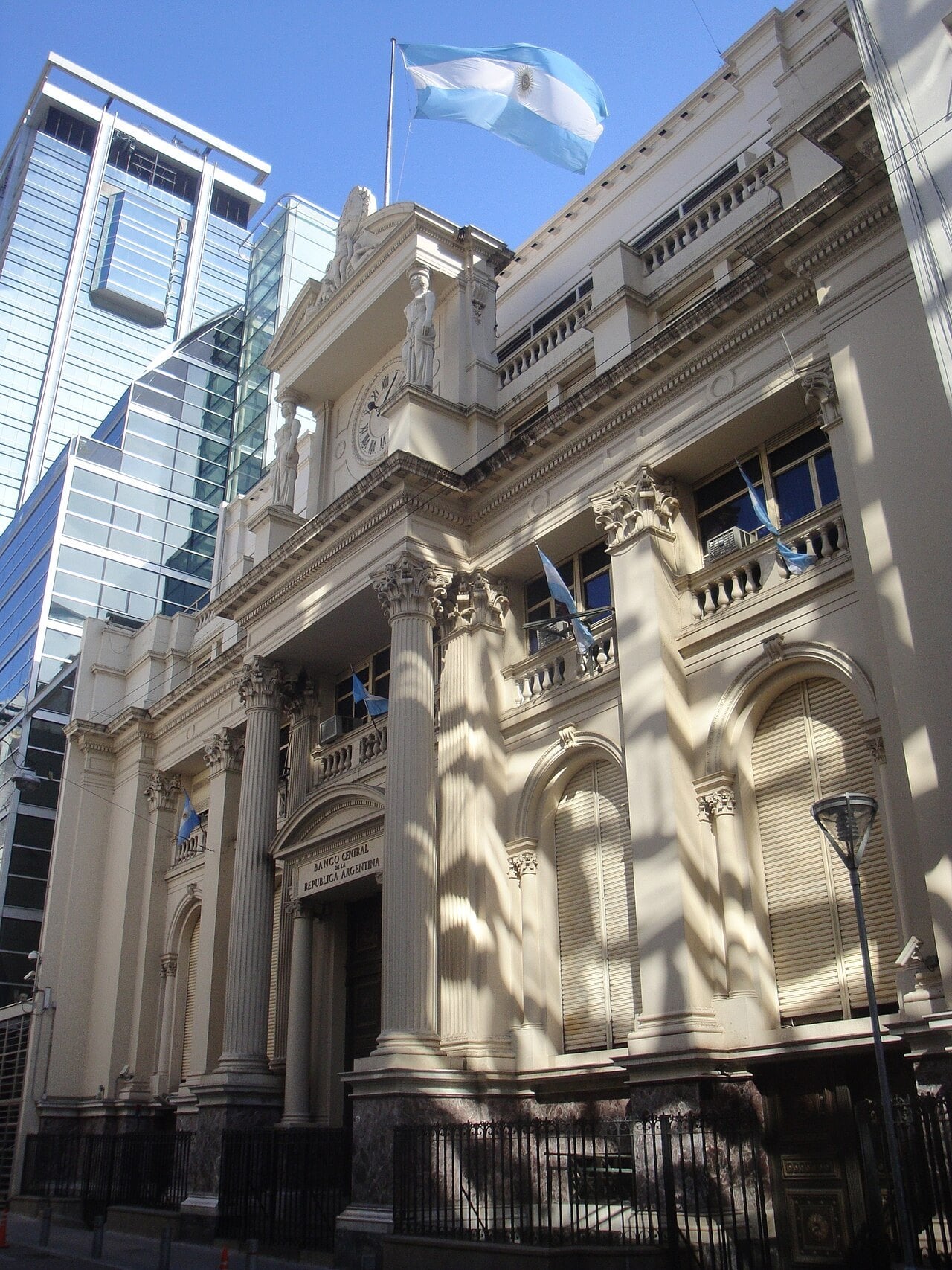
Argentina · ECONOMY
Key Facts
- —What happened Argentina’s lower house votes Wednesday on a bill giving the central bank one job and banning Treasury financing.
- —How big a jump The reform is Javier Milei’s most consequential institutional change, rewriting a charter that has stood for decades.
- —The real story The bill removes the mechanism by which Argentine governments historically paid for themselves with printed money.
- —The catch Critics say a clause lets the bank raise dollars internationally, using reserves as backing, reopening a spending channel.
- —Who it touches Investors holding Argentine assets and businesses face a test of whether the ban survives a future government.
- —What comes next The vote tests parliamentary arithmetic Wednesday, though the governing bloc had not secured a quorum by 20 August.
A central bank charter is the closest thing a country has to a promise it cannot easily break. Argentina is about to rewrite its own.
The Argentina central bank reform reaches the floor of the Chamber of Deputies on Wednesday 26 August, and it is the most consequential item on Javier Milei’s institutional agenda that most people outside the country have not heard of. It would rewrite the bank’s charter to give it one job, and take away the mechanism by which Argentine governments have historically paid for themselves.
What the Argentina central bank reform would do
Four things, and the first is the one that carries the rest.
The bank’s mandate would be reduced to a single objective. The committee text is reported two ways — as preserving the value of the national currency, and as price stability — and the bill itself is not public, so take the precise wording as unsettled. Either way the effect is the same: Argentina’s current charter, like many in the region, asks the central bank to pursue several goals at once, monetary stability alongside employment and development. A single mandate removes the discretion that comes from having to balance them.
Financing the Treasury would be prohibited outright. This is the provision with a century of Argentine history behind it, and it is why the bill exists.
The non-transferable Treasury notes — the letras intransferibles, the instrument by which reserves have been swapped for government paper and spent — would be wound down; sources differ on whether that means outright elimination or progressive cancellation. And the rules for removing the bank’s authorities would be tightened to require serious cause, a presidential decree and a two-thirds majority in both chambers. That last provision is the one that decides whether any of the rest survives a change of government.
It reached the floor with a majority committee report signed on 12 August by the finance and budget committees, carrying 42 signatures from La Libertad Avanza and allied blocs while the main opposition walked out. It is on a crowded order paper: a second fiscal amnesty, a cut in VAT on cassava starch from 21% to 10.5%, the Mercosur–Singapore trade agreement and accession to the Patent Cooperation Treaty are all listed for the same session, and the agenda was still being negotiated this week.
The objection worth taking seriously
The opposition to this bill is not mainly the obvious one. Few Argentine economists will argue in public for the central bank printing money for the Treasury; that argument was lost some time ago.
The criticism that has traction is narrower and more technical. A PxQ report published on 19 August identifies a clause it calls a Trojan horse: a mechanism enabling the bank, under governor Santiago Bausili, to raise dollars on international markets using gross reserves as backing. If that reading is right, the bill would close one channel for using reserves to fund the state and quietly open another.
Whether that is a drafting flaw or a design choice is exactly the sort of question a floor debate is for, and exactly the sort that tends not to get answered in one.
What the ratings agencies are actually saying
There is a line circulating that Moody’s has declared Argentina’s fiscal adjustment will continue “regardless of who wins the elections”. Unusually, the shorthand is accurate — and it is worth quoting properly, because the qualifier does the work.
In research reported on 21 August, Moody’s wrote that it is likely current policies will continue regardless of the outcome of the 2027 elections, and that whether under a second Milei term or a successor government, it expects most of the economic reforms to be maintained. That is the agency’s own language, not a press gloss. No individual analyst is named in the coverage.
The word carrying the weight is “likely”. Moody’s says continuity is probable, not certain — and the same agency, a month earlier on 22 July, warned about the risk of an interventionist government returning in 2027. Both judgements are Moody’s. Only one of them has travelled, which tells you more about the market than about the agency. What is being priced is the fading of what Argentine traders call “riesgo kuka”, the fear of a Kirchnerist return unwinding the adjustment — at the presidential election of 24 October 2027, which is the vote Moody’s is actually talking about. There is no national election in Argentina in October 2026.
And the underlying rating is the sober part. Moody’s raised Argentina to B3 with a positive outlook on 21 July, up from Caa1 — the third upgrade in under three months, after Fitch and S&P. B3 is still deep in highly speculative grade. Country risk rose more than 20% during August even so, and bonds fell. A maturing recovery from where Argentina started is not the same as an investment-grade country.
Why the charter matters more than the rate
If you hold Argentine assets, the reason to care about a charter rather than a policy rate is durability. Rates change monthly. A charter changes what the next government is allowed to do, and that is what a risk premium is actually pricing.
If you do business in Argentina, the provision to watch is the ban on Treasury financing and, right behind it, the removal rules for the bank’s authorities. A prohibition that a future government can lift by replacing the board is not a prohibition.
And if you have watched Argentina for any length of time, apply the usual discount. Argentina has legislated monetary discipline before. The convertibility law of 1991 was also a promise written into statute, and it held for a decade before it did not. What is different this time is not the intention but the parliamentary arithmetic, and Wednesday is when that gets tested.
For readers elsewhere in Latin America the interest is comparative. Chile, Peru, Colombia and Brazil all run central banks with formal independence and mandates that survived changes of government, and all four went through their own version of this argument. Argentina is doing in one bill what its neighbours did over two decades — which is either an admirable shortcut or the reason to be sceptical, depending on how much you think a charter can carry on its own.
Frequently Asked Questions
When does Argentina’s congress vote on the central bank reform?
The Chamber of Deputies is scheduled to take it up on Wednesday 26 August 2026, though as of 20 August the governing bloc had not assembled a quorum and allied blocs were still negotiating. A majority committee report was signed on 12 August by the finance and budget committees.
What would the reform change?
It would reduce the central bank to a single mandate, ban transitory advances and primary-market purchases of government paper, wind down the non-transferable Treasury notes used to channel reserves into public spending, and require serious cause plus a two-thirds majority in both chambers to remove the bank’s authorities.
Did Moody’s say Argentina’s adjustment will continue whoever wins?
Broadly yes, with a qualifier. In research reported on 21 August 2026 Moody’s said it is likely current policies continue regardless of the outcome of the 2027 elections, under a second Milei term or a successor. A month earlier it warned about the risk of an interventionist government returning in 2027. Argentina is rated B3 with a positive outlook — still highly speculative grade.
Connected Coverage
Sources
- Cámara de Diputados de la Nación
- Parlamentario
- Bloomberg Línea
- Infobae
- El Destape
- La Nación
- PxQ
In depth
This article was produced by The Rio Times’ automated AI newsroom. Editorial responsibility: Matthias Camenzind, Publisher and Editor-in-Chief. The Rio Times also runs Ask Rio Times, which answers from 100,000+ of our own articles, the daily Latin America Power Map, and prediction-market odds on elections and markets.. How we use AI · Report an error