Mercosur-EU Agreement Turns Four Months Old as Brussels Suspends Brazilian Meat
Trade · Latin America
Key Facts
- —The milestone After 25 years of talks, the EU-Mercosur trade agreement began provisional application on 1 May 2026.
- —The market It links more than 700 million consumers and phases out most tariffs over the coming decade.
- —The catch In September 2026, the EU suspended Brazilian meat imports — a separate food-safety measure, not the deal’s own quota dispute.
- —The sequel Mercosur ratified a trade pact with Singapore in August and is studying a fertiliser market with Chile.
- —The context The deal’s political and cooperation chapters still need approval from every EU national parliament.
A trade deal’s birthday is usually a formality. Four months after it began applying, the EU-Mercosur agreement already looks unfinished.
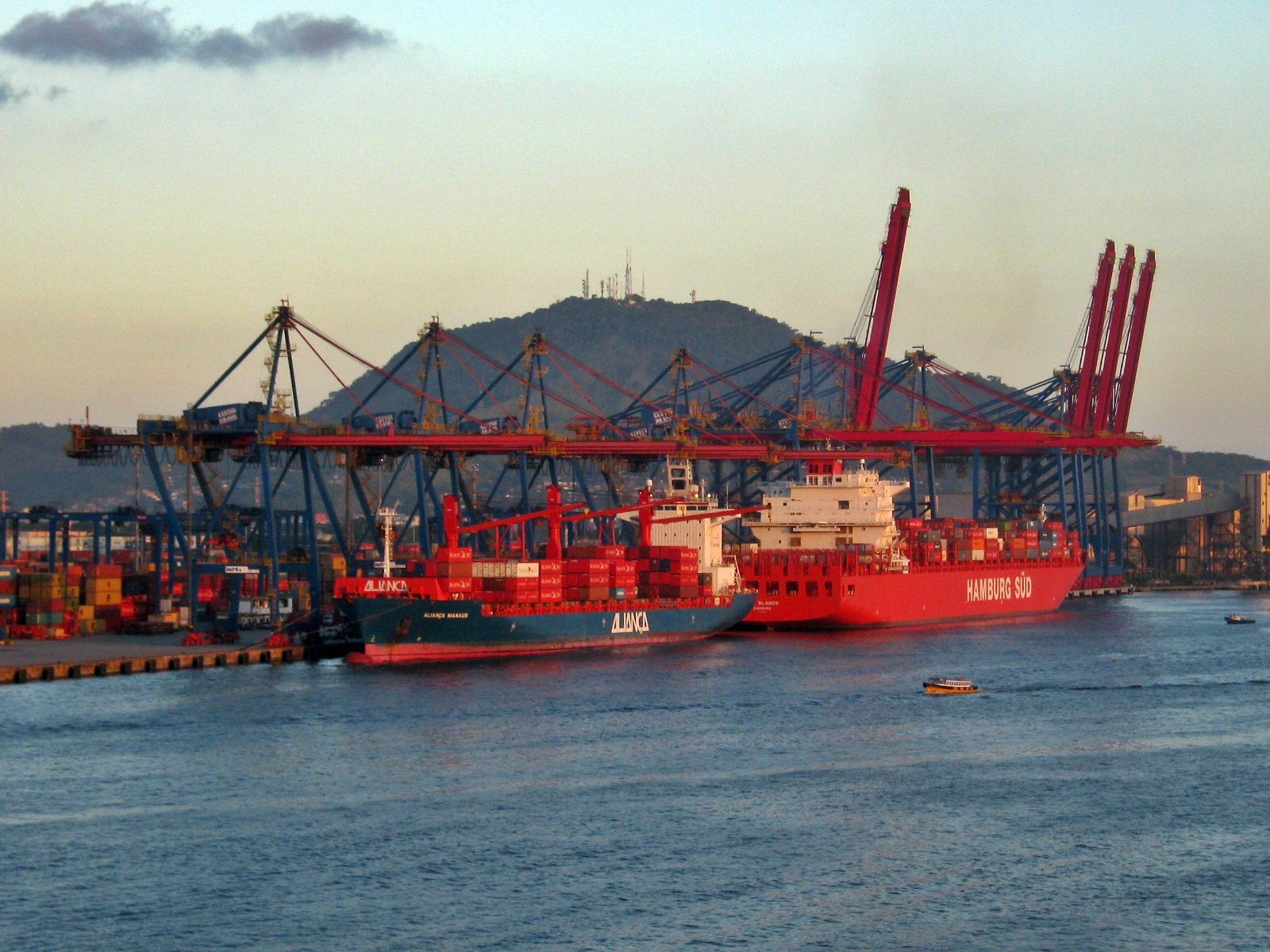
That is close to what officials on both sides expected. Big trade deals settle in slowly, and this one is settling in exactly that way.
What changed on day one
Tariff cuts started right away on some goods. The biggest cuts will phase in over ten years.
European machines, chemicals and cars became cheaper in South America. South American farm goods, minerals and industrial inputs got limited but real new access to Europe.
For companies, the practical change was paperwork. New rules of origin let a São Paulo parts maker treat the European Union (EU) as a single market.
The same rule works in reverse, so a German exporter can treat all four Mercosur countries as one market too.
Two deals, one signing
What began applying in May is the interim trade agreement, covering tariffs and market access only. It needed approval from EU governments and the European Parliament, but not from each country’s own parliament.
The wider EU-Mercosur Partnership Agreement also covers political dialogue and cooperation. That fuller deal still needs ratification by all 27 EU national parliaments, a process that could take years.
The meat suspension is not the quota fight
On 3 September 2026, the EU suspended imports of Brazilian beef, poultry, eggs and honey. The European Commission says Brazil failed to prove its cattle met a long-standing EU rule against using antibiotics to fatten livestock.
This is a food-safety measure applied to imports generally since 2022, not a use of the trade deal’s own suspension clause. A separate, older dispute over how Brazil, Argentina, Paraguay and Uruguay split their shared EU beef quota is still unresolved.
Brazil supplied guarantees for poultry and honey, which are under review. It did not yet supply the fuller documentation the EU wants for beef, covering an animal’s entire life.
Brazil was the European Union’s second-largest beef supplier in 2025. The suspension therefore affects a major share of the EU’s imported beef, not a marginal one.
Mercosur is not waiting for Brussels
The bloc’s new tempo is the more interesting story. Its trade pact with Singapore is Mercosur’s first with an Asian economy.
Argentina’s Congress gave final approval on 27 August 2026, by 234 votes to four. The Senate had already passed the same text on 14 May 2026, by 65 votes to none.
The law now awaits formal promulgation by President Javier Milei.
Mercosur and Vietnam launched talks on a similar pact on 21 December 2025, at a summit in Foz do Iguaçu, Brazil. Mercosur is also studying a joint fertiliser market with Chile, aimed at reducing reliance on imported supply.
The ratification risk has not vanished
The Partnership Agreement’s political and cooperation chapters need approval in every EU country. Farm lobbies in France, Poland and Ireland have not gone quiet.
Poland’s government tried and failed to block the deal’s Council approval on 9 January 2026. Thousands of farmers marched in Warsaw and Dublin that same week.
Five countries voted against the deal at that Council meeting: Poland, France, Austria, Hungary and Ireland. Together they represented only 29% of the EU’s population, short of the 35% needed to block it.
Poland’s government said it would challenge the deal at the Court of Justice of the European Union (CJEU), the bloc’s top court. The case’s timeline remains unclear.
French opposition parties filed no-confidence motions against their own government over the Mercosur vote, in January 2026. Both motions failed for lack of support.
The agreement also ties compliance with the Paris climate accord to its core commitments. A serious breach could, in principle, put the wider relationship at risk, though no such step has been taken.
How the meat quotas actually work
The deal does not open Europe to unlimited South American beef. It creates a combined tariff-rate quota of 99,000 tonnes a year for all four Mercosur countries.
Meat within that quota pays a reduced tariff of 7.5%. Meat outside it pays the European Union’s normal beef tariff, which combines a percentage and a per-kilogram charge and runs far higher.
Poultry gets a separate duty-free quota of 180,000 tonnes a year, phased in over five years. Sugar gets the same 180,000-tonne duty-free quota, plus an extra 10,000 tonnes reserved for Paraguay.
Industrial ethanol enters duty-free up to 450,000 tonnes a year from day one. Nearly 96% of goods entering Mercosur from the EU will become tariff-free within 15 years.
Brazilian exporters spread their allocations across product lines and EU member states to manage the risk. European importers, in turn, diversify their suppliers so no single shipment holds up their business.
In April 2026, a group of European Parliament members warned the quota system risks concentrating imports among a few large exporters. Belgian MEP Benoît Cassart led the letter, which named Brazil’s meat industry as a particular risk.
They asked the European Commission to keep beef and poultry quotas fully under EU control. Failing that, they want a formal review of how licences are shared among operators.
What to watch next
Three questions matter most through the rest of 2026. Will the antibiotic-related suspension lift before Brazil’s 4 October election, and will the beef-quota split among Mercosur members finally get settled?
Third, does the Vietnam talks’ pace show that Singapore was a pattern, not an exception? The deal took 25 years of negotiation; the next few years will show what it was worth.
Background: Brazil: Split Payment, the World’s Broadest Instant Tax Collection, Will Only Be Mandatory in 2028.
Background: Fintechs and Digital Banks in Brazil 2026: Market Guide.
The politics in Brasília and Buenos Aires
In Brazil, the deal is a campaign asset ahead of the October election, evidence of a government that delivers on trade. In Argentina, it suits President Javier Milei’s push for open markets, even though his government prefers bilateral deals to Mercosur’s joint bargaining.
Mercosur’s members increasingly want room to sign deals alone, and Singapore showed that is possible. The EU relationship’s staying power depends partly on whether Mercosur still negotiates as one bloc.
Connected Coverage
EU Suspends Brazilian Meat Over Antibiotic Rules, Not the Mercosur Quota Fight
Mercosur-Singapore FTA: A User’s Guide for Brazilian Companies
Argentina Ratifies Mercosur-Singapore Trade Deal in Final Vote
The Big Picture
Mercosur-EU Deal — the complete coverage hub
Latest developments
- Suho Plays São Paulo on 20 December 2026 — 13 October 2026
- Mazatlán Marathon on 6 December 2026 — 13 October 2026
- French Montana Plays Cape Town on 4 December — 13 October 2026
- Sharks vs Stormers in Durban on 5 December — 13 October 2026
This article was produced by The Rio Times’ automated newsroom system. How we use AI · Report an error · Editorial responsibility: Matthias Camenzind, Editor-in-Chief