Trump’s Trade Rebalancing Accidentally Helps Brazil Tame Inflation
Brazil’s Finance Ministry quietly cut its 2025 inflation forecast from 4.9% to 4.8% this week, but the real story lies in how Donald Trump’s trade tariffs are inadvertently helping Brazil control rising prices.
The September 11 announcement from Brazil’s Economic Policy Secretariat reveals an economic paradox. Trump’s 50% tariffs on Brazilian goods have backfired, creating what economists call a “global supply glut” that pushes down prices worldwide.
Instead of crushing Brazil’s economy, the trade balancing is providing unexpected inflation relief. Brazil exports $40 billion worth of goods to America annually.
Trump’s tariffs hit 40% of these exports, worth $16.4 billion, targeting coffee, beef, and manufactured goods. However, key exports like aircraft, orange juice, and iron ore received exemptions after intensive lobbying.
The tariffs forced Brazilian exporters to flood other global markets with goods originally destined for America. This oversupply drives down international prices, which eventually reduces costs for Brazilian consumers buying everything from food to electronics.
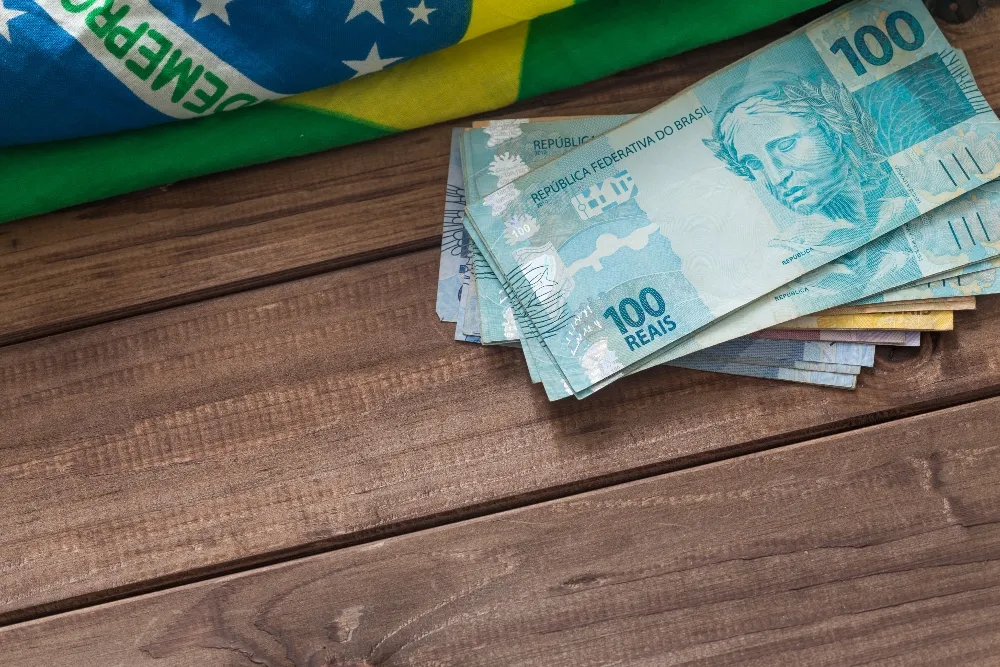
Currency movements amplify this effect. Brazil’s real gained 12% against the dollar in early 2025, making imports cheaper. This follows a brutal 2024 when the real lost 27% of its value, pushing inflation above 4.8%.
Brazil’s central bank compounds the disinflationary pressure through aggressive rate hikes. Interest rates now sit at 15%, the highest since 2006. The bank raised rates by 450 basis points since September 2024, cooling domestic demand and investment.
These policies work, but Brazil still misses its inflation targets. The government aims for 3% inflation with tolerance up to 4.5%. At 4.8%, projected inflation exceeds this ceiling for the second consecutive year. Private economists predict even higher inflation, around 5.2% to 5.7%.
The government simultaneously cut economic growth projections from 2.5% to 2.3% for 2025. High interest rates that control inflation also slow economic expansion. Brazil faces the classic central banking dilemma of choosing between price stability and growth.
Energy costs add complexity. Brazil expects “yellow flag” electricity tariffs in December, adding modest charges when weather conditions require expensive thermal power generation.
However, the Itaipu hydroelectric bonus provided August relief, temporarily reducing utility bills. Agricultural and industrial wholesale prices are falling for six consecutive months.
Lower costs for metals, food processing, and manufactured goods gradually filter through to consumer prices. This provides the strongest disinflationary pressure outside of monetary policy.
Brazil responds to Trump’s tariffs with the Sovereign Brazil Plan, offering subsidized credit to affected exporters. The program encourages companies to find new markets beyond America while maintaining employment levels.
Government analysis suggests these measures halve the economic impact of American trade barriers. The broader implications extend beyond inflation statistics.
Brazil demonstrates how smaller economies can adapt to major power trade wars. While Trump intended to punish Brazil for prosecuting former President Jair Bolsonaro, the tariffs inadvertently help Brazil’s inflation management.
Market dynamics reveal the unintended consequences of protectionist policies. When one major market closes, goods flow elsewhere, creating price effects that benefit consumers in unexpected places.
Brazil’s experience offers lessons for other emerging economies facing similar trade pressures. For 2026, Brazil maintains its 3.6% inflation projection, expecting gradual convergence toward the 3% target.
This optimistic outlook assumes continued tight monetary policy and stable external conditions, though upcoming elections could introduce new uncertainties.
The inflation revision highlights modern economic interconnectedness. Trump’s America First policies produce ripple effects that sometimes benefit the very countries they target. Brazil’s inflation moderation shows how global trade wars reshape economic outcomes in unpredictable ways.
Live Market IntelligenceBrazil — Live Market Board
Rio Times · Live Market Intelligence
Brazil — Live Market Board
+0.21%
207,339.89
+0.21%
64,975.08
+0.69%
11,166.65
+0.38%
2,869,488
+0.00%
2,582.65
+2.69%
59,860.04
+0.60%
| Instrument | Last | Change | YoY | Prev. | High | Low | Volume |
|---|---|---|---|---|---|---|---|
| IBOV | 207,339.89 | +0.21% | +21.85% | 206,911.89 | 168,310 | 167,142 | — |
| USD/BRL | 5.16 | +0.01% | -5.13% | 5.16 | 5.18 | 5.14 | — |
| SELIC | 14.00% | — | — | — | — | — | |
| PETR4 | 41.64 | -0.05% | +35.19% | 41.66 | 41.97 | 41.15 | 41,499,400 |
| VALE3 | 72.97 | +0.83% | +30.75% | 72.37 | 73.54 | 72.66 | 17,658,000 |
| ITUB4 | 38.60 | -1.03% | +4.57% | 39.00 | 39.34 | 38.39 | 29,487,800 |
| BBDC4 | 16.85 | +0.36% | +3.50% | 16.79 | 16.90 | 16.67 | 19,416,900 |
| BBAS3 | 19.37 | +0.47% | +0.73% | 19.28 | 19.44 | 19.16 | 11,069,200 |
| B3SA3 | 14.26 | -0.21% | +12.73% | 14.29 | 14.47 | 14.11 | 33,037,800 |
| ABEV3 | 14.89 | -0.80% | +21.91% | 15.01 | 15.07 | 14.81 | 16,453,100 |
| WEGE3 | 47.59 | +0.49% | +29.99% | 47.36 | 48.08 | 47.36 | 3,364,600 |
| PRIO3 | 59.14 | -0.19% | +50.67% | 59.25 | 59.81 | 58.74 | 3,325,600 |
| SUZB3 | 41.33 | +2.35% | -23.55% | 40.38 | 41.48 | 40.35 | 3,914,900 |
| RENT3 | 34.68 | -0.09% | +0.84% | 34.71 | 34.96 | 34.35 | 7,979,100 |
| AZZA3 | 15.89 | -2.63% | -53.76% | 16.32 | 16.42 | 15.82 | 1,330,300 |
| CSNA3 | 4.30 | +0.47% | -42.65% | 4.28 | 4.41 | 4.26 | 10,076,100 |
| GGBR4 | 24.69 | +2.19% | +51.38% | 24.16 | 24.85 | 24.18 | 7,047,600 |
| ENEV3 | 24.21 | -1.38% | +70.49% | 24.55 | 24.64 | 23.99 | 9,297,000 |
This article was produced by The Rio Times’ automated newsroom system. How we use AI · Report an error · Editorial responsibility: Matthias Camenzind, Editor-in-Chief
LatAm Markets: Live Signals → — real-time movers, turnover leaders and FX across Latin America.