The Sheriff and the Fugitive: Suriname’s Turbulent Path to Elections
Suriname is preparing for crucial parliamentary elections in the coming year. The opposition faces significant challenges, marking the political landscape with turmoil.
This instability follows the departure of its prominent leader, who fled the country to evade a prison sentence for murder charges.
In 2020, Chan Santokhi, known as “The Sheriff,” assumed the presidency after a surprising victory with the Progressive Reform Party (VHP). Santokhi, a former police commissioner and Minister of Justice is recognized for his staunch anti-crime stance.
His notable act as minister was prosecuting Desi Bouterse, Suriname’s authoritarian figure from the 1980s, for a notorious event called the December Murders.
Bouterse, who led the country through two presidential terms with his New Democratic Party (NDP), was convicted in 2019. Despite this, he managed to evade his prison sentence, becoming a fugitive.
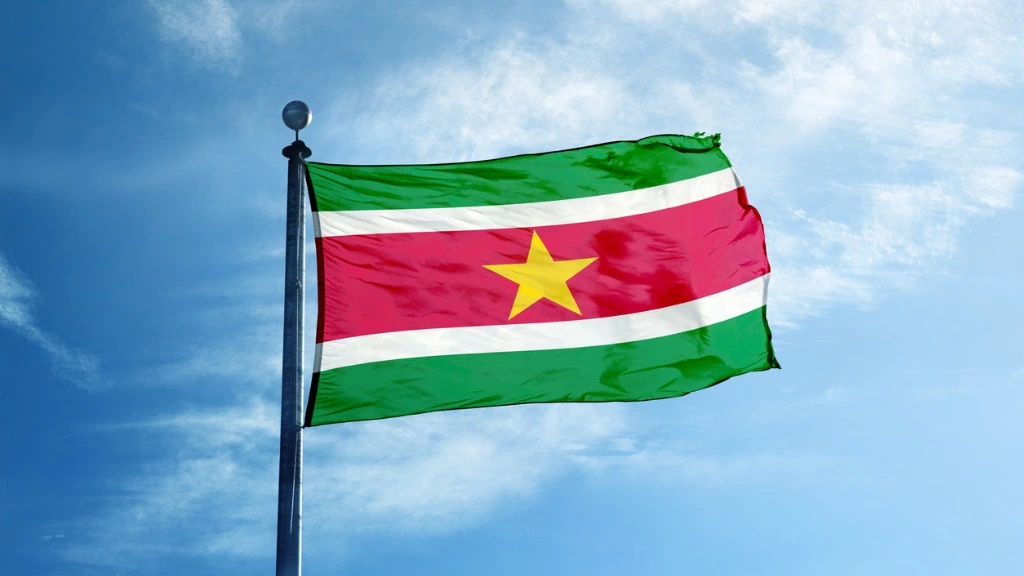
The upcoming elections are fraught with uncertainties, as polling is sparse. The NDP must navigate the repercussions of Bouterse’s absence while the current government contends with considerable civil unrest.
Jennifer Geerlings-Simons, a former National Assembly chair and close associate of Bouterse, will represent the NDP in his absence.
Her leadership is seen as critical for preserving Bouterse’s legacy and potentially shielding him politically. This comes despite his recent relinquishment of party control.
The government is not without its internal conflicts. Vice President Ronnie Brunswijk, who has previously clashed with Bouterse, now seeks the presidency.
Meanwhile, a former coalition partner has separated from the ruling government, citing economic grievances such as high inflation and increasing poverty.
Suriname’s Political and Economic Crossroads
President Santokhi faces a dire political climate, as evidenced by a 2023 poll showing only a 3% approval rating.
This discontent stems largely from unpopular economic measures linked to an IMF program, despite approval from international investors.
Suriname is on the brink of a potential economic upturn, with new oil discoveries anticipated to boost revenue.
However, environmental concerns linger, and public skepticism remains, fueled by unmet promises of economic prosperity from past ventures.
This pivotal moment in Suriname‘s history reflects a nation at a crossroads as it grapples with leadership legacies and the pressing need for economic and political stability.
The upcoming elections will not only decide the immediate future of its governance. They will also test the resilience of its democratic institutions amidst these challenging times.
More: Latin America news in English, every day from The Rio Times.
This article was drafted with automated assistance and reviewed before publication. How we use AI · Report an error · Editorial responsibility: Matthias Camenzind, Editor-in-Chief