
Economy: Suriname
Key Facts
—What. Private bus owners say the Paramaribo city bus fare would rise from SRD 14.50 (about US$0.38) to about SRD 23 (about US$0.61) without state subsidies.
—Who. John Mahadewsingh, chairman of the PLO, an association of private route-bus owners in Suriname.
—Where. Suriname, mainly the capital Paramaribo.
—The numbers. The state spent about SRD 1.19 billion (about US$31.6 million) on public and school transport from July 2025 to August 2026.
—Why it matters. The government projects a 2027 budget deficit of SRD 10.8 billion (about US$286 million), so subsidies face closer scrutiny.
—Next. The PLO wants answers from the Transport Ministry on stalled bus permits by Friday, 9 October 2026.
—Still open. It is not known whether the government will keep, cut or redirect the bus subsidy.
—As of. 7 October 2026, 22:42 GMT
Private bus owners in Suriname say a city ride would cost about SRD 23 (about US$0.61) without state aid, up from SRD 14.50 (about US$0.38). That is a rise of up to 59 percent, and it comes as the government weighs tighter subsidy rules.
What We Know
John Mahadewsingh chairs the PLO, the Particuliere Lijnbushoudersorganisatie, which represents private owners of licensed route buses. He told the broadcaster Radio ABC that a new calculation, including higher fuel costs, points to a fare of SRD 22 to 23 (about US$0.58 to US$0.61).
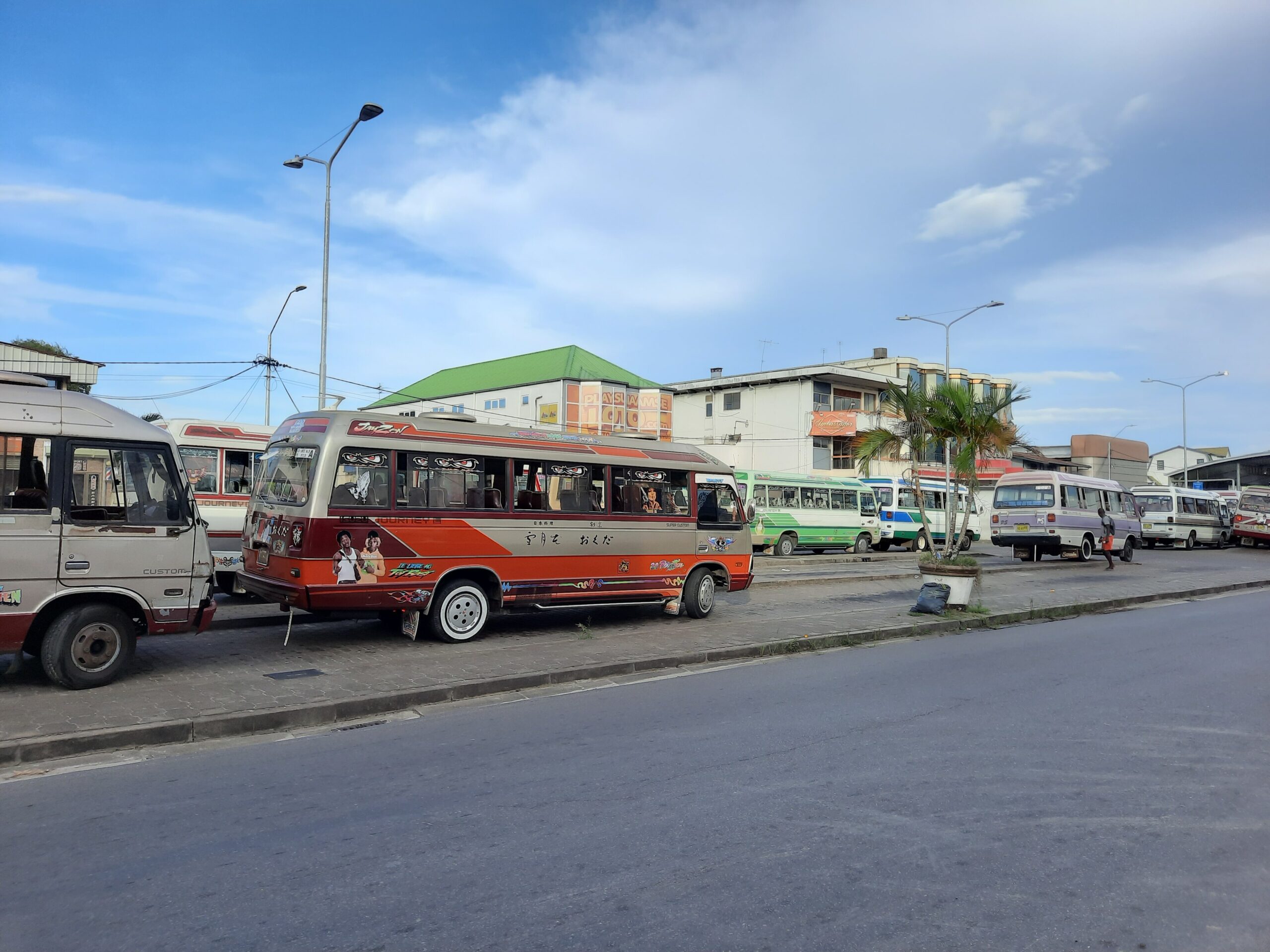
Suriname Herald reported the remarks on Wednesday, 7 October. The current city fare is SRD 14.50, so SRD 23 would be a rise of about 59 percent.
Conversions in this article use the Central Bank of Suriname’s weighted average rate for 6 October, about SRD 37.70 per US$1. That is the mid-point of the bank’s buying rate of 37.551 and selling rate of 37.843.
How the Subsidy Works
Private bus owners receive two kinds of state support, a fare compensation and a fuel compensation. The fuel payment began after fuel prices rose sharply and the government chose to postpone a fare increase.
Mahadewsingh says an average city bus owner gets about SRD 3,000 (about US$80) a month for fuel. He puts fare compensation at about SRD 16,000 (about US$424), or roughly SRD 19,000 (about US$504) in total.
He says real costs are higher than daily fuel spending, because maintenance and wear on the bus also eat into income. He has proposed ending the subsidy to owners and supporting lower-income passengers directly instead.
What Transport Support Costs the State
Between July 2025 and August 2026, the government spent about SRD 1.19 billion (about US$31.6 million) on public and school transport, Dagblad Suriname reported on 2 October. School transport took about SRD 558 million (about US$14.8 million) of that.
Fare compensation for private bus owners came to about SRD 320 million (about US$8.5 million). The state bus company, Nationaal Vervoer Bedrijf (NVB), received about SRD 315 million (about US$8.4 million).
The government says it wants tighter checks on services and subsidies, according to the same report. The money matters because the government projects a 2027 budget deficit of SRD 10.8 billion (about US$286 million), or 4 percent of GDP.
Permits and Pressure on Owners
The PLO is also in a dispute with the Ministry of Transport, Communication and Tourism (TCT) over permits, stickers and other documents. Mahadewsingh says some buses have stood idle for five to six months as a result.
He wants clarity by Friday, 9 October, and a meeting with the transport minister is possible that day, Suriname Herald reported on 5 October. He hopes to avoid protest action for now but warned that patience is wearing thin.
A separate union, the Bond van Bus- en Boothouders in Suriname (BBBS), represents owners who run buses and boats for the NVB. Its chairman, Cotino Finisie, told Dagblad De West on 6 October that fuel compensation has still not been paid and that short protest actions are not ruled out.
TCT announced on 5 October that it will tighten checks on bus owners and drivers together with the police. Offences such as dangerous overtaking and speeding can cost owners their permits or drivers their professional cards, depending on how serious they are.
Jeffrey Lau, a member of parliament for the National Party of Suriname (NPS), says the debate must not stop at permits and routes. “What good is a bus that runs if a family with three or four children can barely afford the cost of bus travel?” he asked, GFC Nieuws reported on 7 October.
Lau wants TCT to work with bus owners on affordable fares, clear route agreements and better oversight. He also suggests ways to help families hit hardest by transport costs.
What Is Not Known
It is not known whether the government will keep, cut or redirect the bus subsidy. TCT’s statement this week covered driving standards and permit conditions, not the PLO’s fare calculation.
No fare rise has been announced, and the city fare stays at SRD 14.50 (about US$0.38) for now. The SRD 22 to 23 figure is the owners’ own estimate, and we could not independently check their cost calculation.
What It Means for US Readers and Investors
For US readers, this is a close look at how fuel costs and state support reach households in Suriname, a small country on South America’s north coast. Visitors who ride city buses pay the current SRD 14.50 fare for now, and our guide to moving to Suriname covers daily costs for newcomers.
For investors, the subsidy sits inside a tight budget, and the wider debt picture is covered in Suriname Lines Up US$850 Million in New Loans. The government projects a 2027 deficit of SRD 10.8 billion (about US$286 million), while the economists’ association VES says it may exceed SRD 16 billion (about US$424 million), Suriname Herald reported on 6 October.
State debt stood at SRD 175.3 billion (about US$4.7 billion) at the end of June 2026, according to the budget reports. Cutting the bus subsidy would ease spending but could raise fares for commuters, a trade-off the government has not yet settled in public.
The next test comes on Friday, when bus owners expect answers on their stalled permits. Any decision on the subsidy would more likely follow in the budget debate for 2027.
More: Suriname news in English, every day from The Rio Times.
Frequently Asked Questions
How much does a city bus ride in Suriname cost?
The current city fare is SRD 14.50, about US$0.38. Private bus owners say it would be about SRD 22 to 23 (about US$0.58 to US$0.61) without state support.
Why does Suriname subsidise private buses?
The state pays private bus owners a fare compensation and a fuel compensation. The fuel payment began after fuel prices rose and the government postponed a fare increase.
How much does transport support cost the government?
From July 2025 to August 2026 the state spent about SRD 1.19 billion (about US$31.6 million) on public and school transport. About SRD 320 million (about US$8.5 million) of that was fare compensation for private bus owners.
Are Suriname’s bus owners going on strike?
No strike has been announced by the PLO. It wants answers on stalled permits by Friday, 9 October, and says patience is running out.
Sources
Suriname Herald, PLO fare warning (7 Oct 2026) · Suriname Herald, PLO permits demand (5 Oct 2026) · Dagblad Suriname, transport spending (2 Oct 2026) · Central Bank of Suriname, exchange rates · Suriname Herald, TCT checks (7 Oct 2026) · Dagblad De West, NVB owners (6 Oct 2026) · GFC Nieuws, Jeffrey Lau (7 Oct 2026) · Suriname Herald, 2027 budget (30 Sep 2026) · Starnieuws, 2027 budget
Connected Coverage
This article was produced by The Rio Times’ automated newsroom system. How we use AI · Report an error · Editorial responsibility: Matthias Camenzind, Editor-in-Chief