
CANADA · ANALYSIS
Key Facts
- —What is happening The United States is imposing a 50% additional duty on selected Canadian goods under Section 338 of the Tariff Act of 1930, effective August 22, 2026.
- —Why it matters The tariffs cover approximately US$20 billion of U.S. exports targeted by Canada, while Canada’s counter-tariffs cover approximately C$27.6 billion of U.S. imports; USMCA-qualifying goods are not exempt from the Section 338 tariffs, which apply to all covered goods regardless of USMCA origin.
- —The numbers The Section 338 duty is 50% ad valorem, the statutory maximum under 19 U.S.C. § 1338, and Canada has retaliated with counter-tariffs of 15%, 25% and 50% on about C$27.6 billion of US goods.
- —Who is who Gellert Global Group, a family-run US food importer, filed the first major court challenge on October 20, 2026.
- —What it means for you A US importer bringing in covered Canadian goods valued at US$1 million now faces an additional US$500,000 duty before ordinary customs charges, freight and insurance.
The section 338 tariff is a 50% additional duty the United States began imposing on selected Canadian goods on August 22, 2026, marking the first express presidential use of this 1930 trade statute. For US importers, retailers and consumers, it means higher costs on Canadian alcohol, dairy, wood products and other goods, and a legal fight is already underway.
Canada is the United States’ largest trading partner, and the two economies are deeply integrated across autos, lumber, energy and agriculture. This analysis explains what Section 338 is, who can challenge it in court, and what the measure means for US importers, prices and Canadian exporters, drawing on the USA & Canada Intelligence Brief.
What Section 338 Is and Why It Is Being Used Now
Section 338 is codified at 19 U.S.C. §1338, within the Tariff Act of 1930, the same protectionist statute associated with the Smoot-Hawley tariff increases. It authorises the president to impose new or additional duties on goods from a foreign country when he finds that country applies an unreasonable charge, regulation or limitation to US goods that it does not apply equally to comparable goods from other countries.
The statute also covers discrimination against US commerce through customs, port, regulatory, classification or other restrictions. The president may set duties of up to 50% of the value of the imported goods, with rates intended to offset the burden imposed on US commerce.
President Donald Trump announced the measure on July 20, 2026, citing alleged Canadian discrimination against US alcohol, dairy and motor-vehicle commerce. The tariffs were initially set to begin on August 19, but the administration suspended implementation until August 22 while negotiations continued; after talks failed, the duties took effect.
The Congressional Research Service describes the 2026 action as the first time a president expressly cited Section 338 to impose tariffs.
The US International Trade Commission has a statutory role in investigating or ascertaining discrimination and notifying the president with recommendations.
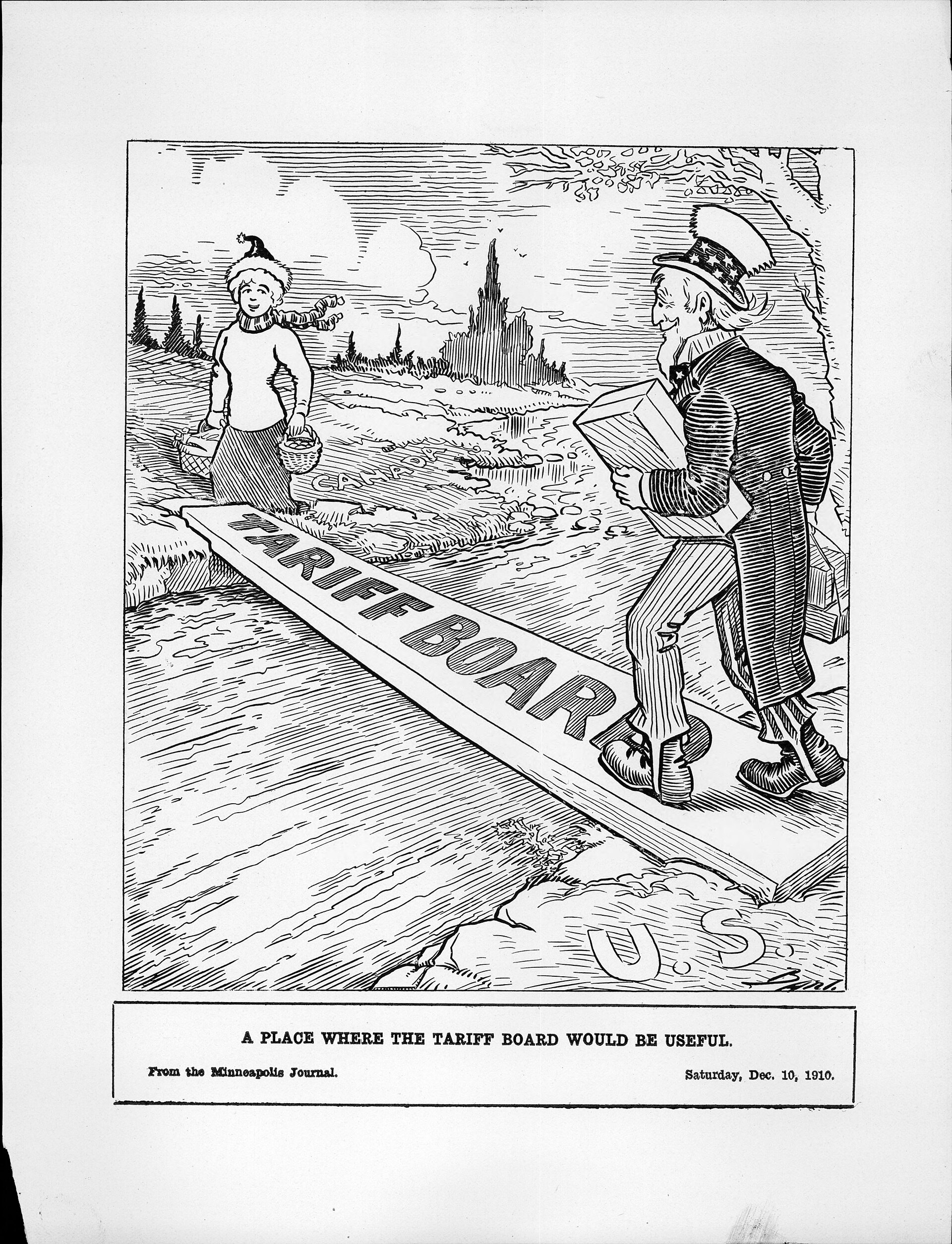
The Numbers That Matter
The Section 338 additional duty is 50% ad valorem, the statutory maximum under 19 U.S.C. § 1338. The US Trade Representative estimated the original action covered approximately US$20 billion in U.S. exports targeted by Canada.
The exact duty payable by an importer can depend on the product’s tariff classification, customs value, existing normal duty rate and any other applicable trade measure. The 50% figure refers to the Section 338 additional duty, not necessarily the importer’s complete landed tariff burden.
- US Section 338 rate: 50% ad valorem, effective August 22, 2026.
- Estimated Canadian imports affected: approximately US$20 billion, announced July 20, 2026.
- Canadian counter-tariffs: 15%, 25% and 50%, effective September 8, 2026.
- Canadian goods targeted by counter-tariffs: approximately C$27.6 billion of US imports.
- USMCA treatment: no exemption from the US Section 338 tariffs.
A US importer bringing in merchandise valued at US$1 million would face an additional US$500,000 Section 338 duty at the 50% rate, before considering ordinary customs duties, freight, insurance and other charges.
The Actors and What Each Wants
Finance Minister François-Philippe Champagne announced the Canadian counter-tariffs on August 25, 2026, while Dominic LeBlanc serves as the minister responsible for Canada–US Trade.
Gellert Global Group, a family-run US food importer, filed the first major court challenge on October 20, 2026, in the US Court of International Trade. The company says its Canadian cheese imports had previously entered without tariffs under USMCA and that it now faces a 50% duty.
The US International Trade Commission is the agency assigned a role in investigating discrimination under Section 338 and notifying the president with recommendations.
The Legal Challenge and Who Can Sue
The most direct plaintiffs are US importers that must pay the duties. Customs duties are normally assessed against the US importer of record, making importers the clearest parties to seek judicial relief.
The complaint raises two principal arguments.
Other potentially interested parties include importers paying the duties, US companies whose contracts or supply chains absorb the tariff, trade associations representing affected industries, and in some circumstances foreign exporters if they can establish a legally recognised injury and standing.
Canadian exporters generally do not automatically receive refunds merely because they are harmed economically. Canadian government challenges could arise through diplomatic or trade-dispute channels, but the reported CIT case was brought by a US importer.
Autos, Lumber, Energy and USMCA Context
Motor vehicles were among the sectors cited by the administration when it announced the tariffs. The Section 338 action covers selected goods rather than imposing a universal tariff on every Canadian product, but even targeted tariffs can disrupt integrated North American auto production where vehicles and parts cross the border multiple times.
Paper and wood products are included among the covered categories. Canadian lumber exporters and US builders face exposure through both direct duties and possible supply shortages, with the likely transmission channel for US consumers being higher construction costs.
The Section 338 product list does not identify a blanket tariff on Canadian energy exports. Canada is a major supplier of crude oil, natural gas and electricity to the United States, but the reported measures should not be characterised as a universal tariff on Canadian energy absent a specific product listing or separate presidential action.
The potential application of the measure to USMCA-qualifying goods is one of the most consequential features of the dispute. The tariffs can apply even where goods satisfy the agreement’s rules of origin and would ordinarily receive preferential treatment.
The dispute also arrives during the scheduled review of the North American trade agreement, creating wider risks for companies around USMCA preferences, rules-of-origin compliance and investment decisions.
Economic and Business Stakes
The direct macroeconomic effect is likely to be smaller than the sectoral effect because the tariffs apply to a defined group of products rather than all Canadian imports. However, the policy creates several layers of economic uncertainty.
US importers and manufacturers using covered Canadian products face immediate cost increases. Retail prices may rise where substitution is difficult, and Canada’s retaliation reduces market access for US exporters.
Companies may postpone capital spending while tariff coverage and USMCA rules remain uncertain. Firms may shift procurement to US or third-country suppliers, often at higher short-run cost.
A court ruling could invalidate the tariffs and require refunds, but could also leave the executive authority intact. The central investment question is whether the measure is a negotiating instrument or the beginning of a durable restructuring of North American trade.
The effect on the overall US price level depends on the share of consumer spending represented by the covered products and how long the tariffs remain in force. The effect can be much larger for individual sectors than for headline inflation.
What It Means for the United States and Latin America
For US readers, the immediate consequence is higher costs on imported Canadian foods, alcohol, wood products and consumer goods. Retailers may compress margins to delay passing through the duty, while manufacturers using Canadian paper, wood or intermediate inputs face higher production costs.
The retaliatory tariffs on approximately C$27.6 billion of US goods, effective September 8, 2026, increase the risk that the dispute will affect US farmers, manufacturers, beverage companies and other exporters. The listed affected sectors include steel, dairy, appliances, agricultural equipment, pulp and paper, and electronics.
For Latin America, the dispute creates both risks and opportunities. Countries that export competing agricultural, wood or manufactured goods to the United States may gain market share as US buyers seek alternatives to Canadian suppliers.
At the same time, a broader North American trade conflict could slow regional growth and disrupt supply chains that extend into Latin America. Investors should watch whether the Section 338 measure becomes a template for trade actions against other partners.
The USMCA review adds another layer of uncertainty for companies with North American operations. Businesses may delay investment decisions while rules of origin, dispute settlement and the agreement’s future duration remain unresolved.
The Scenarios
That would require refunds and could restore USMCA preferences for affected goods.
A second scenario is that the court upholds the tariffs, leaving the executive authority intact. That would likely encourage further use of Section 338 and could accelerate supply-chain relocation away from Canada.
A third scenario is a negotiated settlement tied to the USMCA review. The administration could use the tariffs as bargaining leverage over market access, rules of origin or dispute settlement, then suspend or modify the duties as part of a broader agreement.
A fourth scenario is escalation. Section 338 also allows the president to order affected products excluded from the United States if the foreign country maintains or increases the alleged discrimination.
What would stabilise the situation is a court ruling that clarifies the legal framework, or a bilateral agreement that restores USMCA predictability. What would tip it toward deeper conflict is expanded product coverage, further retaliation, or a breakdown in the USMCA review.
What It Means for You
If you import covered Canadian goods, your customs bill has risen sharply since August 22, 2026. A US$1 million shipment now carries an additional US$500,000 Section 338 duty before ordinary customs charges, freight and insurance.
If you buy Canadian cheese, alcohol, wood products or other listed goods, expect higher retail prices or product substitution. Retailers may absorb some cost initially, but sustained tariffs typically pass through to consumers over time.
If you export to Canada, check whether your products fall within the Canadian counter-tariff list effective September 8, 2026, which applies rates of 15%, 25% or 50% to products covering approximately C$27.6 billion in imports from the United States.
If you are an investor, the key issue is not only the current 50% duty. It is the possibility that a temporary Section 338 measure becomes part of a broader renegotiation involving market access, rules of origin, dispute settlement and the USMCA’s future duration.
What Is Not Known
The central legal question is whether Section 338 remains independently available, or whether later trade legislation impliedly repealed it in areas covered by those newer procedures. The US Court of International Trade has not yet ruled on this question as of October 21, 2026.
It is not known whether the administration will expand product coverage, move toward exclusion of goods under the statute, or suspend the tariffs as part of a USMCA negotiation.
It is also not known how long the tariffs will remain in force.
What to Watch
Watch the US International Trade Commission’s Section 338 rulemaking. The USITC requested public comments on September 4, 2026, concerning how it should carry out its Section 338 responsibilities.
Watch for updates from the Department of Finance Canada and the Canada Border Services Agency on product lists, tariff classifications, customs instructions or remission guidance. The CBSA Customs Tariff 2026 was updated under file T2026-2, effective September 1, 2026.
Watch the USMCA review process. The review is a critical forum for potential tariff suspension or modification.
Watch for any expansion of Section 338 import bans. Further exclusions are possible if the administration determines that Canada maintains or increases the alleged discrimination.
Frequently Asked Questions
What is Section 338 of the Tariff Act of 1930?
Section 338, codified at 19 U.S.C. §1338, authorises the US president to impose additional duties of up to 50% on goods from a foreign country that discriminates against US commerce or applies unequal burdens to US trade. The 2026 action is the first express presidential use of this statute to impose tariffs.
What goods are covered by the Section 338 tariff on Canada?
The tariffs apply at a rate of 50% ad valorem effective August 22, 2026.
Who can challenge the Section 338 tariffs in court?
US importers that must pay the duties are the most direct plaintiffs. Gellert Global Group, a family-run US food importer, filed the first major challenge in the US Court of International Trade on October 20, 2026.
Do the Section 338 tariffs have a USMCA exemption?
No. The Section 338 tariffs contain no exemption for goods qualifying under the United States-Mexico-Canada Agreement, meaning they can apply even where goods satisfy the agreement’s rules of origin and would ordinarily receive preferential treatment.
How much will the Section 338 tariff cost US importers?
A US importer bringing in covered Canadian merchandise valued at US$1 million would face an additional US$500,000 Section 338 duty at the 50% rate, before considering ordinary customs duties, freight, insurance and other charges.
What counter-tariffs has Canada imposed in response?
Canada imposed counter-tariffs of 15%, 25% and 50% on approximately C$27.6 billion of US goods, effective September 8, 2026. The listed affected sectors include steel, dairy, appliances, agricultural equipment, pulp and paper, and electronics.
Does the Section 338 tariff apply to Canadian energy exports?
The Section 338 product list does not identify a blanket tariff on Canadian energy exports. Canada is a major supplier of crude oil, natural gas and electricity to the United States, but the reported measures should not be characterised as a universal tariff on Canadian energy absent a specific product listing or separate presidential action.
Sources: riotimesonline.com, congress.gov, congress.gov, congress.gov, congress.gov, congress.gov. Retrieved 21 October 2026.
This article was produced by The Rio Times’ automated newsroom system. How we use AI · Report an error · Editorial responsibility: Matthias Camenzind, Editor-in-Chief