Petro Challenges Colombian Congress with Labor Reform Referendum
Colombian President Gustavo Petro officially submitted a 12-question labor reform referendum to Congress on Thursday, following massive May Day demonstrations across the nation.
The president joined thousands of protesters in Bogotá’s Bolivar Square before formally presenting the proposal at the Capitol. Petro’s move comes after his original labor reform was rejected by a Senate committee in March 2025.
This setback marked the second time Congress blocked the initiative, prompting the president to pursue the referendum strategy as an alternative path.
The referendum requires congressional approval within 30 days. If approved, Petro must issue a decree calling citizens to vote within three months. For the results to be valid, participation must exceed 13 million voters-more than Petro received in his presidential election.
During his address to supporters, Petro issued direct warnings to lawmakers opposing the referendum. He declared that Colombians would “rise up and revoke” senators who vote against it in the 2026 elections.
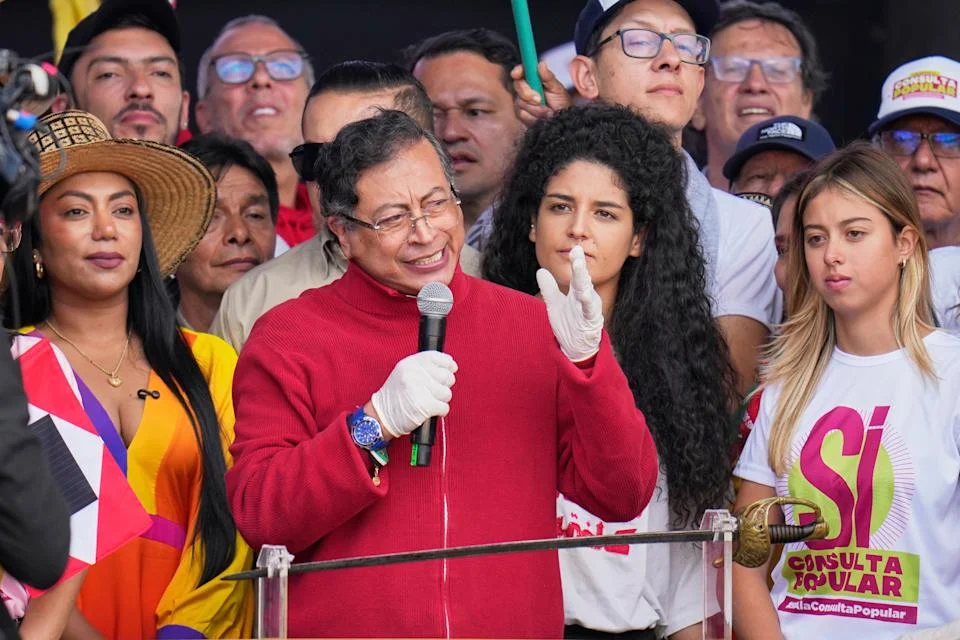
Petro Pushes for Labor Reform Referendum Amid Political Tensions
The president emphasized that no parliamentarian rejecting the referendum would secure re-election. Petro dramatically reinforced his message by displaying Simón Bolívar’s sword, a powerful symbol in Colombian politics.
This theatrical gesture aimed to pressure the Senate, where his coalition lacks a majority. The 12-question referendum addresses several labor issues.
These include limiting workdays to eight hours, defining daytime work as ending at 6 PM, mandating double pay for holiday work, and promoting job stability through open-ended contracts.
Business groups have consistently opposed these reforms. They claim the changes would significantly increase labor costs and potentially harm small businesses. However, Labor Minister Antonio Sanguino counters that the reform would generate 91,000 jobs annually.
Sanguino argues the reform seeks to correct “injustices generated against working classes” through neoliberal policies implemented since the 1990s. He states these policies extended working hours, eliminated overtime pay, restricted strike rights, and outsourced labor.
This referendum push represents Petro’s latest attempt to fulfill campaign promises. Most of his major economic and social reforms have faced stubborn resistance in Congress since he became Colombia’s first leftist president in 2022.
More: Colombia news in English, every day from The Rio Times.
This article was produced by The Rio Times’ automated newsroom system. How we use AI · Report an error · Editorial responsibility: Matthias Camenzind, Editor-in-Chief